Pentagon special operations office uses accelerator format to push faster acquisition
The Pentagon office overseeing special operations and low-intensity conflict has staged its first accelerator-style event aimed at moving promising technologies closer to operators by cutting through the slower habits of the traditional defense buying system. The event, organized by the office of the Assistant Secretary of Defense for Special Operations and Low-Intensity Conflict, brought a select group of companies together to pitch solutions tied directly to operational demands from the field.
Officials described the gathering as a “different kind of industry day,” with an emphasis on face-to-face engagement and outcome-driven selection rather than the long, process-heavy cycles that often define defense procurement. The broader message from the event was straightforward: special operations forces do not believe they can afford to wait a decade or more for relevant capability when commercial and military technologies are evolving on much shorter timelines.
Assistant Secretary Derrick Anderson used the event to frame acquisition reform as an immediate readiness issue rather than a bureaucratic aspiration. In remarks reported from the venue, he said the exercise was meant to reflect a pathfinder approach for the department, with special operations positioned as an early adopter of faster, more adaptive procurement methods.
That framing matters because defense reform discussions often stay abstract. In this case, SO/LIC tied the concept to a live selection mechanism built around current operational problems and direct contact with vendors. The office was not simply asking industry what it had available. It said it solicited responses based on needs drawn from operational commands and then narrowed the resulting submissions to a small set of finalists.
From roughly 700 proposals to 15 finalist pitches
According to officials, the office received around 700 proposals from industry and reduced that pool to 15 capabilities invited to present. Reporters were not allowed to remain for the pitches themselves, but the structure suggests a deliberate attempt to create competitive pressure around practical problem solving rather than extended paper-based review.
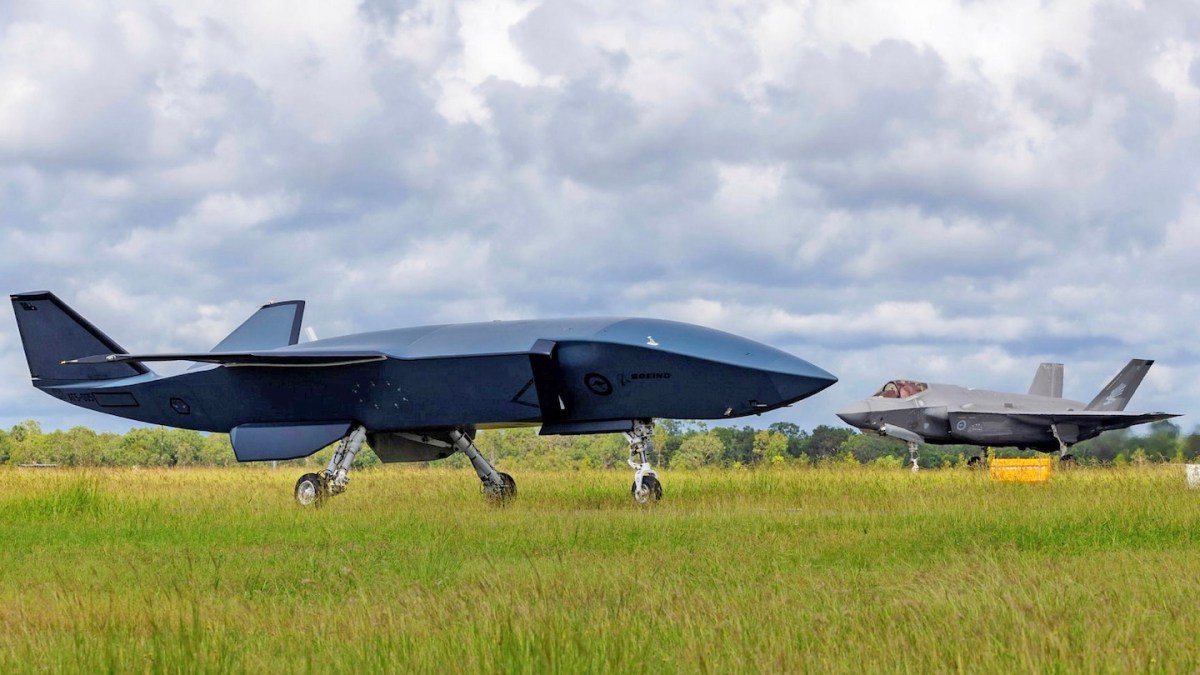
The specific problem sets cited by officials offer a window into where special operations planners see gaps. Among the needs raised were surveillance payloads for Group 3 medium-sized drones and beyond-line-of-sight communications systems that do not depend on low Earth orbit satellites. Those are not generic technology wish lists. They point to operational concerns around resilient sensing, contested communications, and the need to reduce reliance on potentially vulnerable space-based links.
The emphasis on direct operational demand is central to the accelerator concept. Instead of launching a broad technology scouting exercise and then searching for a use case, SO/LIC said it started with mission problems supplied by commands. That approach can reduce the risk that procurement efforts drift toward impressive demonstrations that do not match near-term field requirements.
Defense leaders cast bureaucracy as the problem to solve
Both Anderson and other officials used the event to argue that acquisition culture itself has become a constraint. Anderson said the department cannot let legacy process dictate readiness, while Cara Teeter, deputy assistant secretary of defense for special operations analysis, resources, and capabilities, told attendees that success should be judged by outcomes rather than adherence to a process the system created for itself.
That is a sharper formulation than the usual call for efficiency. It suggests SO/LIC is trying to redefine what counts as institutional success inside defense acquisition. In that view, the completion of a compliant process is not enough if it fails to deliver useful capability in time to matter.
There is also an implicit acknowledgment that technology refresh cycles are accelerating outside government. Anderson told reporters that senior leaders should not have only one yearly touch point with industry to see an idea that could be obsolete within six months. That statement captures one of the core tensions in defense innovation: military organizations often buy on timelines better suited to stable, slowly changing platforms, while software, autonomy, communications, and small unmanned systems now move much faster.
The accelerator model is one attempt to adapt. By creating a shorter path from problem statement to senior-level review, SO/LIC appears to be testing whether it can identify usable capabilities earlier and maintain a more active dialogue with companies building them.
Why special operations may be the logical test bed
Special operations has long been treated inside the Pentagon as a community more willing to experiment with tailored tools, rapid integration, and unconventional procurement pathways. That makes SO/LIC a plausible place to trial methods that might later influence the broader department.
The event’s design reflects that role. It paired operational specificity with senior attention, reduced a large proposal pool quickly, and focused on technologies that speak to current battlefield concerns such as resilient communications and drone-enabled sensing. If the model yields deployable capability or shortens award timelines, it could strengthen the argument for using similar mechanisms elsewhere in the Department of Defense.
At the same time, an accelerator event by itself does not solve the downstream issues that often slow defense adoption. Selection is only the start. Contracts, testing, integration, security reviews, sustainment planning, and budget alignment still determine whether a finalist pitch turns into fielded equipment. The value of the event will ultimately be measured by what happens after the presentations, not by the novelty of the format alone.
A signal about Pentagon priorities, not just event design
Even with that caveat, the first SO/LIC accelerator event sends a clear institutional signal. Pentagon officials are trying to show industry that they understand the complaint that defense buyers are too distant, too periodic, and too slow. They are also signaling to internal stakeholders that procurement reform is not only about policy memos or oversight language. It is about building new habits for how needs are framed, how vendors are engaged, and how quickly ideas are elevated for decision.
The event also reflects a broader shift in defense thinking. As military planners confront rapid changes in drones, communications, and networked operations, the cost of delay rises. A capability that arrives years late is not merely inconvenient; it may be irrelevant. That is the urgency SO/LIC appears to be leaning into.
Whether this first event becomes a model or remains an isolated pilot will depend on follow-through. But the initial structure is clear enough: take mission problems from operators, invite targeted responses from industry, force prioritization, and put leadership in the room early. For a Pentagon system often criticized for distance and delay, that is a meaningful experiment in changing how technology gets from proposal to potential use.
This article is based on reporting by Breaking Defense. Read the original article.
Originally published on breakingdefense.com