Ship movements in the Strait of Hormuz face another setback
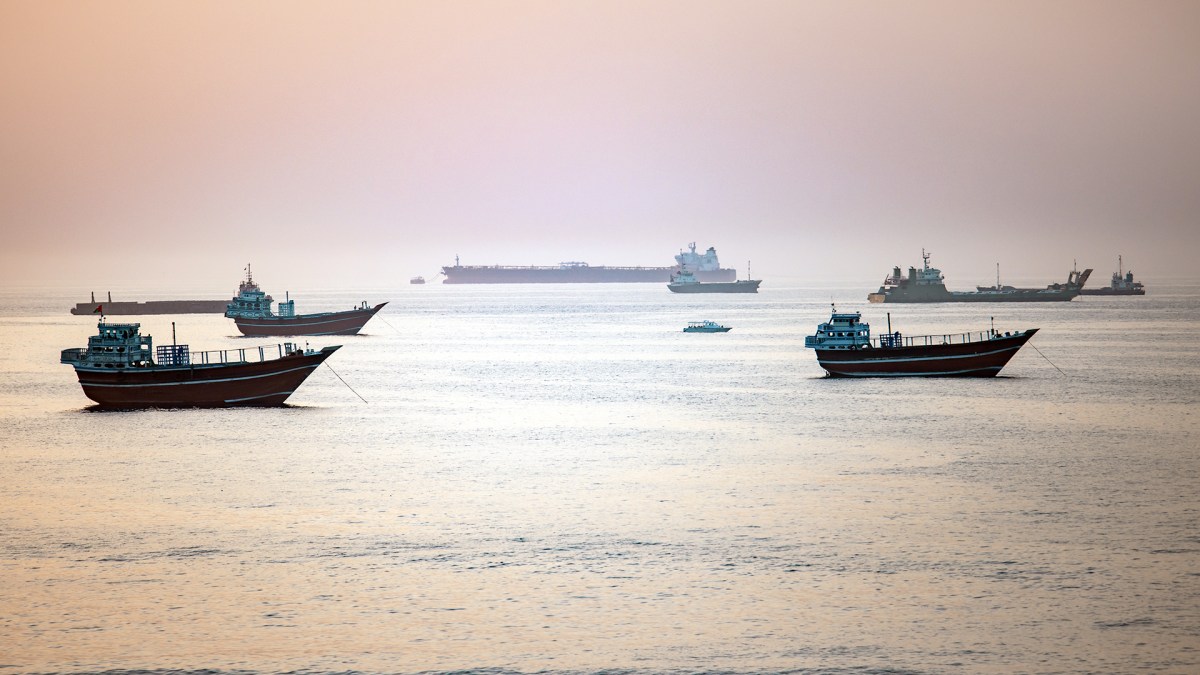
An effort to move stranded commercial vessels out of danger in and around the Strait of Hormuz has been paused after a cargo ship was attacked in the Gulf of Oman, according to reporting that cites the International Maritime Organization and a U.S. official. The episode shows how unstable maritime traffic remains even as some transit had begun to resume through one of the world’s most strategically sensitive waterways.
The International Maritime Organization, working with Oman, had been developing an evacuation plan intended to provide safer passage for vessels still stuck in the Persian Gulf. The need for that plan reflects how badly commercial movement has been disrupted after the strait was described as largely closed following attacks on Iran by the United States and Israel. Even with tentative movement returning, the article says current transits amount to only a tiny fraction of the volume seen before the conflict.
The latest attack was enough to halt that nascent recovery effort. IMO Secretary-General Arsenio Dominguez said seafarer safety remains paramount and that the evacuation plan would be paused until there is more clarity. The decision underlines a basic reality for ship operators: partial reopening means little if insurers, crews, and routing planners still see the operating environment as too unpredictable to trust.
The reported attack changed the risk picture immediately
According to the article, a U.S. official said the strike was carried out by an Iranian drone, and Iranian officials confirmed that account. The vessel that was hit was not itself participating in the IMO’s evacuation effort. Even so, the incident directly affected the viability of the plan because it suggested that any organized movement of ships could still unfold under active threat.
That distinction matters. If a ship outside the evacuation framework can still be attacked in the area, then a convoy-like or formally coordinated transit arrangement may not meaningfully reduce risk unless the broader security picture changes. For mariners and shipping companies, the question is not just whether a route exists on paper, but whether any route can be considered credibly safe.
The timing was especially sensitive because the article says traffic had just started to move through the strait again amid tense peace talks between the United States and Iran. The pause therefore interrupts not a stable recovery but a fragile, early-stage attempt at normalization. In practical terms, that means uncertainty remains the dominant operating condition.
Control of transit routes has become part of the confrontation
The article also points to a warning issued earlier Thursday by the Islamic Revolutionary Guard Corps Navy. According to reporting cited there, the IRGC-N said safe passage through the Strait of Hormuz was limited to routes designated by Tehran and that other routes were unacceptable and dangerous. Iranian state-run media were cited as the source of that warning.
The implication is that navigation itself has become contested. The strait is not simply hazardous because of generalized conflict risk; it is also hazardous because authorities and military actors may dispute which corridors are legitimate. The article says the IRGC-N claimed it turned back several ships that attempted to transit through the southern route suggested by the IMO.
That introduces a direct collision between an international maritime body’s effort to organize safe movement and Iran’s assertion of control over where ships may pass. For commercial operators, conflicting guidance is often as destabilizing as physical danger. A route endorsed by one authority but rejected by another can leave captains and companies in an impossible position, especially when delay, detention, or attack are all plausible outcomes.
Even alternative routes appear constrained
The report notes that there is also a northern route near the Iranian coastline, while concerns remain about mines in the main route through the middle of the strait. This means the transit problem is not limited to one blocked corridor. Instead, every available option carries a distinct risk profile: political confrontation on one route, proximity to Iranian forces on another, and mine threats in the central channel.
For a waterway as commercially important as Hormuz, that kind of route degradation has outsized consequences. The article does not attempt a broader market analysis, but the strategic significance is obvious. When multiple channels through a chokepoint become unsafe, shipping capacity does not merely slow; it becomes difficult to coordinate at all. Delays compound, schedules slip, and confidence in the corridor erodes.
The pause in the IMO evacuation plan therefore signals more than a single operational delay. It is evidence that even carefully organized international mitigation efforts can be overtaken by events on the water. The strait may be partially traversable in a narrow tactical sense, but the environment is still too unstable for a sustained commercial recovery.
Why the IMO’s pause matters
The evacuation plan was significant because it represented a concrete response by an international body trying to restore at least limited navigational order. The article says several vessels had already been successfully evacuated through that effort before the pause. That makes the suspension more consequential: it interrupts a mechanism that had begun to produce results, however modestly.
For shipowners, charterers, and crews, the suspension will likely reinforce the view that waiting remains safer than moving unless conditions improve materially. The threshold for confidence in a high-risk strait is much higher than the threshold for a one-off passage. Operators need repeated proof that routes are workable, guidance is coherent, and security incidents are not escalating faster than plans can adapt.
The latest strike suggests the opposite. It shows that isolated movement can still trigger or suffer attack, and that diplomatic progress has not yet translated into operational stability. It also highlights how quickly maritime planning can be invalidated when military signaling, drone activity, and contested routing converge in a single day.
A chokepoint still defined by uncertainty
The key takeaway from the latest developments is that the Strait of Hormuz remains open only in the most limited and conditional sense. Some vessels may be moving, but the international framework meant to widen that flow has now been paused. Routing authority is disputed, central lanes are shadowed by mine concerns, and at least one cargo vessel has been struck during a period that was supposed to mark tentative improvement.
That leaves the region in a familiar but dangerous position: commercial necessity is pushing traffic forward, while the security environment keeps pulling it back. Until those two forces are brought into closer alignment, shipping through Hormuz is likely to remain episodic, constrained, and acutely vulnerable to sudden reversal.
This article is based on reporting by twz.com. Read the original article.
Originally published on twz.com