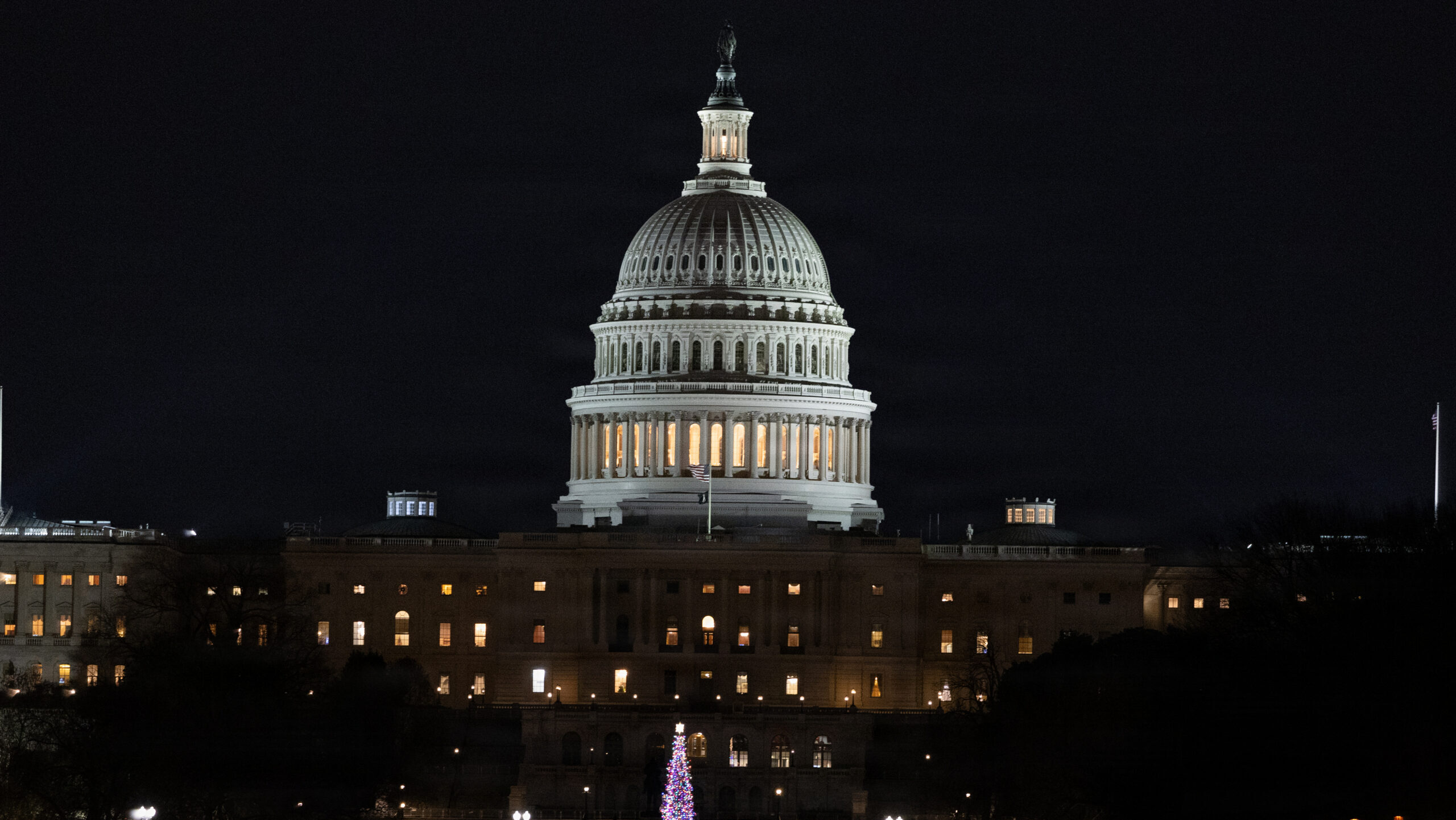
Senate backs temporary funding bill, but the Pentagon still faces a fall budget fight
The U.S. Senate has passed a bipartisan continuing resolution designed to keep federal agencies funded into December, moving Congress a step closer to avoiding a government shutdown when the new fiscal year begins on Oct. 1. According to the source report, senators voted 90-6-1 for the measure, which would extend funding through Dec. 11 and keep the Pentagon operating at fiscal 2026 levels during that period.
The vote is meaningful because it reduces the immediate risk of a funding lapse, but it does not resolve the larger appropriations standoff. The House and Senate have approved different versions of a stopgap bill, and lawmakers will still need either to negotiate a compromise or for one chamber to adopt the other’s measure after Congress returns in September. Until that happens, the possibility of a shutdown remains a live issue rather than a closed one.
Continuing resolutions, or CRs, are temporary spending bills used when Congress has not finished regular appropriations before a new fiscal year starts. They are often treated as procedural necessities, but they have direct operational consequences, particularly for defense. The Senate bill described in the source text would keep Pentagon funding flat at fiscal 2026 levels and forbid the start of new programs. For military planners and contractors, that combination matters: it preserves continuity, but it also constrains new starts and can delay planned initiatives.
What the Senate bill would do
The Senate’s version would run until Dec. 11. That date differs from the House-passed CR, which would expire on Dec. 4. The Senate bill also includes anomalies, meaning special funding exemptions or tailored provisions that deviate from a clean extension of existing spending levels. The source text states that those anomalies and provisions had Democratic backing and were not included in the House version.
This split is central to what happens next. The House passed its bill before the August recess, but that version was opposed by most House Democrats. Rather than take up the House package unchanged, the Senate unveiled its own proposal on Aug. 2 and then passed it with broad bipartisan support. That leaves Congress with two bills on the table rather than one unified measure ready for the president’s signature.
For the Pentagon, the practical effect of the Senate bill is stability with limits. Funding would continue, which is the core purpose of a CR, but at prior levels and without permission to begin new programs. Defense agencies can operate under that structure, but they generally prefer full-year appropriations because temporary funding can distort acquisition schedules, hiring plans, and modernization timelines.
Why defense officials care about the details
The source text highlights one important absence: neither the House nor Senate bill includes most of the Pentagon-specific anomalies requested by the White House. Those requests reportedly included $1 billion in funding for the Trump-class battleship and permission to obligate funding on five multiyear munitions contracts. Because those provisions were not included, the stopgap measure, if enacted in its current general form, would offer less flexibility than the administration sought for certain defense priorities.
That detail is significant for two reasons. First, it shows that even when lawmakers agree on the need to avoid a shutdown, they may still resist using a temporary bill to advance contested or specialized defense initiatives. Second, it underscores how much policy can ride on what might otherwise look like a simple extension of existing funding. A CR is not just a calendar tool; its anomalies, omissions, and restrictions can shape near-term military procurement and planning.
The article’s framing also points to a broader appropriations pattern in Washington. When Congress falls back on stopgap bills, agencies gain time but lose certainty. For the Defense Department, which manages long timelines and capital-intensive programs, that uncertainty can be costly. A temporary measure may avert an immediate disruption to pay and operations, yet still complicate program execution if contract authority, new starts, or special transfer authorities are limited.
The next phase comes in September
Congress now has a narrow window after returning from recess to settle the differences. Lawmakers can negotiate a compromise version that incorporates acceptable provisions from both bills and pass it through both chambers, or one chamber can decide to accept the other’s measure to speed the process. Either route would need to happen before the start of the fiscal year to fully remove shutdown risk.
The strong Senate margin suggests there is broad appetite for avoiding a lapse in funding. But bipartisan support in one chamber does not automatically translate into a final deal, especially when the House and Senate have taken different approaches and when the House version has already drawn opposition from most House Democrats. The unresolved gap between Dec. 4 and Dec. 11 may look minor, but it reflects larger disputes over what a temporary bill should contain and whose priorities it should accommodate.
For defense watchers, the most important takeaway is that Congress has created momentum but not closure. The Senate vote makes a shutdown less likely than it would be without a bipartisan CR on the table. Still, the Pentagon remains on a temporary-funding track, and key administration-backed defense exceptions remain outside both chamber versions for now.
That means the coming negotiations are about more than keeping the lights on. They will determine whether lawmakers settle for a straightforward extension of current spending, whether they make room for selected anomalies, and how much flexibility the Defense Department gets while waiting for full-year appropriations. In the short term, the Senate has provided a path away from an Oct. 1 funding lapse. In the medium term, the harder budget fight has merely been postponed until September.
This article is based on reporting by Breaking Defense. Read the original article.
Originally published on breakingdefense.com