Satellite imagery suggests Russia is expanding counter-drone protection to strategic submarines
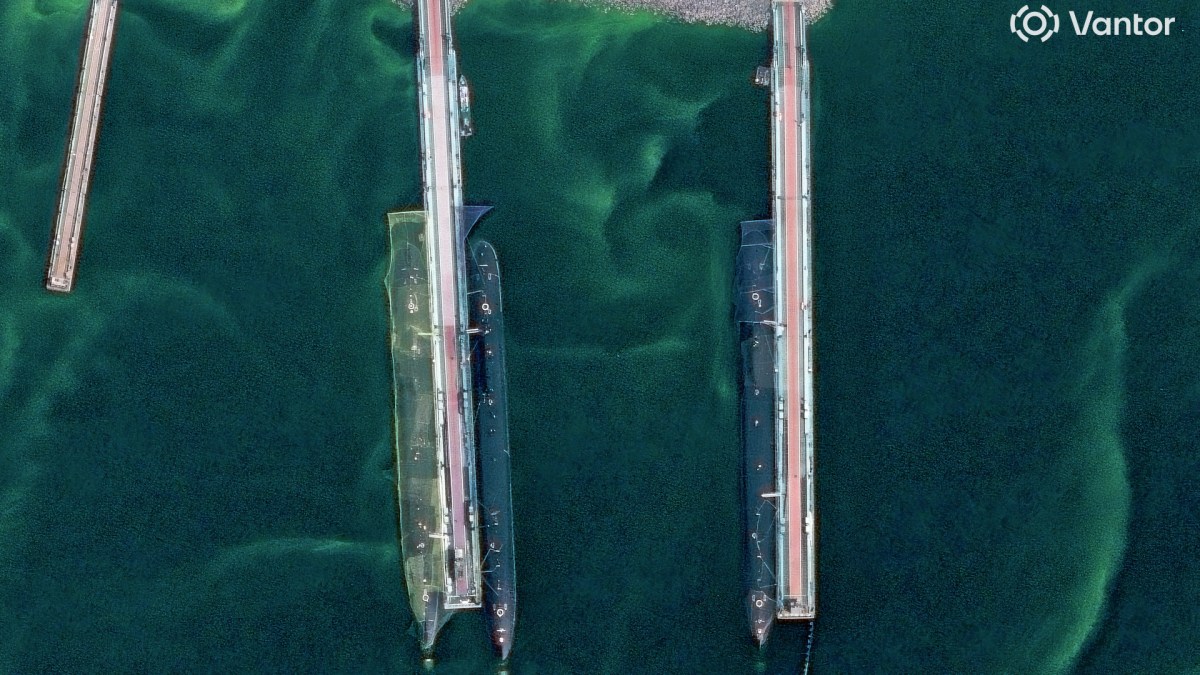
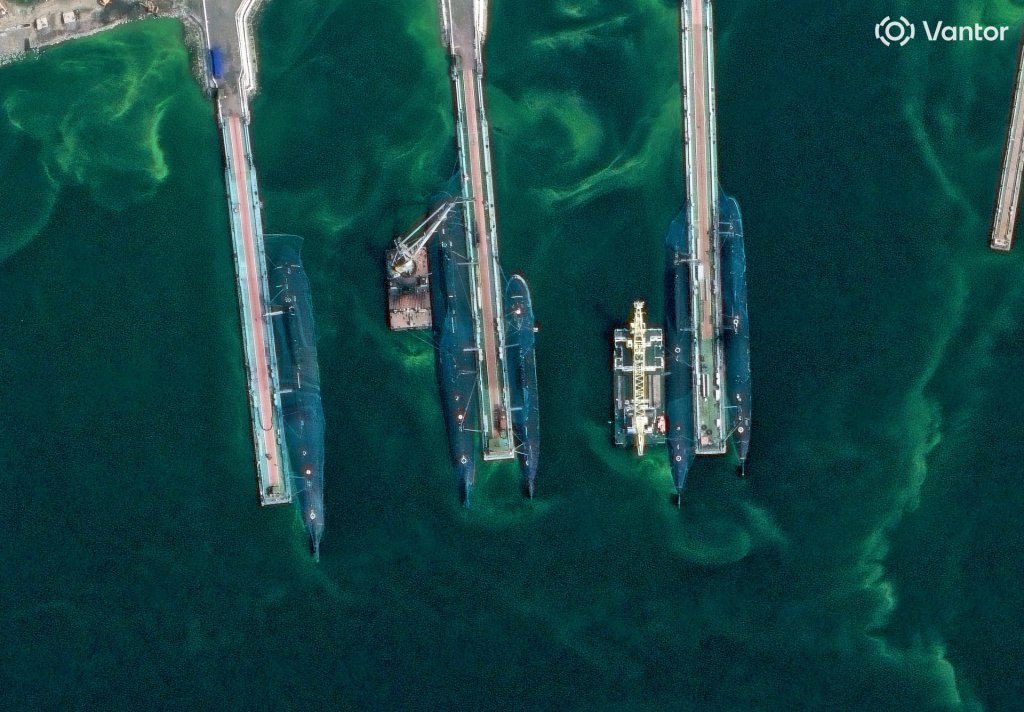
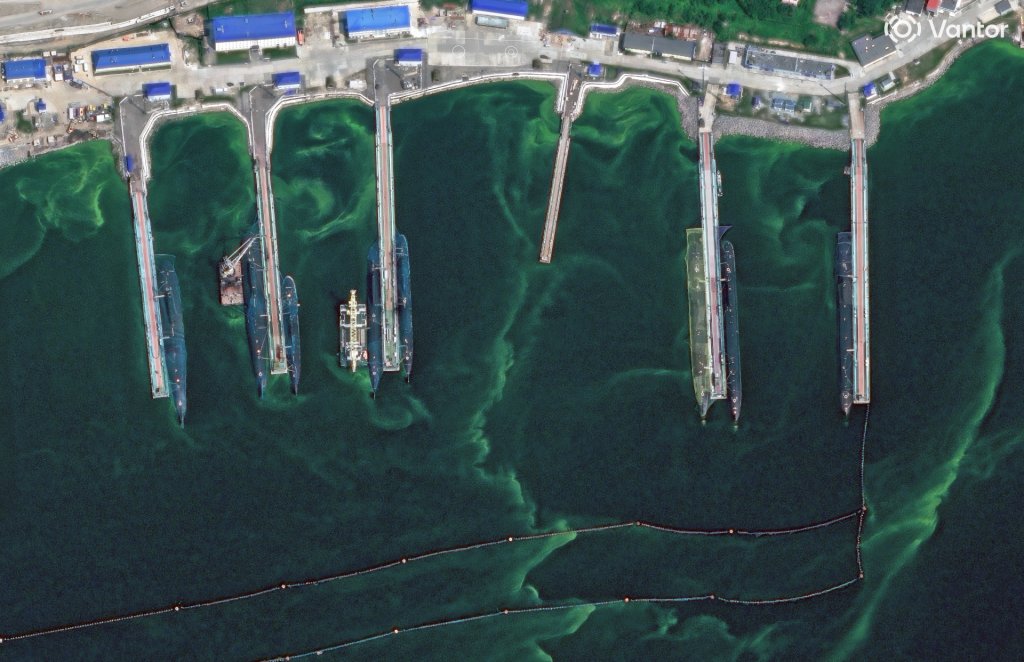
Recent satellite imagery indicates that the Russian Navy is placing nets over submarines at a major base on the Kamchatka Peninsula, a move that points to growing concern about uncrewed threats to some of its most sensitive military assets. According to the reported imagery, several submarines at Rybachiy, a strategically important Pacific Fleet base, were fully covered by netting by early August.
The development is significant because Rybachiy is described as the homeport for most of Russia’s Borei and Borei-A class nuclear ballistic missile submarines. Those boats form a core part of Russia’s sea-based nuclear deterrent. The base also hosts other guided-missile and attack submarines. If Russia is now physically shielding those vessels at berth with anti-drone netting, that would mark a notable extension of defensive measures beyond the immediate combat zone associated with the war in Ukraine.
What the imagery reportedly shows
The source text says imagery from August 4, 2026, showed several different submarine types covered by nets at Rybachiy. It also says what is visible is broadly consistent with netting Russia has used in and around Ukraine as a countermeasure against kamikaze drone attacks on assets on land and in the water. Similar netting, the report notes, has also been seen in use by other armed forces elsewhere.
The same reporting says additional imagery suggests Russian forces may have started using the nets at Rybachiy as early as May. In those images, crane barges were visible and appeared to be assisting with the installation of the overhead barriers around submarines moored at the piers. That detail matters because it implies a deliberate engineering effort rather than a temporary field improvisation. Covering large submarines at dock requires more than simply draping fabric or mesh over a hull; it demands support structures, access planning, and procedures that still allow maintenance and security operations to continue.
Why strategic submarines are now in the drone equation
The core military implication is straightforward: Russia appears to be treating drone threats as relevant even to fixed infrastructure housing nuclear-capable submarines in geographically distant locations. Kamchatka is far from the direct front lines of the Ukraine war, yet the reported protections suggest Russian planners may no longer assume distance alone is an adequate shield.
That does not necessarily mean an attack on those submarines is imminent or that the nets can defeat every threat. The source text supports a narrower conclusion: Russian concerns about drone attacks have expanded to critical facilities far removed from active battlefields. In other words, the psychological and operational footprint of uncrewed warfare is growing. Systems once viewed as rear-area assets may now be treated as exposed nodes requiring visible physical protection.
That shift reflects a broader pattern in modern conflict. Cheap or improvised drones can force expensive militaries to rework assumptions about sanctuary, hardening, and asset concentration. A submarine in port is less protected than one deployed at sea, and naval bases can present dense target sets: moored vessels, fuel systems, maintenance infrastructure, air defenses, and command facilities in relatively fixed positions.
Nets are a simple answer to a complicated problem
Netting is not a glamorous response, but it fits the current logic of counter-drone defense. Small one-way attack drones and other uncrewed systems can be difficult to detect consistently and expensive to defeat with traditional missiles or gun systems. Physical barriers offer a low-tech, scalable layer of defense that can complicate an attacker’s flight path, trigger premature detonation, or force operators to attempt less accurate strikes.
The source material specifically compares the submarine coverings to netting previously employed by Russian forces in and around Ukraine. That continuity suggests Russia sees value in transferring battlefield adaptations to strategic basing. The same basic concept can be repurposed across environments: protect valuable static assets by adding a passive obstacle that remains in place even when electronic warfare, sensors, or active defenses are strained.
Such measures can also have signaling value. Overhead nets telegraph that commanders believe the threat is credible enough to justify visible changes at major installations. Even if the protection is imperfect, it may alter attacker planning and demonstrate to domestic and foreign observers that vulnerabilities are being addressed.
The wider basing picture
The report also says there are signs of additional protective steps at a separate Russian base along the Black Sea aimed at shielding submarines from uncrewed aerial threats. That matters because it suggests the Kamchatka case may not be isolated. Instead, Russia could be standardizing protective measures across different fleets and theaters, adapting local defenses to the growing reach of drones.
If that is the case, the story is not just about one set of images from one base. It is about how naval infrastructure is changing under the pressure of uncrewed systems. Strategic assets that were once defended primarily through distance, secrecy, layered perimeter security, and conventional air defense may now require visible physical countermeasures as well.
What can and cannot be concluded
The available source text supports several points clearly. First, imagery reportedly shows multiple submarines under nets at Rybachiy on August 4. Second, Rybachiy is a highly strategic base associated with Russia’s Borei and Borei-A ballistic missile submarines. Third, the observed netting is broadly consistent with anti-drone practices Russia has used elsewhere. Fourth, the move indicates concern about uncrewed threats extending beyond Ukraine’s immediate battlespace.
There are also limits. The source text does not establish whether the nets have already been tested against a real attack at those locations. It does not quantify effectiveness, and it does not prove precisely which drone profiles the barriers are intended to defeat. It also does not demonstrate that the threat is solely maritime or aerial in origin, only that the measures are understood in the context of expanding uncrewed threats.
What this says about modern naval vulnerability
The broader lesson is that even the most consequential military platforms can be drawn into the economics of drone defense. A ballistic missile submarine represents enormous strategic value, but when it is tied up at a pier, part of its protection may now come from something as basic as netting. That contrast captures one of the defining features of current warfare: high-end deterrent systems increasingly coexist with low-cost threats that reshape everyday defensive practice.
For Russia, the apparent decision to net submarines at Rybachiy suggests that safeguarding strategic forces now includes adapting to persistent, asymmetric pressure from unmanned systems. For outside observers, it is another sign that drone warfare is not only changing battlefields. It is changing what military powers think must be protected, where they think it must be protected, and how visibly they are willing to protect it.
This article is based on reporting by twz.com. Read the original article.
Originally published on twz.com