The Air Force is sketching out a very different air combat envelope
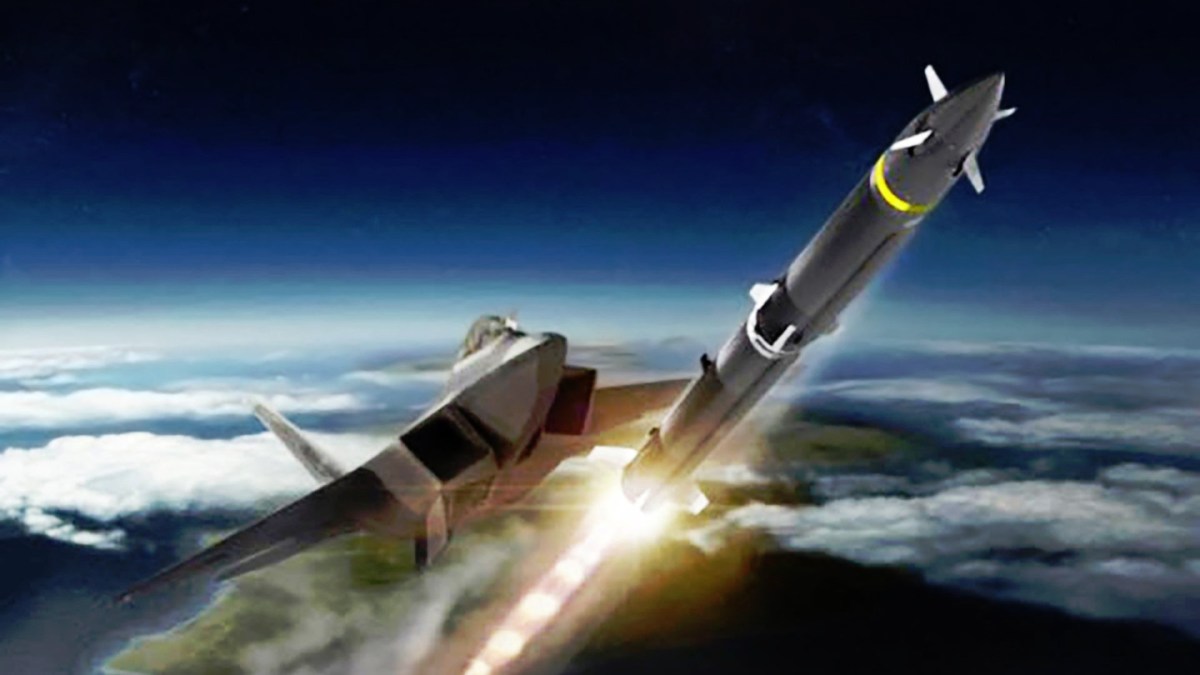
The U.S. Air Force has signaled that it wants an air-to-air missile with a threshold minimum range of 1,000 nautical miles, according to a new industry-day notice reported by The War Zone. If that requirement survives into a formal program, it would represent a dramatic expansion over the reach associated with current versions of the AIM-120 AMRAAM and point to a broader shift in how the service wants to fight in heavily defended theaters.
The effort is tied to what the Air Force is calling the Air Force Long Range Weapon, or AFLRW. The service is preparing to hold a classified two-day meeting with defense contractors on August 25 and 26 at Eglin Air Force Base’s Guided Weapons Evaluation Facility in Florida. Attendance requires appropriate security clearances, a sign that the most consequential details of the requirement set and intended operating concepts will remain behind closed doors.
Even from the unclassified notice, however, the direction is clear. The Air Force is not simply asking for an incremental improvement to existing missile families. It is laying out the basis for a standoff weapon that could reach far beyond the current air-to-air engagement model and support both air-to-air and air-to-surface missions.
A weapon aimed at high-value targets deep in the rear
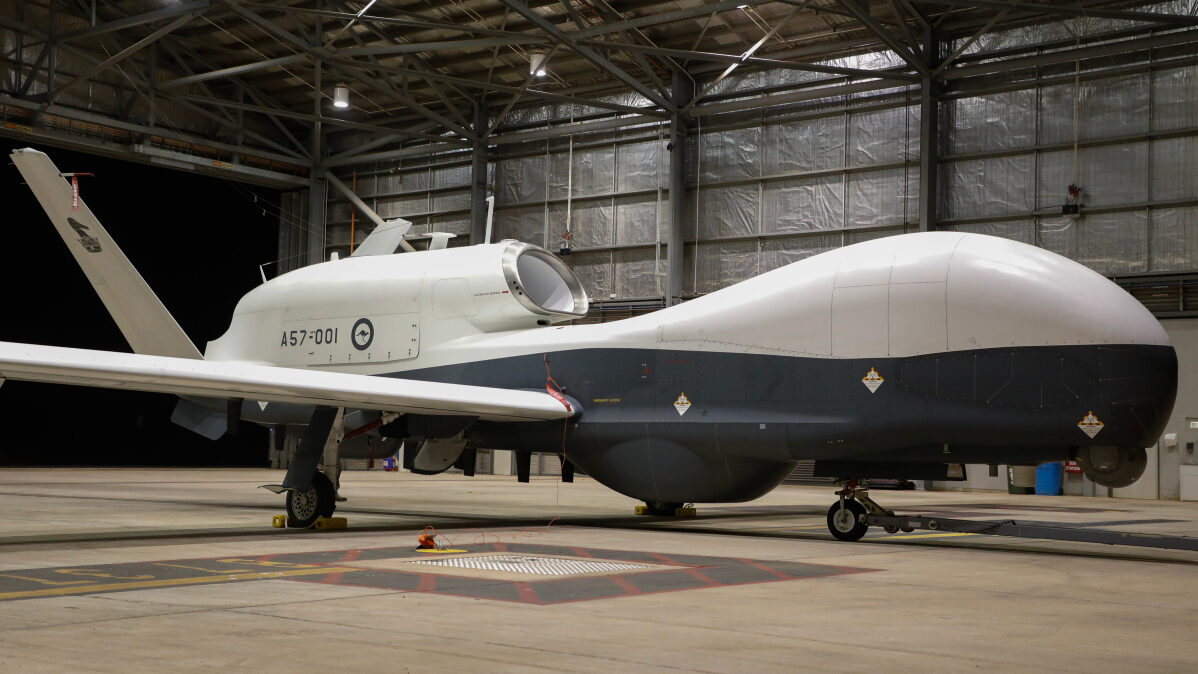
The rationale for such range is straightforward. An air-to-air missile capable of traveling 1,000 nautical miles would be especially relevant for attacks on high-value airborne assets that typically operate well behind the front line. That includes airborne early warning and control aircraft, tankers, and other support platforms that enable long-range sensing, command and control, and sustained fighter operations.
Those aircraft are among the most valuable pieces of any modern air campaign. They extend the reach of combat aircraft, coordinate battlespace awareness, and make it easier to keep forces on station for long periods. Pushing adversary support aircraft farther back, or threatening them at ranges once considered relatively safe, can reshape an entire theater’s air picture without first requiring close-in air superiority.
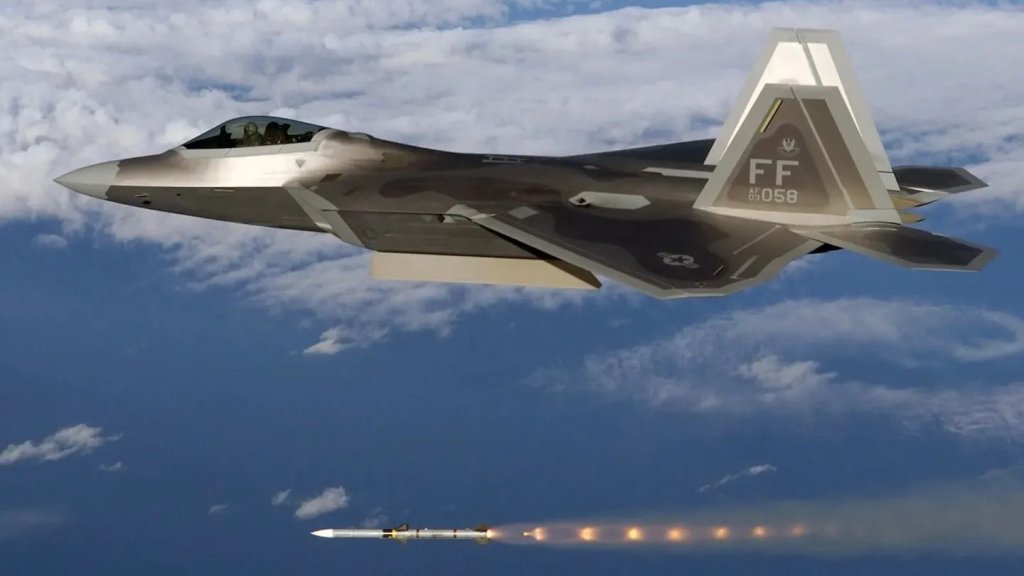
The notice says both the air-to-air and air-to-surface versions of AFLRW would need a threshold minimum range of 1,000 nautical miles and would have to strike their respective targets in what the document describes as Defense Planning Scenario 2.1 and 7.1 environments in a responsive manner. The public notice does not explain those scenarios, but the inclusion suggests the weapon is being framed against demanding operational cases rather than a generic range benchmark.
Beyond a single missile, the program hints at a wider kill-web concept
The War Zone characterizes the planned missile as part of a broader “kill web” approach, and that framing matches the implications of the requirement. At extreme distances, the hardest problem is not merely propulsion. It is finding, identifying, tracking, updating, and handing off targets across a distributed network of sensors and shooters. A missile with such reach would likely depend on a complex chain that could include aircraft, satellites, offboard sensors, and secure communications links.
That matters because a 1,000-nautical-mile weapon is useful only if it can be cued accurately enough and kept informed during flight. The Air Force’s language around next-generation standoff weapons suggests that the missile is being considered not as a standalone projectile, but as a component inside a larger operational architecture. In practice, that means a missile program could end up driving new demands for data fusion, targeting resilience, and modular mission systems as much as it drives advances in aerodynamics or propulsion.
The Air Force also appears to be leaving room for multiple suppliers. According to the notice, AFLRW may select multiple vendors for both air-to-air and air-to-surface variants, with particular focus on air-to-air solutions for initial operational capability. That phrasing indicates the service is preserving competitive space while prioritizing the airborne threat set first.
Modularity is a notable part of the requirement
The solicitation places emphasis on modular components, an increasingly familiar theme in defense procurement. For a weapon expected to serve multiple mission areas and remain relevant over time, modularity can reduce upgrade friction. It can also make it easier to adapt the missile to different seekers, datalinks, propulsion choices, or payload configurations as operational demands evolve.
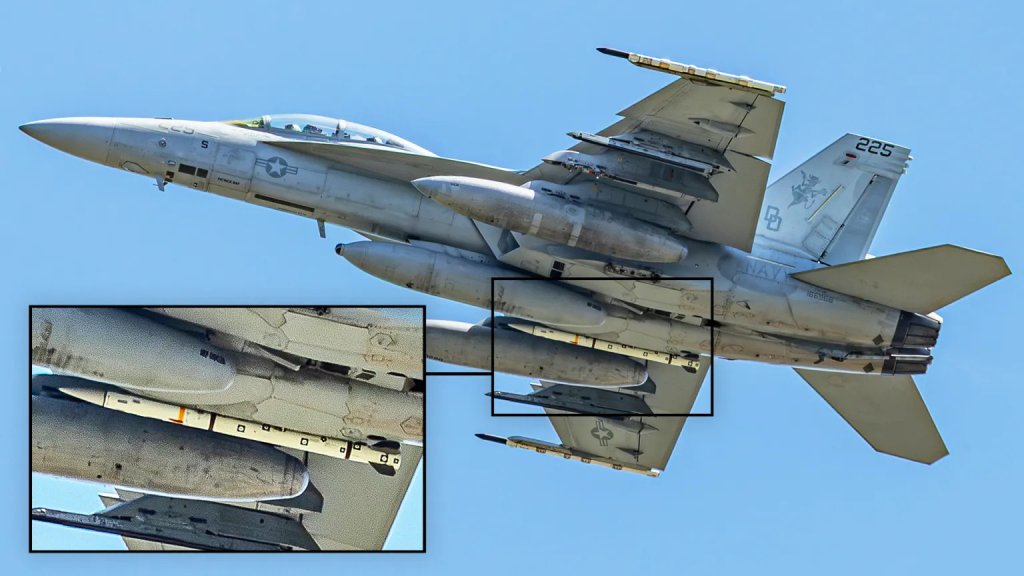
That is especially significant for a program at this scale of ambition. A weapon designed to engage aircraft or surface targets at very long distances will almost certainly face changing assumptions over its development life, from threat behavior to electronic warfare conditions. Building in modularity early is one way to lower the risk that the program becomes overly rigid before it reaches service.
The fact that the Air Force is already interested in both air-to-air and air-to-surface variants reinforces that logic. Shared components or adaptable architecture could allow the service to spread investment across multiple mission sets while preserving at least some common development pathway.
What the notice does and does not tell us
The public information remains limited. The Air Force has not released technical details on propulsion, seeker type, speed, launch platforms, or expected concept of employment. It also has not explained how it intends to balance cost, survivability, target-update needs, and command-and-control dependencies in a contested environment. Those omissions are unsurprising given the classified nature of the upcoming event.
Still, the headline requirement alone is enough to show the scale of the ambition. The Air Force is clearly thinking beyond current medium-range air combat and toward engagements that reach deep into the adversary’s support structure. That aligns with long-running concerns about highly contested regions where tanker tracks, surveillance aircraft, and command nodes could all be pushed farther from the fight unless they are protected by much larger standoff bubbles.
If the effort progresses, AFLRW could become one of the clearest signs yet that future air superiority will depend not only on fighter performance, but on who can most effectively hold the other side’s enabling aircraft at risk from extraordinary distance. The missile itself may be the centerpiece of the announcement, but the more important message is strategic: the Air Force wants to expand where an air battle can begin, and which assets count as vulnerable from the opening stages of a conflict.
This article is based on reporting by twz.com. Read the original article.
Originally published on twz.com