Ukraine says North Korea could expand its missile role in Russia’s war
Ukraine’s military intelligence is warning that North Korea may be preparing a more direct ballistic missile deployment in support of Russia, a development that would deepen an already troubling military relationship between Moscow and Pyongyang. The claim, reported Aug. 5, comes as Ukraine says its ability to stop ballistic missile attacks is deteriorating, with deadly consequences for civilians.
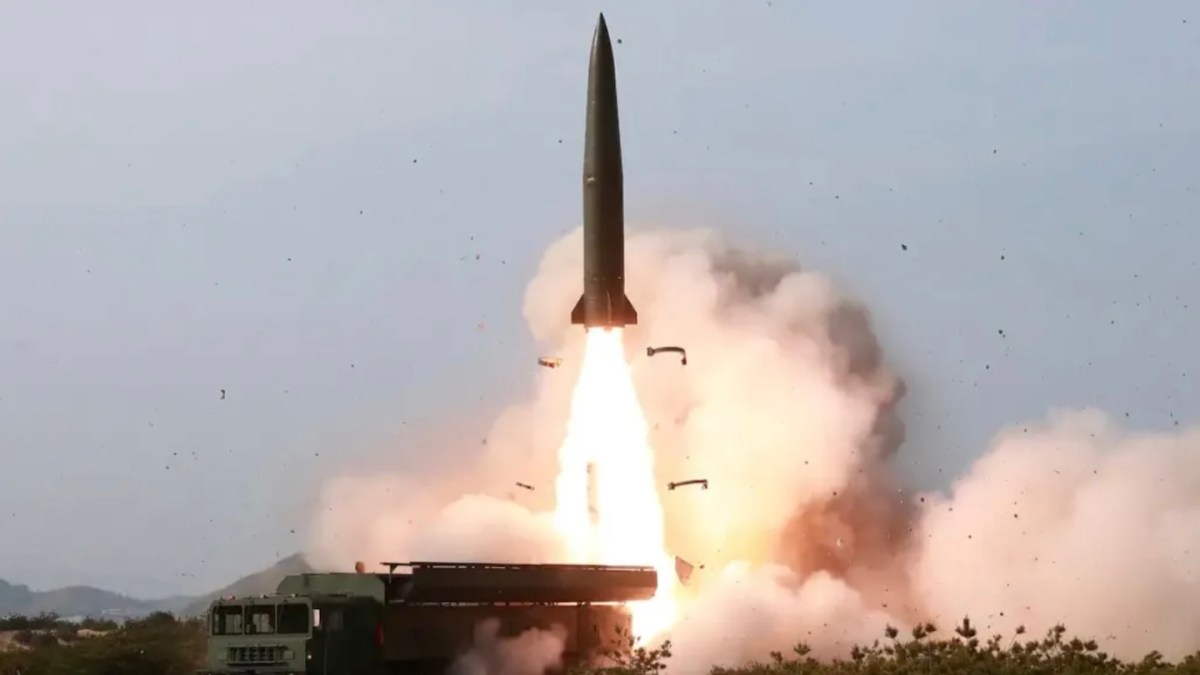
According to Andrii Cherniak of Ukraine’s Main Directorate of Intelligence, or GUR, the planned deployment could involve about 90 North Korean personnel in Russia’s Voronezh region, near the Ukrainian border, working alongside Russia’s 112th Guards Missile Brigade. Ukrainian intelligence assesses that the unit could eventually include six launchers and up to 120 KN-23 and KN-24 short-range ballistic missiles, although Cherniak said the final composition is expected to be set during senior-level talks next month.
That assessment has not been independently verified. The caution is important, because intelligence disclosures during wartime can serve both warning and messaging purposes. Even so, the report fits a broader pattern already visible in the war: Russia has increasingly leaned on outside military support, and North Korea has already been accused of providing ammunition, troops, and smaller numbers of ballistic missiles.
If the new deployment is confirmed, it would represent more than another transfer of hardware. It would suggest operational integration, with North Korean personnel present inside Russia and tied directly to a Russian missile brigade near the theater of war. That would mark a meaningful escalation in the practical depth of the partnership.
Why the timing matters
The warning lands at a particularly dangerous moment for Ukraine. The country’s air force said Russia launched a major overnight attack combining drones and ballistic missiles. Preliminary figures cited in the report said Ukrainian defenses downed 98 of 115 drones, but failed to intercept any of the ballistic missiles.
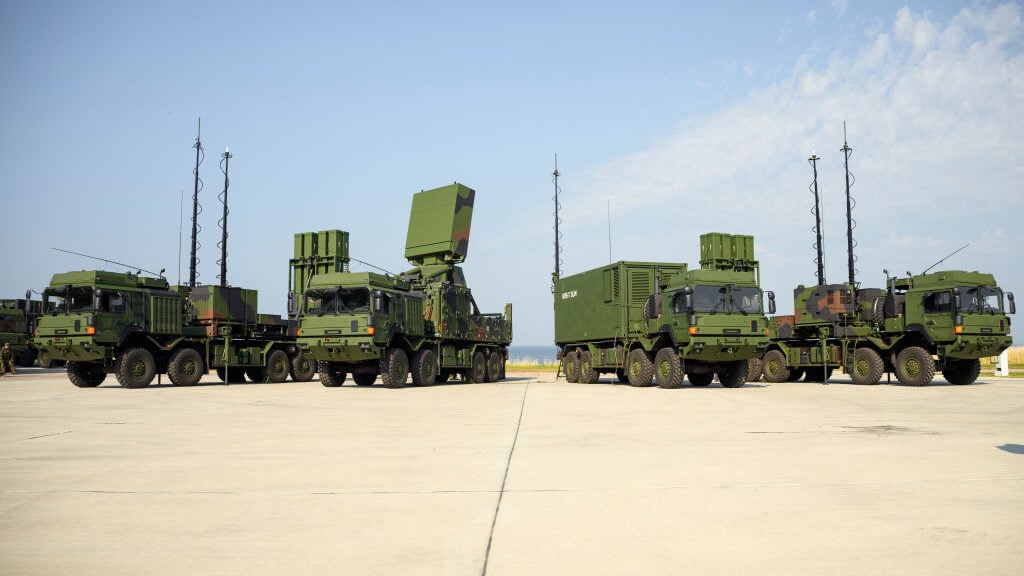
That gap says as much about inventory as about difficulty. Ballistic missiles are harder to stop than drones, and Ukraine’s defenses against them depend heavily on advanced interceptors such as those used by the Patriot system. The report points to an exhaustion of Patriot interceptor stockpiles as one reason Kyiv is becoming increasingly vulnerable to these strikes.

The consequences are immediate. Overnight attacks on Kyiv and the surrounding region involved more than two dozen ballistic missiles, according to the report, killing at least 17 people and injuring dozens. In practical terms, that means a potential increase in Russian access to short-range ballistic missiles would hit Ukraine at a time when it is less able to absorb or defeat them.
This combination of supply expansion on one side and interception shortfalls on the other is what makes the intelligence warning especially consequential. On their own, reports of new missile deliveries are serious. Paired with evidence that existing defenses are under strain, they become more than a procurement story. They point to a possible shift in the balance of immediate strike pressure on Ukrainian cities and infrastructure.
The missiles at issue
The systems named in the Ukrainian assessment, the KN-23 and KN-24, are North Korean short-range ballistic missiles. In the context of the war, their significance lies in the pressure they can place on air defenses and the speed with which they can be used in attacks against populated areas and military targets.
Even limited quantities matter. Ballistic missiles do not need to arrive in overwhelming numbers to change operational choices, especially if defenders are already rationing scarce interceptors. A larger pool of available missiles can force Ukraine to spread its defenses thinner, prioritize some targets over others, and accept greater risk in areas that are not covered.
The possible deployment to Voronezh also matters geographically. The region borders Ukraine, making it a relevant staging area for rapid employment of short-range systems. If a North Korean-linked unit were stationed there, it would place foreign-supplied missile capability in closer operational proximity to the conflict.
None of this proves that a decisive battlefield shift is imminent. But it does reinforce a pattern that has become increasingly clear over the course of the war: Russia’s strike campaign is being sustained not only by domestic production and adaptation, but also by external military relationships that complicate efforts to contain the conflict.

A broader strategic signal
Beyond the immediate military effect, the report highlights how the Russia-North Korea relationship appears to be evolving. Early concerns focused on transfers of shells and rockets. The current warning centers on missile systems and personnel, which implies a higher level of trust, coordination, and shared risk.
That matters diplomatically as well as militarily. A more visible North Korean role in Russia’s war would further internationalize the conflict and sharpen questions about sanctions enforcement, regional deterrence, and how other countries respond to growing military exchanges among heavily sanctioned states.
For Ukraine, however, the first-order issue is simpler and harsher: survival under bombardment. The report’s most sobering detail is not just the possible arrival of more missiles, but the evidence that ballistic missile interceptions are becoming harder to sustain. When a defense network can still clear most drones from the sky but not a single ballistic missile in a major salvo, the vulnerability is no longer abstract.
What to watch next
The next milestone will be whether other governments or intelligence services corroborate Ukraine’s assessment. Independent confirmation would strengthen the case that North Korea is moving from supplier to more direct operational partner in Russia’s missile war. Another important indicator will be whether attack patterns change in the coming weeks, including any increase in the use of KN-23 or KN-24-type systems or new evidence of launches linked to western Russia.
The issue of interceptor availability will also remain central. If Ukraine’s Patriot-related shortages persist, then even a modest expansion in Russia’s ballistic missile access could have outsize effects on civilian safety. Conversely, any rapid replenishment of defensive stocks would blunt the operational advantage such a deployment might provide.
For now, the key fact is that Ukraine has issued a specific and unusually detailed warning at a moment of acute missile-defense stress. The intelligence remains unverified, but the scenario it describes is plausible, strategically significant, and aligned with a broader wartime trend: Russia is finding outside channels to sustain and intensify its strike campaign, while Ukraine’s most demanding layer of air defense is under mounting pressure.
Key points
- Ukraine’s GUR says North Korea may deploy personnel, launchers and up to 120 short-range ballistic missiles to Russia’s Voronezh region.
- The assessment has not been independently verified.
- The warning comes as Ukraine says it failed to intercept any ballistic missiles in a major overnight attack.
- Any increase in Russian access to such missiles would matter more because Ukraine’s interceptor stocks appear strained.
This article is based on reporting by twz.com. Read the original article.
Originally published on twz.com