Air Force chief says recent conflicts are reshaping priorities
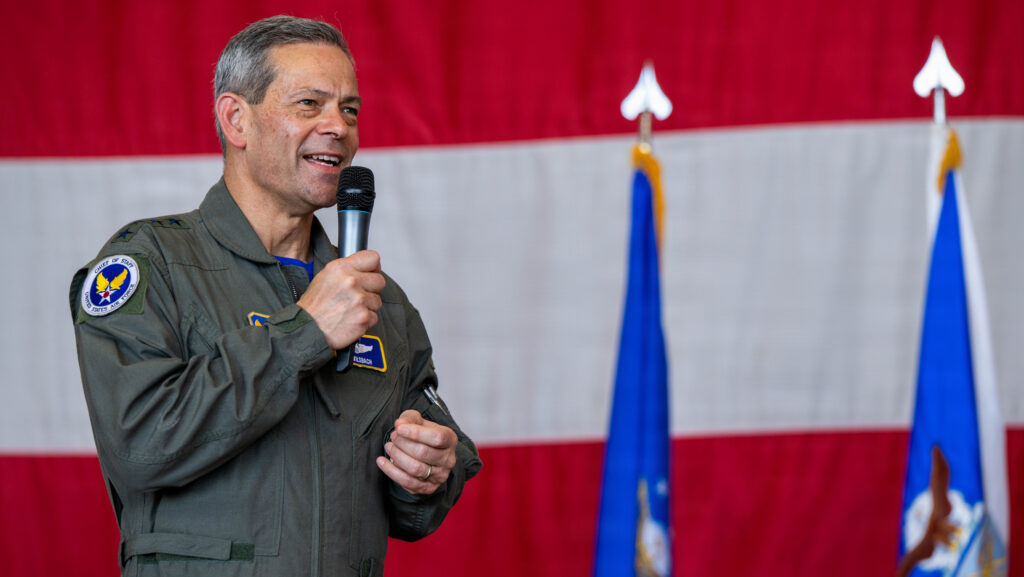
U.S. Air Force Chief of Staff Gen. Kenneth Wilsbach says recent combat lessons, including those drawn from fighting involving Iran as well as observations from Russia’s war in Ukraine, are pushing the service to rethink how it protects aircraft and air bases. In an interview cited by the source material, Wilsbach described base survivability and point defense as urgent concerns at a time when drones, cruise missiles, and ballistic missiles are making fixed installations more vulnerable.
The comments come during an unusually active period for Air Force leadership. The source text notes that Wilsbach took the top uniformed Air Force role less than a year ago and has already had to navigate force-structure reversals, a major proposed Pentagon budget, renewed fighting tied to a collapsed ceasefire with Tehran, and ongoing acquisition problems in multiple high-profile aircraft programs.
Those overlapping pressures help explain why the interview ranged from lessons out of the Iran conflict to the T-7 Red Hawk training jet and delays affecting the F-35 program. Put together, the issues show a service trying to adapt at once to new operational threats and old procurement frustrations.
Drone and missile threats are forcing a rethink of airfield security
The most immediate takeaway from Wilsbach’s remarks is that the Air Force sees air base defense as an area that now needs much more focused expertise. The source text quotes him saying the service plans to create a new career field for point defense after senior leaders reviewed the growing danger posed by one-way attack drones, other unmanned systems, cruise missiles, ballistic missiles, and even smaller low-cost aerial threats.
That is a notable institutional response. Instead of treating base defense as a secondary duty spread across existing specialties, the Air Force appears to be moving toward a dedicated professional track built around defending installations from layered attack. Wilsbach’s framing suggests the service believes recent conflict has exposed a real capability gap.
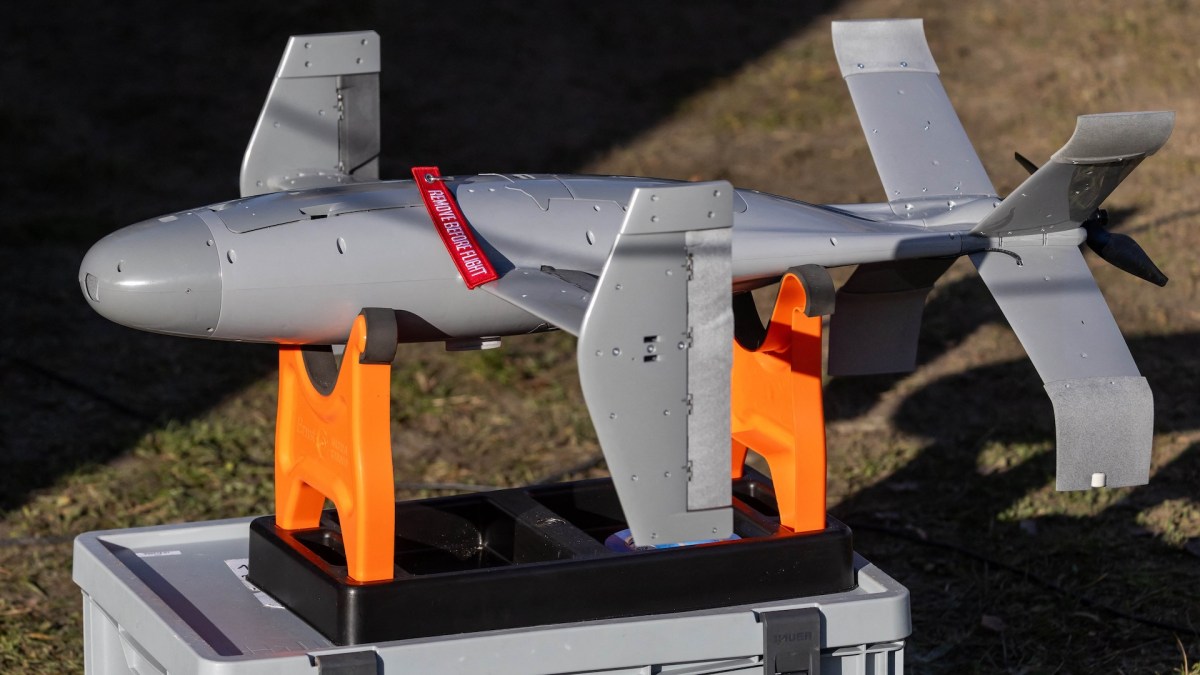
He connected that concern directly to what militaries have observed in Ukraine, where cheap drones and loitering munitions have repeatedly challenged traditional assumptions about rear-area safety. He also tied it to Iran’s use of one-way attack drones. The lesson is straightforward: aircraft parked on the ground, including expensive tactical jets and future autonomous systems, can be destroyed without an adversary first winning traditional air superiority.
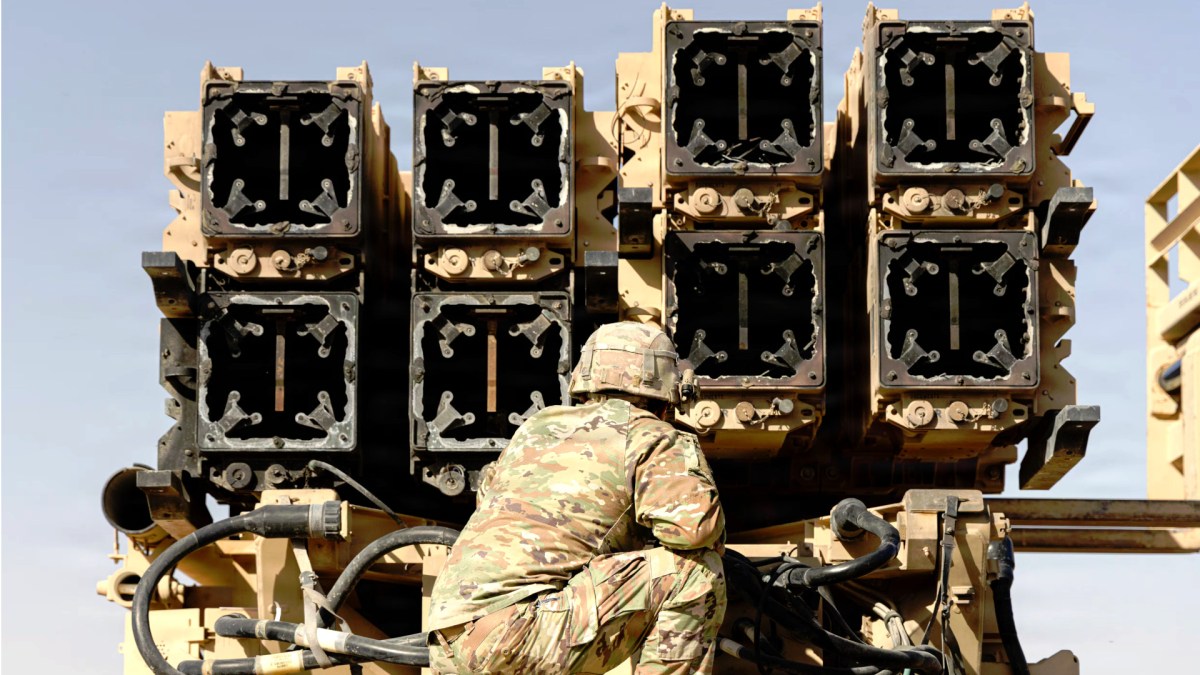
That has implications for force design, basing, and daily operations. Hardening shelters, dispersing aircraft, improving detection, and fielding defensive systems become more than infrastructure questions. They become readiness questions. If runways, fuel points, maintenance areas, and parked aircraft remain exposed, even advanced fleets can be neutralized before they generate combat power.
Concern extends to both crewed and uncrewed aircraft
The interview was prompted in part by congressional concern over the survivability of Collaborative Combat Aircraft, the autonomous or semi-autonomous drones the Air Force sees as a future companion to crewed fighters. Wilsbach’s answer, as reflected in the source text, made clear that he is not limiting the problem to drones. He said he is concerned about the survivability of both CCA systems and manned aircraft in these environments.
That matters because it places a common protection challenge across the future force rather than isolating it to one experimental program. Whether the aircraft is a lower-cost drone or a high-value fighter, the vulnerability on the ground can still be decisive. In that sense, survivability is not just about the platform’s performance in the air. It is also about whether the Air Force can keep enough assets intact and operational at the base level.
The implication is that the service may need to invest as seriously in passive and active defense around its installations as it does in next-generation aircraft themselves. A more distributed and defended basing model could become a prerequisite for making future airpower concepts credible in a conflict against a capable adversary.
T-7 and F-35 problems remain part of the picture
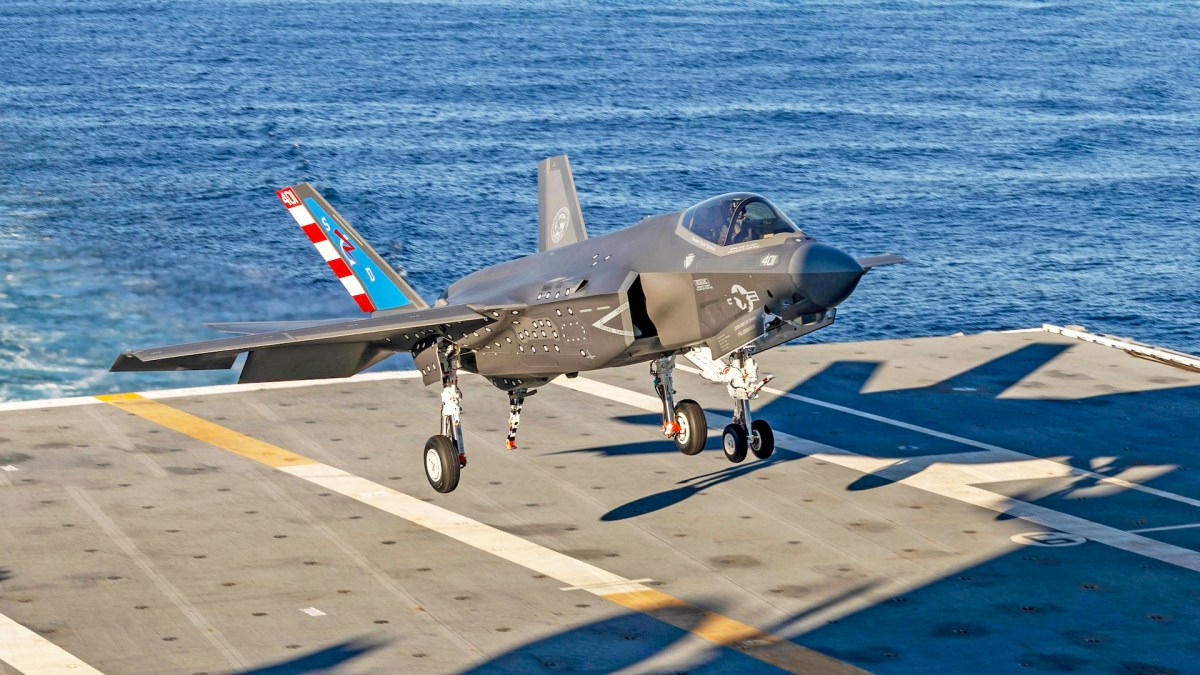
Beyond operational lessons from recent wars, Wilsbach also addressed two major acquisition concerns: the Boeing-built T-7 Red Hawk trainer and ongoing F-35 delays. The source material notes that the interview followed a reporting series describing previously unreported issues affecting the T-7 program. It also references problems in the F-35 fleet, where upgrade difficulties have reportedly left some aircraft non-combat capable and resulted in deliveries without new radars.
Even without a full technical accounting in the source text, the significance is clear. The Air Force is simultaneously trying to modernize pilot training, field advanced fighters, and prepare for emerging base-defense threats. Delays or capability gaps in any one of those areas put extra strain on the others.
The T-7 is particularly important because it underpins the training pipeline for future aviators. Problems there do not remain confined to one procurement program; they can cascade into readiness and force-generation timelines. The F-35 issues are similarly consequential because the aircraft is central to U.S. and allied tactical airpower planning. If upgrades slip or fielded jets lag desired capability, the operational consequences extend well beyond budget or schedule charts.
An Air Force balancing modernization with immediate vulnerability
What emerges from Wilsbach’s interview is an Air Force confronting two different clocks at the same time. One clock is strategic and long term: build the future force, integrate collaborative aircraft, modernize training, and keep advanced fighter programs on track. The other is immediate: protect bases and aircraft against threats that are already proving effective in active conflicts.
That second clock may now be moving faster. Wilsbach’s emphasis on point defense and airfield protection suggests the service believes the threat has matured to the point where institutional change can no longer wait for ideal procurement timelines. The Air Force may still pursue exquisite platforms, but recent combat experience is underscoring a simpler truth: even the most advanced aircraft are vulnerable if they cannot survive on the ground.
For Congress and Pentagon planners, that means survivability investments may need to be evaluated alongside aircraft procurement, not after it. For the Air Force, it means adaptation is no longer only about buying the next system. It is also about defending the bases from which every system must operate.
This article is based on reporting by Breaking Defense. Read the original article.
Originally published on breakingdefense.com