Battery swapping gets a practical pitch for heavy trucks
Electric trucking has no shortage of technical paths, but one of the hardest questions remains economic: how do fleet operators electrify long-haul vehicles without waiting for perfect charging infrastructure or replacing usable trucks all at once? The supplied source text highlights an Australian answer from Janus Electric, a company betting that conversion, battery swapping, and battery-as-a-service can lower the cost and friction of the transition.
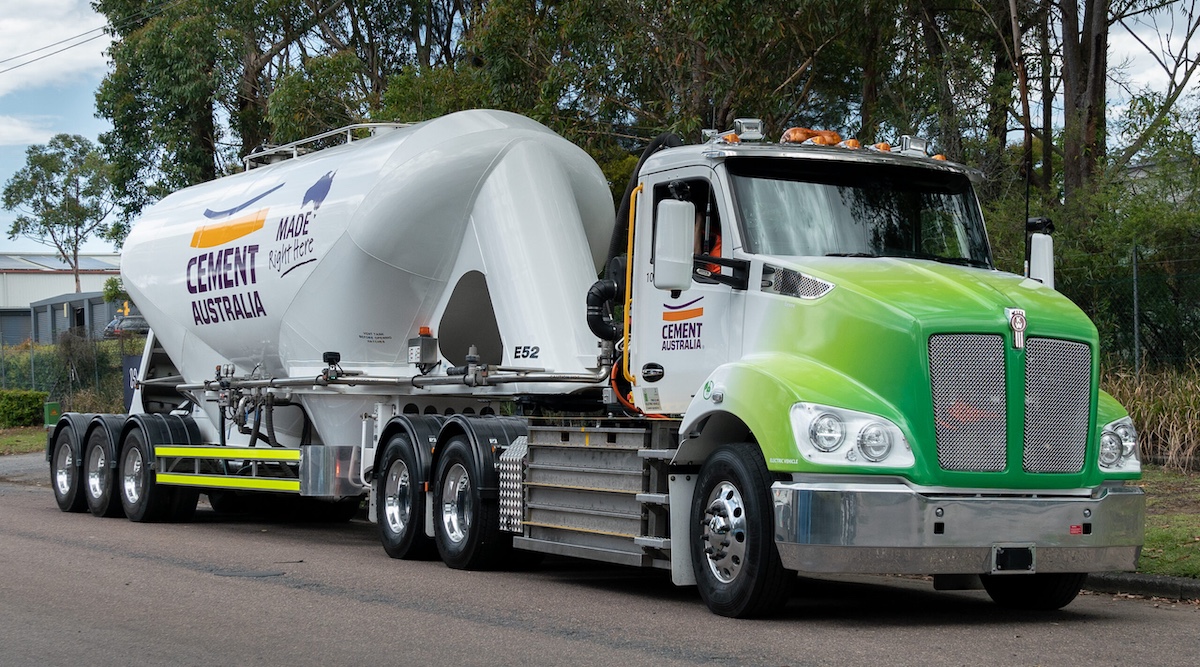
Rather than building only new electric trucks from the factory, Janus has developed a method for converting overhaul-ready five-year-old diesel trucks to electric propulsion. That approach is aimed at fleet owners who want to extend the life of existing assets while beginning a gradual shift away from diesel. In the source text, Janus says converting a diesel truck to electric is about a quarter of the cost of manufacturing a new electric truck.
If that cost comparison holds at scale, it would mark a meaningful challenge to the assumption that fleet electrification must begin with entirely new vehicles. For operators managing large numbers of aging semis, the ability to repower a truck instead of scrapping it could change the capital planning equation.
Why Janus combines conversion with swapping
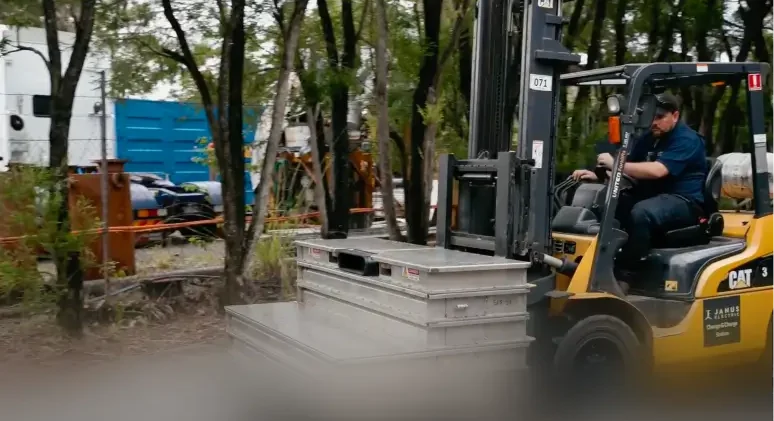
The company’s model depends on more than conversion. It also uses swappable battery packs supported by a battery-as-a-service, or BaaS, structure. In the source text, CleanTechnica describes this as a way to reduce up-front vehicle cost and shift battery ownership, monitoring, and lifecycle management to the supplier.
That matters because batteries are one of the most expensive components in any electric heavy vehicle. Under Janus’s model, the fleet operator does not have to own and manage every pack over its full life. Instead, the supplier provides the batteries, monitors pack health, removes aging packs from service, and sells them into second-use markets when appropriate. The operator receives what the source describes as a known, good battery pack.

This setup is meant to solve two common concerns at once. First, it lowers the purchase burden associated with electrification. Second, it reduces uncertainty around battery degradation, which can be especially important for operators making route and uptime commitments. If the battery becomes a service layer rather than a permanently embedded asset, the life of the truck is no longer tied as tightly to the life of a specific pack.

Swap time, grid demand, and route design
Janus is also making the case that swapping can sidestep some of the biggest infrastructure headaches facing heavy-duty charging. The source text says a Janus battery swap takes about four minutes, putting it much closer to a conventional refueling stop than a long charging session. For freight operations, turnaround time is not a minor convenience. It is central to route efficiency, driver scheduling, and vehicle utilization.
The infrastructure argument may be even more important. According to the supplied text, Janus swap charging uses 300 amps at 240 volts and does not require a grid upgrade. That claim goes directly at one of the toughest barriers to truck electrification: the cost and delay of reinforcing local power infrastructure for high-capacity charging depots.
The article frames slow-charged swap packs as a way to shift charging away from the immediate, high-power demands of fixed-battery electric trucks. Instead of rapidly charging a very large onboard pack, operators can recharge swap packs more gradually and then exchange them in service. In theory, that reduces peak electrical demand at the moment the truck needs energy and can make site planning simpler.
The model also changes battery sizing. The source text gives a 500-mile route example, arguing that a truck using swaps could run with a 250-mile pack and exchange it, rather than hauling a much larger pack sized for the full route. That would reduce battery weight, which matters in freight because payload and efficiency both suffer when the battery becomes too large.
Extending truck life instead of scrapping it
One of the stronger ideas in the source text is that the electric powertrain can alter the retirement logic for heavy trucks. Diesel semis often reach the end of their practical life when the engine does, because the engine is such a large share of the vehicle’s cost and maintenance burden. By contrast, the source argues that electric motors can have very long service lives if they are properly designed and used.
That creates a different asset picture. A converted truck with an electric motor and access to service-managed swap batteries could remain productive longer than its diesel predecessor would have. Combined with BaaS, the vehicle would not age out just because its original battery pack degraded. The battery can be replaced through the service model, while the truck remains in operation.
For fleet owners, that is a more incremental and potentially less risky path than a full fleet replacement cycle. It also aligns with how transport operators often make decisions in practice: not by adopting a perfect technology all at once, but by finding a route that works with current vehicles, current depots, and current margins.

A distinct path in a crowded electric truck market
The supplied text places Janus within a wider global battery-swap push, including recent attention on CATL-linked truck swap infrastructure in Europe. What distinguishes Janus in that comparison is not simply that it uses swapping, but that it pairs swapping with retrofits of existing diesel trucks. That is a more utilitarian strategy than building a premium new electric platform from scratch.
It also reflects a specific view of market adoption. Janus appears to assume that the transition to electric freight will be constrained by capital cost, infrastructure lead times, and operator caution more than by theoretical vehicle performance. If that assumption is correct, then retrofits and swap services may win business precisely because they are less disruptive than a clean-sheet replacement.
The source does not present independent operational data beyond the claims summarized in the article, so the model still needs to prove itself across larger fleets and broader use cases. But the significance of the story is clear even at this stage. Janus is offering a template for truck electrification built around reuse, service-based batteries, and lower infrastructure strain. In a sector where deployment speed often depends on practical constraints more than technical elegance, that combination could make battery swapping more than a niche experiment.
This article is based on reporting by CleanTechnica. Read the original article.
Originally published on cleantechnica.com