Plentify and Deye target a new phase for South Africa’s home energy market
South African energy technology company Plentify has partnered with Deye in a bid to build what is described as Africa’s largest residential virtual power plant, a development that could shift the role of home solar systems from backup assets into coordinated grid resources.
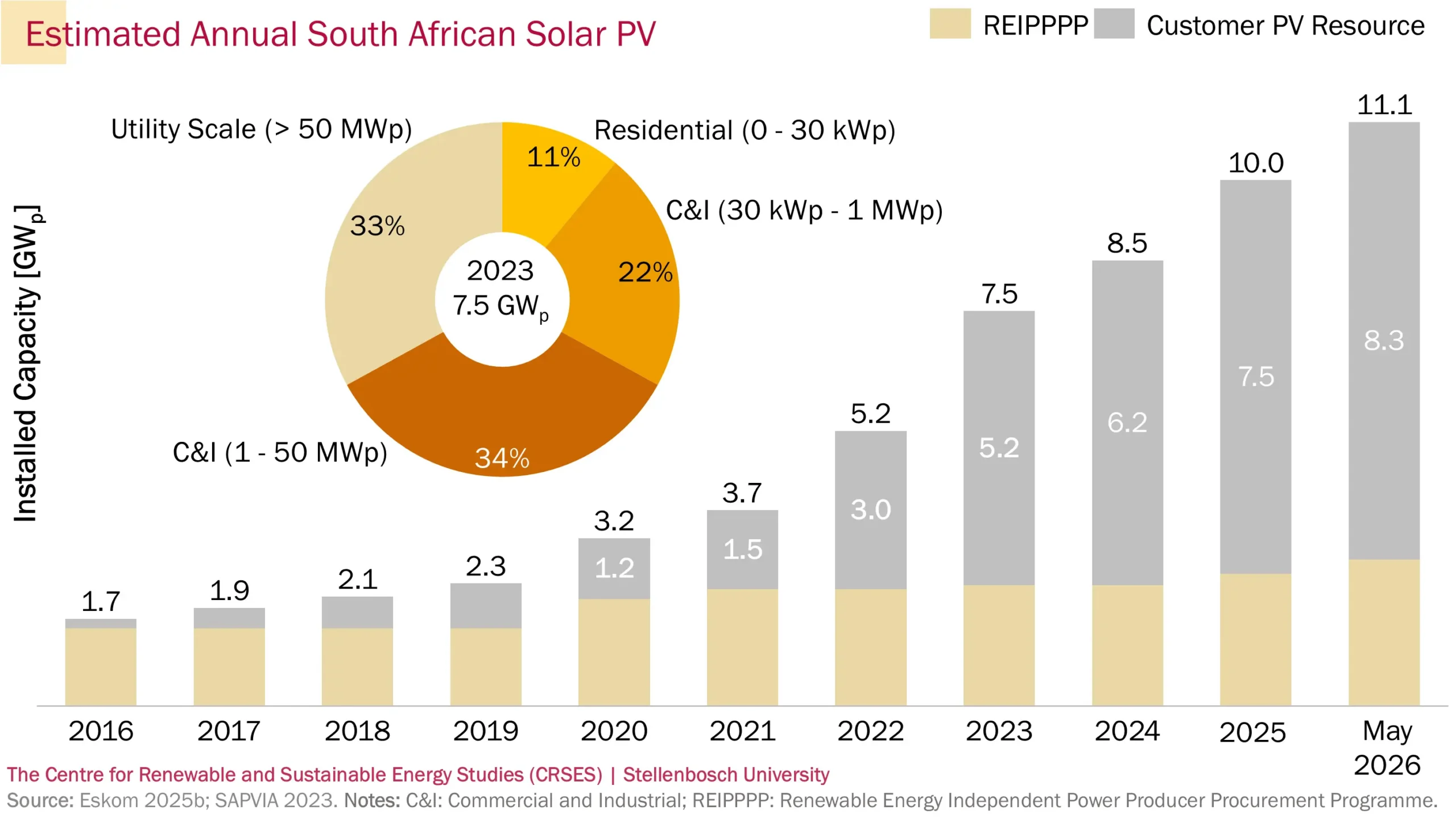
The significance of the announcement rests on timing as much as scale. South Africa’s residential and commercial solar market accelerated rapidly during years of electricity shortages and load shedding, as homes and businesses installed rooftop solar and battery systems to protect themselves from grid instability. According to the source material, that wave of adoption has already produced more than 8.3 gigawatts of solar photovoltaic capacity installed by homes and businesses, compared with 2.8 gigawatts on the utility solar side.
That imbalance matters. It means distributed energy assets, rather than centralized utility projects alone, have become a major part of the country’s electricity picture. The new Plentify-Deye partnership is effectively an attempt to turn that installed base into something more coordinated and economically useful.
From backup systems to flexible energy networks
A virtual power plant, or VPP, generally refers to a system that coordinates many distributed energy devices so they can act more like a single, flexible power resource. In this case, the raw material is already widely deployed: hundreds of thousands of solar systems installed across homes and businesses.
Plentify has been building products around precisely that kind of household energy optimization. The company is known for SolarBot, a controller described as a smart companion to solar and hybrid inverters, and HotBot, an intelligent controller for electric water heaters. SolarBot is designed to maximize solar self-consumption by analyzing factors including weather, load shedding schedules, and human behavioral data. HotBot is designed to reduce energy use while still delivering hot water when needed.
Those product details help explain why a VPP partnership is a logical next step for the company. Plentify’s existing position is not just in selling hardware, but in managing when and how energy is used inside homes. A residential virtual power plant extends that logic from individual households to a broader fleet.

The Deye relationship adds a second ingredient: installed hardware reach. The source identifies Deye as one of the world’s largest manufacturers of residential solar inverters and batteries, and says Plentify was appointed as Deye’s exclusive virtual power plant partner in South Africa. That exclusivity suggests the partnership is meant to create a coordinated route into a large installed customer base rather than a loose technical integration.
Why this matters in the South African context
The partnership lands in a country where energy behavior has already been reshaped by necessity. South Africa’s recent history of load shedding pushed households and businesses to invest in self-protection. What emerged was not a niche market, but a large distributed infrastructure layer created outside the traditional utility buildout model.
The source notes that 2026 has, so far, seen no load shedding, a contrast with the “dark days” that drove solar and battery adoption. That shift raises an important next question for the market: what should all of that behind-the-meter capacity do when emergency backup is no longer the only priority?
A virtual power plant is one answer. If the installed base of batteries, inverters, and controllable loads can be coordinated, then rooftop systems stop being purely defensive purchases and start becoming system-level assets. That does not erase their role in resilience, but it broadens the value proposition. Homes may still want protection from outages, yet aggregated control can also create efficiency gains and potentially support a more responsive electricity system.
Plentify’s positioning is notable because it is centered on optimization rather than only generation. The company’s controllers work with household demand patterns and equipment behavior, which is essential in a distributed energy environment where flexibility can come from both when power is consumed and when stored energy is used.
The commercial and technical logic behind the deal
The commercial appeal of the partnership comes from a basic fact set out in the source: South African homes and businesses did the heavy lifting in accelerating solar adoption. That means a large installed asset base already exists. Building a virtual power plant on top of that base can be more attractive than waiting for entirely new generation capacity, because it starts with devices that have already been bought and deployed.
Technically, the deal appears to rely on connecting Plentify’s control and optimization capabilities with Deye’s inverter and battery ecosystem. The announcement does not spell out detailed operating rules, market structures, or dispatch mechanisms, so any stronger claim would go beyond the source. But the direction is clear enough: the partners want to unlock more value from residential energy systems by coordinating them, not simply by adding more hardware.
That is an important distinction in energy markets globally. A first wave of distributed solar adoption often focuses on installation volume. A second wave tends to focus on orchestration: how to make those systems behave intelligently as a network. South Africa may now be entering that second phase.

What to watch next
The partnership’s broader importance lies in whether it can demonstrate that a country shaped by electricity shortages can convert a reactive consumer solar boom into a managed distributed power layer. If successful, the model would suggest that the legacy of load shedding is not only a larger stock of private energy assets, but also the foundation of a more flexible power system.
For households, that could mean solar and batteries become more productive over time, rather than simply remaining insurance policies against instability. For the wider electricity sector, it could mean distributed systems are treated less as isolated customer equipment and more as part of the operational landscape.
The announcement does not settle how large the virtual power plant will become in practice or how quickly it will scale. But it does identify a meaningful change in direction. South Africa’s rooftop solar surge created a vast installed base. Plentify and Deye are now trying to turn that fragmented capacity into coordinated infrastructure.
That makes this more than a partnership announcement. It is an early test of whether one of Africa’s most active residential solar markets can move beyond emergency adoption and into distributed system management at scale. If that transition takes hold, the next chapter of South Africa’s energy story may be defined not only by how much solar was installed, but by how intelligently that solar is connected and controlled.
This article is based on reporting by CleanTechnica. Read the original article.
Originally published on cleantechnica.com