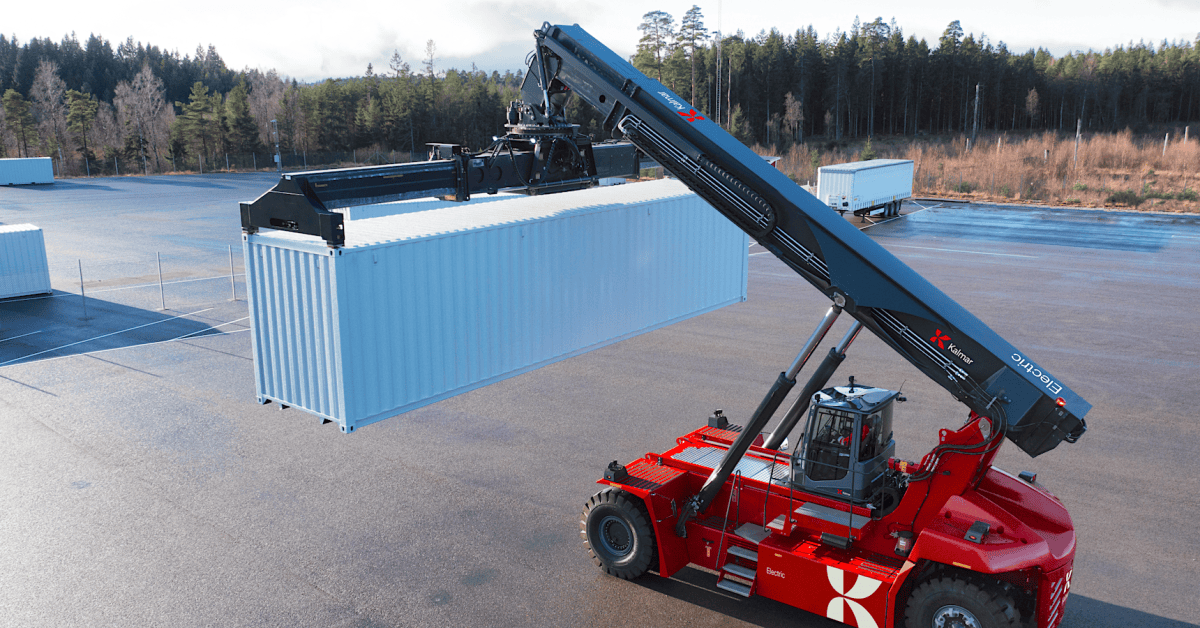
The Port of Helsingborg has ordered two electric reach stackers from Kalmar, according to a report from Electrek. The order is a modest one by fleet standards — two machines — but it lands squarely in the middle of one of the more consequential transitions now under way in global logistics: the slow replacement of diesel-powered cargo-handling equipment with battery-electric alternatives.
Ports are unusual industrial environments. Operators work inside confined footprints, lifting and shifting loads measured in tens of tonnes, often within metres of other vehicles, stacks, and personnel. Precision is non-negotiable, conditions are unforgiving, and the margins that separate a profitable terminal from a losing one are notoriously thin. Those constraints have historically made terminal operators cautious about new drivetrains. That caution appears to be loosening.
Why Ports Are Rethinking Diesel
The case for electrifying port equipment rests on a handful of practical pressures that converge in the same place.
- Air quality: Ports are frequently sited next to cities, and diesel exhaust from yard equipment contributes to local particulate and nitrogen oxide pollution. Electrifying the machines that run continuously inside a terminal attacks that problem at the source.
- Noise: Container handling is loud. Battery-electric drivetrains cut the low-frequency engine noise that dominates around stacking areas, which matters both for nearby residents and for workers who spend entire shifts in that environment.
- Operating cost: Electricity is typically cheaper per unit of work than diesel, and electric drivetrains have fewer moving parts, fewer fluids, and less scheduled maintenance. In a business where margins are razor-thin, those differences compound over a machine's service life.
- Regulation and reputation: Ports face growing pressure from municipalities, regulators, and customers to demonstrate emissions reductions. Equipment orders are one of the most visible ways to do that.
What a Reach Stacker Actually Does
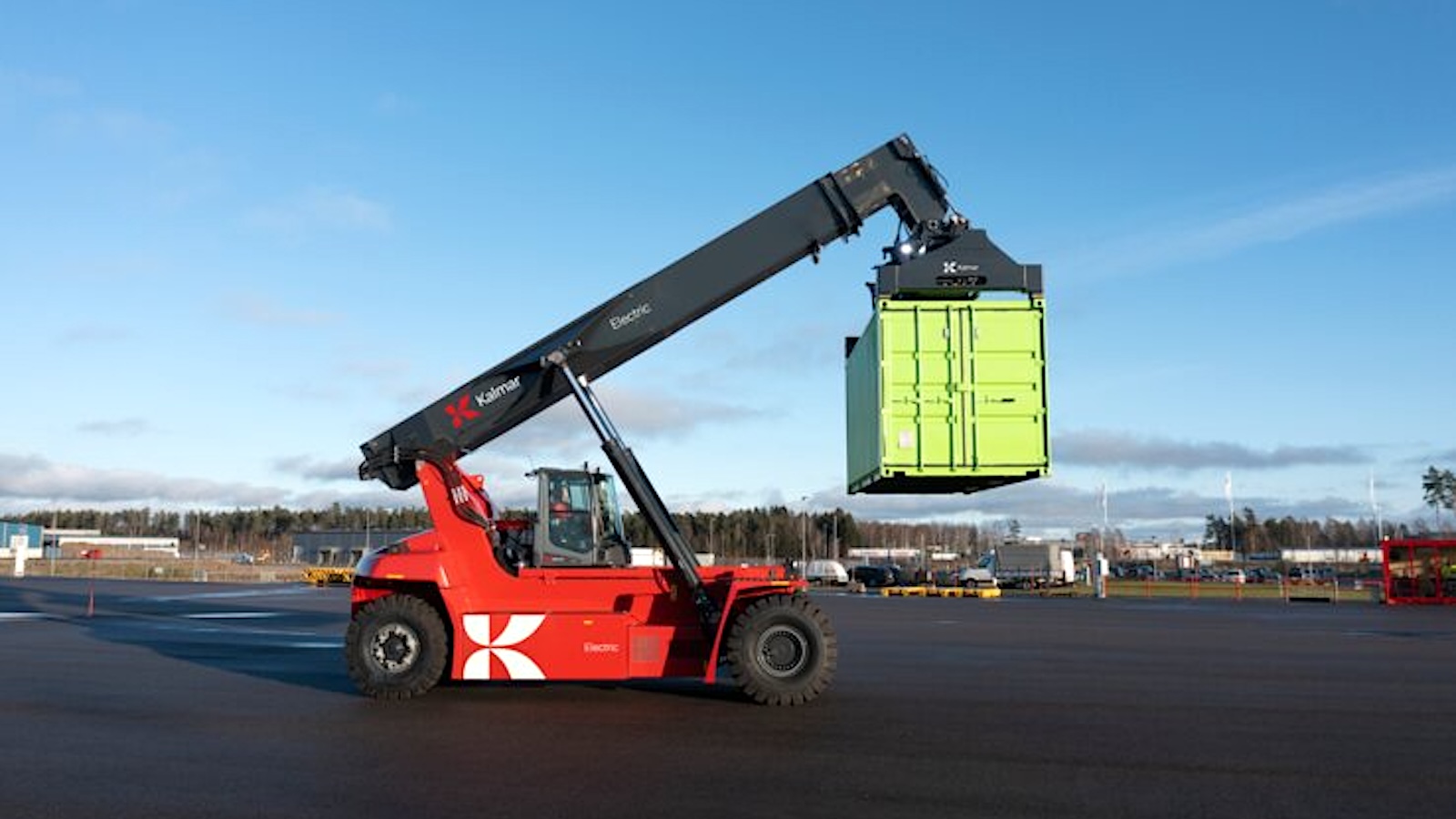
A reach stacker is a specialised mobile machine built around a telescopic boom and a spreader that locks onto a shipping container. Unlike a gantry crane fixed to a rail, a reach stacker drives itself to the container, lifts it, and places it — on a trailer, on the ground, or several containers high in a stack.
That flexibility is why reach stackers are common in smaller terminals, intermodal yards, and inland depots where building fixed crane infrastructure is impractical or uneconomic. It also explains why they are demanding candidates for electrification. A reach stacker combines the duty cycle of heavy construction equipment with the duty cycle of a forklift: short, intense lifting bursts, constant repositioning, and long shifts. Any battery system fitted to one has to survive that without forcing the operator to stop work mid-shift.
The Port of Helsingborg's order covers two such machines, both supplied by Kalmar. Neither the financial terms nor a delivery timetable was included in the initial report. What the order does confirm is that Helsingborg sees electric drive as viable for the work its terminal actually performs — not as a pilot showpiece, but as equipment intended to enter service.
The Charging Question
For any port, the hardware purchase is only half the decision. The other half is infrastructure. Electric reach stackers need charging, and how that charging is arranged shapes the whole operating model.
Terminal operators generally weigh a few approaches:
- Opportunity charging: topping up during natural breaks in the work cycle, which keeps battery packs smaller and cheaper but requires disciplined scheduling.
- Shift-end charging: plugging in between shifts, which is simpler but demands larger batteries and enough charge points for the whole fleet.
- Battery swapping: exchanging depleted packs for charged ones, which reduces downtime but adds handling equipment and standardisation requirements.
Each option has knock-on effects for electrical capacity at the quayside. Ports adding electric yard equipment often find they need to upgrade substations and cabling, and that work can take longer than the machine delivery itself.

What the Helsingborg Order Signals
Helsingborg is not the first port to move in this direction, and two machines will not reshape a terminal's emissions profile on their own. The significance lies in the pattern. When operators with confined layouts and thin margins commit to electric heavy equipment, it suggests the technology has cleared the threshold where the operational trade-offs are acceptable.
It also puts pressure on the rest of the equipment ecosystem. Terminal tractors, empty-container handlers, straddle carriers, and forklifts all face similar questions. A port that has learned to charge and schedule one class of electric machine builds the internal knowledge, electrical capacity, and maintenance routines needed for the next class.
What to Watch Next
Several details will determine whether the Helsingborg order becomes a template or a one-off:
- Real-world duty cycles. How the machines perform across full shifts in actual terminal conditions, and whether battery capacity holds up over years of heavy lifting.
- Charging rollout. Whether the port treats charging as a retrofit or integrates it into a broader electrification plan.
- Fleet expansion. Whether two units become the first instalment of a larger order covering other equipment classes.
- Cost transparency. Whether electric reach stackers close the total-cost-of-ownership gap with diesel equivalents quickly enough to convince operators who are not under regulatory pressure.
Ports rarely change quickly. The equipment is expensive, the work is unforgiving, and unplanned downtime is measured in delayed vessels. That is precisely why moves like Helsingborg's attract attention: they are made by people who cannot afford to be sentimental about a drivetrain. If electric reach stackers can hold up in a terminal, the argument for electrifying the rest of the yard gets considerably easier to make.
This article is based on reporting by Electrek. Read the original article.

Originally published on electrek.co