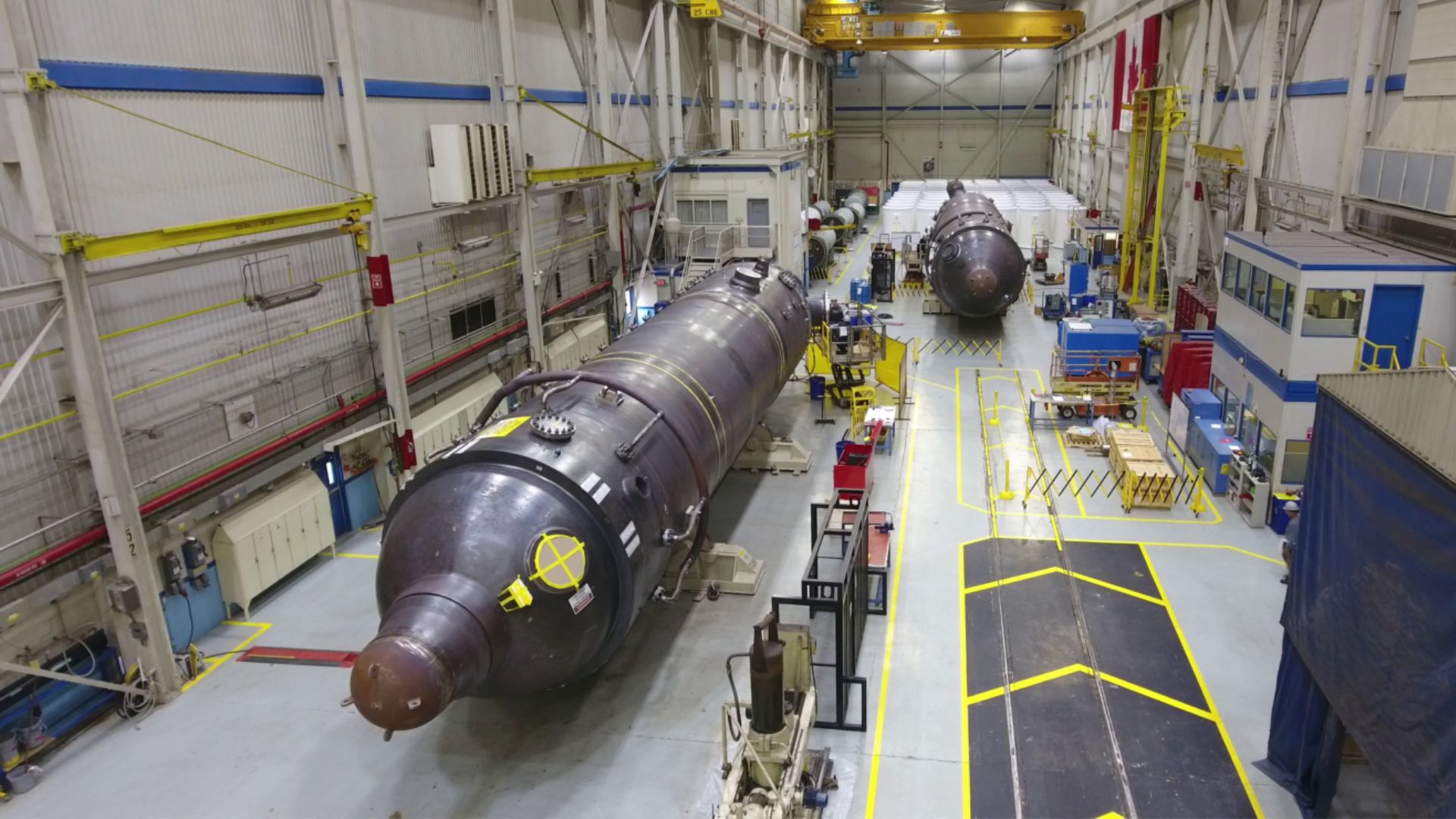
A coastal community in eastern Canada could soon host one of the world's first transportable nuclear power plants, under a proposal that pairs microreactor technology from a US firm with a 50-megawatt-class generating station designed to be moved rather than built permanently in place. The project, reported by Interesting Engineering, represents a notable shift in how the nuclear industry approaches siting, scale and the speed at which new capacity can be delivered.
Instead of the sprawling gigawatt-scale campuses and decade-long construction timelines that have long defined nuclear power, transportable plants are intended to be assembled in factories and delivered to the places that need electricity. The appeal is straightforward: bring serial manufacturing discipline to a sector historically dominated by bespoke, site-specific engineering.
A new category of nuclear plant
The word "transportable" is doing real work here. It distinguishes this class of plant from conventional reactors, which are effectively permanent infrastructure — poured, welded and commissioned over years, and impractical to relocate once operating. A transportable plant is conceived as a unit that can be moved to its operating site, and in principle moved again if circumstances change.
Microreactors sit at the small end of the nuclear spectrum. They are generally defined by their factory fabrication, their ability to be transported by truck, ship or aircraft, and their comparatively modest electrical output. That combination opens up markets that large reactors cannot economically serve: remote communities, island grids, industrial sites and regions where extending transmission lines would be prohibitively expensive.
Why the 50 MW class matters
The 50-megawatt class is a meaningful benchmark. It is large enough to anchor a substantial share of a small grid's demand, yet small enough to be manufactured and shipped as a coherent unit rather than assembled piece by piece on site. For a coastal community in eastern Canada, a plant of that size would represent a step change in local generating capacity, potentially displacing the diesel-fired generation that sustains many remote and coastal grids.
Diesel dependence carries well-known costs: fuel must be shipped in, often over long distances and in difficult weather; prices are volatile; emissions are significant; and supply interruptions can be disruptive. A transportable nuclear unit, if it performs as intended, would offer a long-duration, low-carbon alternative with infrequent refuelling.

Why eastern Canada is a natural test case
Eastern Canada offers several features that make it a plausible early market for this technology. It has coastal communities that are not always well served by large transmission networks. It has experience operating small, isolated power systems. And it has a policy environment that has been receptive to small modular reactor concepts as part of a broader decarbonisation strategy.
Hosting one of the world's first transportable plants would also carry symbolic weight. The project is framed as a first-of-its-kind installation for the country, and early projects tend to attract scrutiny, regulatory attention and public interest in equal measure.

The case for microreactors
- Factory fabrication: Building units in a controlled manufacturing environment can improve quality control and compress schedules.
- Scalable output: Multiple small units can be added over time to match demand, rather than committing to a single large block of capacity.
- Flexible siting: Smaller footprints and lower cooling requirements open up locations that conventional plants cannot use.
- Grid resilience: Distributed generation reduces reliance on long transmission corridors and single points of failure.
- Firm low-carbon power: Unlike wind and solar, nuclear output does not depend on weather or time of day.

Beyond electricity
Transportable nuclear plants are also discussed as potential sources of industrial heat, district heating and process steam, though those applications typically demand closer integration with a host facility than electricity generation does. For a coastal community, the more immediate value proposition is likely to be straightforward grid supply — firm power that can run through the night and through the winter, independent of fuel deliveries by road or sea.
Questions that remain
Transportable nuclear power also raises novel questions that regulators and communities will need to work through. Licensing a plant designed to move is not the same as licensing one bolted to a concrete foundation. Regulators must consider how a unit is certified, how it is transported, how it is secured at each stage, and what happens at the end of its operating life.
Then there is the matter of public acceptance. Nuclear projects of any size attract scrutiny, and a first-of-its-kind deployment in a coastal community will likely involve extensive consultation, environmental assessment and community engagement. Trust, once established, is the currency on which such projects trade.
Economics are another open variable. The promise of factory-built nuclear rests on the assumption that serial production will drive costs down over time. That assumption has yet to be proven at scale. Early units are typically expensive, and the industry's ability to move down the cost curve will determine whether transportable plants become a mainstream option or remain a niche solution for special circumstances.

What to watch next
For now, the significance of the Canadian proposal lies in what it represents rather than what it has already delivered. It shows that the transportable nuclear concept has moved from whiteboard to specific site discussions. It aligns a US microreactor developer with a Canadian host community and a 50 MW-class design envelope.
If the project advances, it will be watched closely by utilities, regulators and developers in other countries facing similar problems: small grids, expensive fuel, decarbonisation targets and limited transmission. Success would provide a template. Failure would provide lessons just as valuable.
What is already clear is that the nuclear conversation has broadened. Alongside the familiar debate over large central stations, there is now a parallel track exploring whether nuclear power can be manufactured, shipped and installed like other industrial equipment. A coastal community in eastern Canada may end up being one of the first places where that question gets a real-world answer.
This article is based on reporting by Interesting Engineering. Read the original article.
Originally published on interestingengineering.com