Lucid's Cosmos Prototype Shows Up on Highway 101
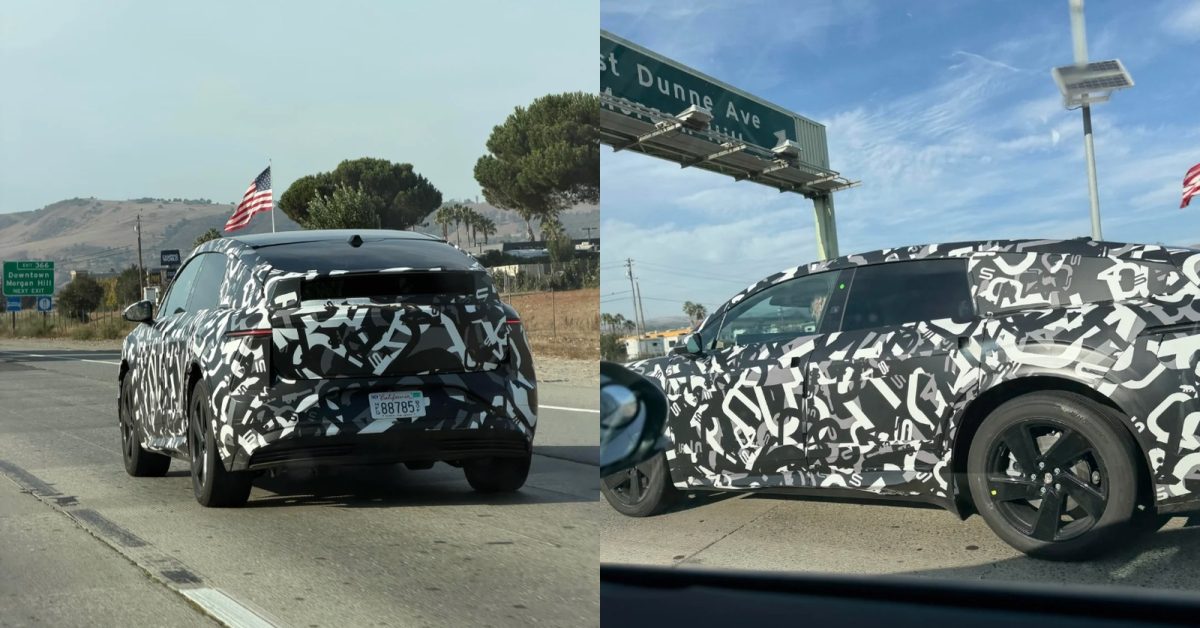
Lucid's long-discussed entry into the $50,000 electric SUV segment has produced its most tangible public evidence yet. According to an Electrek report dated Oct. 5, 2026, a camouflaged prototype of the vehicle — the Cosmos — was photographed driving in California traffic on Highway 101 in Morgan Hill. That location places the test vehicle roughly 40 miles south of Lucid's headquarters in Newark, California, a stretch of road close enough to the company's engineering base to make it a natural venue for shakedown runs.
The report does not detail specifications, range, charging performance, or a firm on-sale date. What it does establish is that a physical Cosmos — not a rendering, not a design study promised for some future reveal — is being driven on public roads. For anyone tracking Lucid's attempt to move downmarket from its luxury lineup, that is a meaningful data point, and it arrives alongside the story's other headline: the program has been framed around a delay tied to 2027.
Why Morgan Hill and Highway 101 Are Telling
Automakers rarely test in random places. The roads chosen for validation work usually reflect proximity to engineering teams, access to varied grades and traffic conditions, and the ability to get a vehicle back to a workshop quickly when something fails.
Newark, Lucid's headquarters, sits on the eastern side of the San Francisco Bay. Highway 101 running south through Morgan Hill gives engineers an accessible loop with freeway speeds, on-ramps, rolling terrain toward the Santa Cruz Mountains, and enough daily congestion to exercise thermal management, sensor suites, and stop-and-go behavior. Catching a masked prototype there suggests the program has reached the stage where real-world durability and calibration miles matter — the unglamorous middle of vehicle development that sits between design freeze and production.
It also suggests the company is not treating the Cosmos as a theoretical exercise while it manages other priorities. Prototypes that exist only on paper do not accumulate highway miles.
What camouflage does and does not hide
Manufacturers wrap prototypes in printed vinyl and foam padding for two reasons: to conceal body lines from rivals and photographers, and to obscure how close a design is to its final form. The camouflage on the Cosmos prototype is standard industry practice, and it deliberately muddies the details that enthusiasts care about most — headlight shape, grille treatment, roofline, and the exact proportions of the rear.
What the masking cannot hide is the basic package. A midsize SUV footprint is difficult to disguise, and neither is the fact that engineers are testing on open roads rather than inside a closed facility. Masked prototypes also tend to appear in public only after a vehicle can survive a drive without support vehicles trailing it, which itself is a small milestone.
The $50,000 Question
Price is the central fact of this story. A $50,000 starting point would place the Cosmos squarely in the market for electric family haulers — a band where sales volume lives and where Lucid has historically not competed. The company built its reputation with high-priced, long-range luxury vehicles. A $50,000 midsize SUV is a different business entirely: it demands manufacturing efficiency, supply-chain discipline, and the ability to hit a cost target repeatedly at scale.
Reaching that number is the hard part. Battery costs, material prices, labor, and platform amortization all push against the sticker. The report does not say whether $50,000 refers to a base configuration, an anticipated average transaction price, or a target that could shift before launch. Buyers and investors should treat it as a stated ambition rather than a locked figure.
What "After 2027 Delay" Means for Timing
The framing of the sighting ties the Cosmos to a delay, with 2027 as the reference point. In practice, that means the vehicle's arrival has slipped from whatever earlier expectation existed, and the window now under discussion lands in or around 2027.
Testing in 2026 is consistent with that kind of schedule. Prototype fleets typically accumulate tens of thousands of miles across seasons before a launch, and cold-weather, hot-weather, and crash-validation programs each consume months of calendar time. Seeing a camouflaged Cosmos on a California highway while the program is still described in terms of a delay suggests engineers are working through that validation without the vehicle having reached a final, undisguised form.
What the report does not provide: a launch quarter, a production site, a range estimate, or confirmation that the SUV arrives in the 2027 calendar year rather than the 2027 model year. Those gaps are worth flagging, because automaker timelines in this segment have a habit of moving.

What to Watch Next
- More frequent sightings, particularly on routes leading to cold-weather and high-altitude test grounds.
- Prototypes shedding camouflage, a common sign that a design is locked and a reveal is approaching.
- Any company confirmation of pricing tiers, range targets, or trim structure.
- Evidence of production tooling, supplier awards, or hiring tied to an assembly location.
- Filing activity or regulatory paperwork that would firm up a launch window.
The Bottom Line
A camouflaged prototype on Highway 101 is not a launch. It is, however, a reminder that the Cosmos is a real program with real vehicles covering real miles. For Lucid, the stakes are straightforward: a volume model at a mainstream price is the most plausible route to broadening a customer base that has so far skewed toward luxury buyers.
The $50,000 figure and the 2027 timeline remain the two numbers that will define whether the Cosmos lands as intended. Until Lucid confirms them with specifications and a firm on-sale date, the clearest signal available is the one drivers near Morgan Hill might catch in traffic — a masked midsize SUV, testing quietly, about 40 miles from headquarters.
This article is based on reporting by Electrek. Read the original article.

Originally published on electrek.co