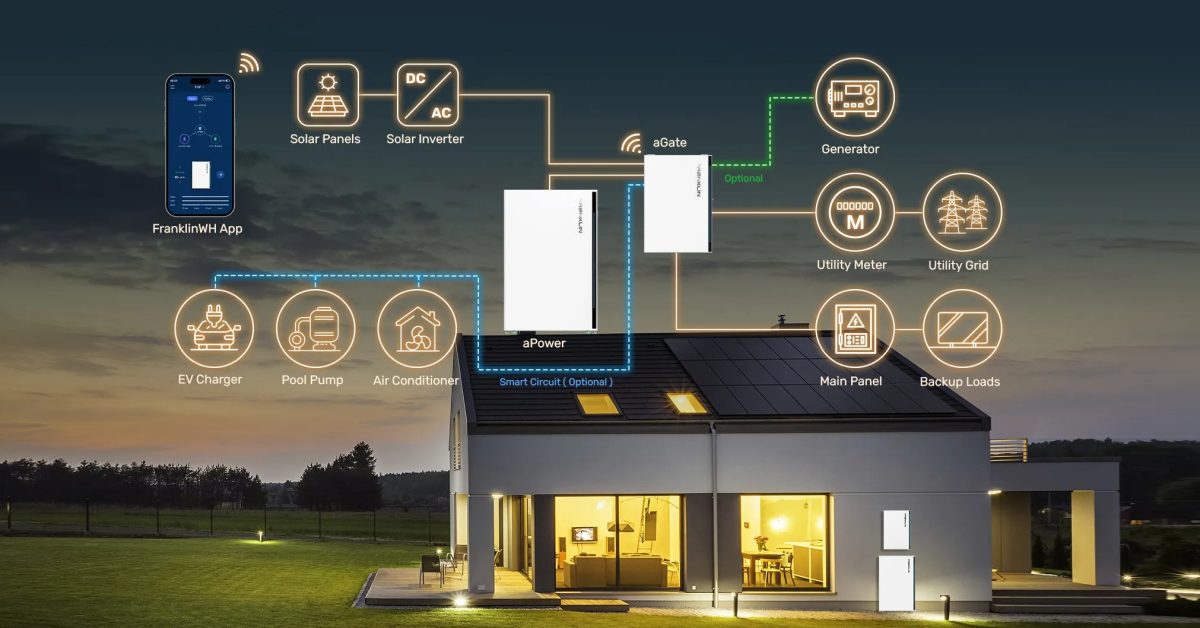
When a Big Home-Solar Question Shows Up on Reddit
Earlier this week, a home solar shopper posted a familiar question in a Reddit subreddit. The homeowner wanted a solar panel plus home backup battery combination that could manage solar and grid power intelligently, automatically switch to battery in a power outage, and still make sense for a typical home. For those of us who talk to installers and engineers daily, it was a good reminder that “smart” solar storage is not just a product spec — it’s a system design decision.
There is no single “best” system or one box that answers every version of that question. But there is a right way to think about it. Here is how a professional would break down what this Redditor needs to consider.
Start With the Loads, Not the Battery
The first thing professionals look at is not solar capacity or battery chemistry. It is what the home actually needs to run when the grid goes away. A system that “auto switches in a power outage” can support the whole house or only a few selected circuits. The Redditor’s wording suggests they want an outage solution that behaves seamlessly, maybe even without manual panel changes. That is achievable, but it starts with a decision about critical loads.
What Must Run When the Grid Is Down?
During an outage, a typical modern home may want refrigeration, internet, lighting, heating or cooling controls, medical equipment, and perhaps a well pump. Adding electric-vehicle charging, an electric range, or central air conditioning to the backup list significantly increases battery size and inverter capacity. A professional would ask: do you need the whole home backed up, or can you split the panel and protect the essentials?
The answer usually comes down to budget, existing electrical panel capacity, and how long the typical outage lasts in a given neighborhood. A whole-home backup battery can be two, three, or more times the size of a critical-loads-only system. That changes cost and installation complexity.

Intelligent Solar and Grid Management: What It Really Means
The phrase “intelligently manage solar and grid power” sounds like marketing language, but it maps to concrete control functions.
- Solar-first consumption: The system should prioritize direct rooftop production over pulling from the grid during the day.
- Battery charging strategy: It should charge the battery when solar output exceeds home load — or when grid power is cheapest, if time-of-use rates apply.
- Export controls: The inverter should be able to send surplus to the grid, and limit exports in markets where net metering rules are changing.
- Load management: Smart systems can shed nonessential loads automatically to keep battery power available for critical circuits during an outage.
- Grid-aware behavior: Before an outage, the system may pre-charge the battery if a utility gives it a heads-up; after an outage, it can re-sync safely.
All of those functions live partly in software and partly in the components chosen by the installer. The Redditor’s use of “intelligently” is a clue that they do not want a passive solar-plus-storage system that only meets code; they want one that can respond to real-time conditions.
Auto-Switching During an Outage Requires Hardware, Not Just Software
Seamless auto switchover is a safety-critical feature. When grid power fails, a home battery system cannot remain connected to the grid while powering the house — that would backfeed the lines and endanger utility workers. The transfer must isolate the home before battery power begins supplying loads.
In a professional install, that’s handled by a backup gateway, transfer switch, or an inverter with built-in islanding capability. This hardware monitors grid frequency and voltage. When it detects a drop, it disconnects from the grid and reconnects when utility power returns, after making sure the grid is stable again. The speed matters, too. For most homes, a few seconds is acceptable; for sensitive medical or IT equipment, some systems offer near-uninterruptible transfer, though that can require additional components.
The “One System to Rule Them All” Myth
A shopper on Reddit often hopes there is a killer all-in-one box that owns solar, battery, and grid management out of the box. In practice, many well-designed systems use components from the same ecosystem precisely because communication between those components is easier.
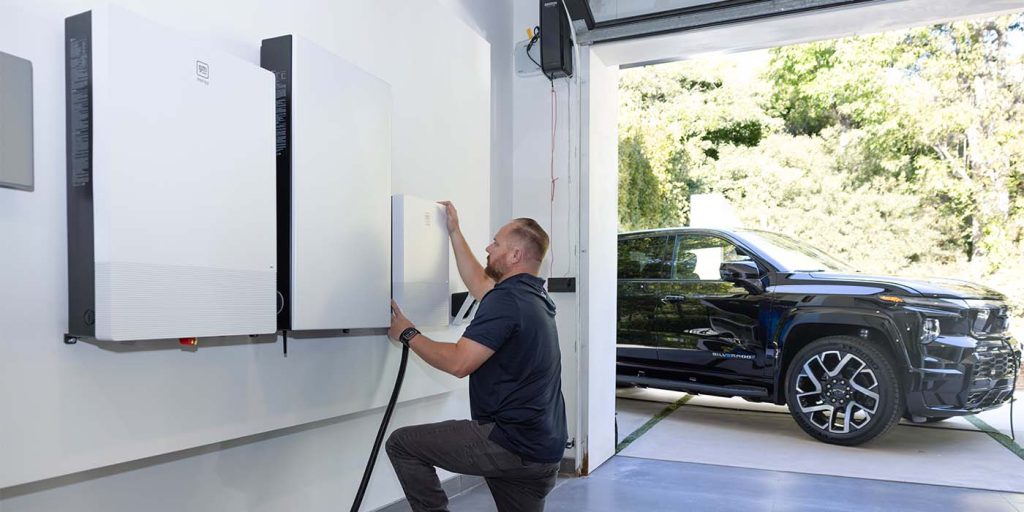
That does not mean every product must be from a single manufacturer. Modern energy management systems increasingly can talk to third-party inverters, batteries, and smart appliances. But the more moving parts you mix, the more you depend on open protocols and installer familiarity.
A professional will often pick a platform that their team has serviced many times, not one that looks best in a YouTube video. The Redditor should be asking about that kind of real-world support, too. What happens when a software update is buggy? What if the battery maker discontinues a model? Long-term serviceability is part of the decision.
Sizing and Layout: Battery Chemistry Is Less Important Than Coverage
Home batteries today are available from many companies, with varying capacities and discharge rates. What the Redditor will learn is that bigger is not automatically better. A battery sized to back up a refrigerator and lights for one night can differ dramatically from a battery that can run air conditioning, heating, and daytime-heavy loads all day.
Should You Add More Solar With the Battery?
A solar-only system without a battery cannot supply power during an outage unless it includes islanding capability. Adding a battery creates an outage-ready system, but it also stores any excess solar that the home does not immediately consume. If the rooftop array is undersized for the new battery, the battery may not fully charge during winter days. If it is oversized, the battery may fill by midday and the system will need to export the surplus.
Good installers run modeling based on local weather, roof orientation, and utility rate structure before quoting. The Redditor’s question does not give enough detail to model those choices, but it does hint at another key point: they want the system to make these decisions automatically. That means choosing an energy management platform that learns usage patterns, or at least allows scheduling.

What a Professional Would Tell That Redditor Next
One of the first replies in any professional answer is: talk to three local installers. Reddit can teach you how to think about solar, but only qualified technicians will know your local utility interconnection rules, panel condition, roof pitch, and permitting requirements.
Bring the professional the list of loads you actually want to protect, your average monthly electric bill, and a sense of how often your area loses power. Ask installers to explain how the system they propose switches over in an outage, how the warranty is structured, and how future expansions would work if you add an EV, heat pump, or another battery.
Finally, remember that “intelligent” management should not require you to become a full-time energy monitor. The best system is one you can set and forget, with a good mobile app for occasional check-ins. The hardware should handle grid, solar, battery and outage switching before you even look at the phone screen.
Takeaway: A Better Question Is “What’s the Right System for My Home?”
The Redditor’s original question pointed in the right direction. Solar-plus-storage is no longer just about saving money on a monthly bill; it’s about making a home more resilient and more capable of using renewable power intelligently. With the right backup hardware and a thoughtful installer, “auto switch in a power outage” is a normal feature, not a luxury.
The next step is to turn the broad question into a precise set of requirements. Once a homeowner knows their critical loads, their expected outage duration, and their budget, the search for a system becomes far easier — and the random Reddit thread becomes the start of a real installation.
This article is based on reporting by Electrek. Read the original article.
Originally published on electrek.co




