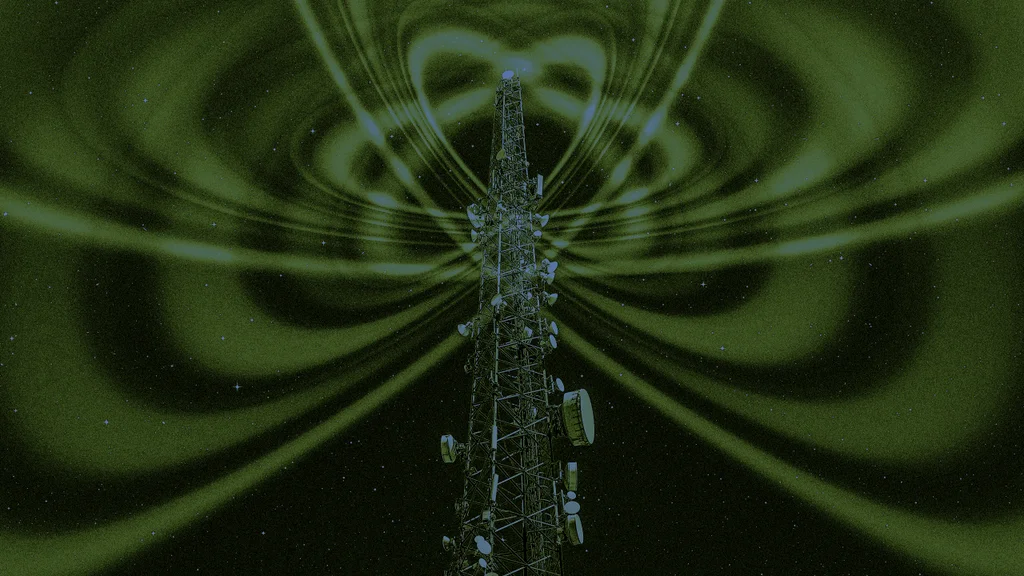
The Invisible Resource Everyone Shares
Every time a smartphone places a call, streams a video, or joins a Wi-Fi network, it fires signals through the air that no one can see. The same is true of a nursery baby monitor, a garage door opener, a GPS receiver, a weather-monitoring satellite, and the radar systems that keep aircraft safely separated from one another. Each of these very different technologies leans on exactly one shared and finite resource: the radio spectrum.
Demand for wireless data keeps rising, pushed along by smartphones, video streaming, and billions of connected devices. That growth is steadily converting a resource once treated as abundant into a congested one, which is why a whole field of research is now aimed at what electrical engineers and regulators describe as the radio spectrum supply crunch.
Radio Spectrum, Pictured as Highways
Radio spectrum occupies the low end of the electromagnetic spectrum, sitting below microwaves, visible light, and X-rays. A useful way to picture it is as an enormous collection of invisible highways, each one running at its own frequency and carrying signals through the air. Television broadcasts, air traffic control, cellphone traffic, and the remote sensing of distant stars all travel along different stretches of that same invisible road network.
Those communication highways span an extraordinary range. At the low end are very low frequencies used for submarine communication; the range extends upward past radio waves toward the frequencies of visible light. The trade-off is physical: higher frequencies carry signals over shorter distances, but because their lanes are effectively wider, they can move more data. Lower frequencies travel farther but carry less.
Because there is only so much spectrum to go around as a matter of fundamental physics, the resource has always required careful management.

Why Governments Handed Out Exclusive Lanes
Historically, governments managed spectrum by issuing exclusive licenses. A block of frequencies would be dedicated to a specific user, and everyone else was told to stay off it. This approach functioned well enough for decades, largely because the available highway network was sufficient for the traffic that existed. A licensed band behaved like a private road: predictable, protected from interference, and simple to police.
The Surprise: Empty Roads Beside Traffic Jams
Then researchers began measuring how spectrum is actually used, and the results were not what the licensing model predicted. Studies tracking actual spectrum use over many years found that large stretches of licensed spectrum sit idle much of the time. A military radar system, for instance, may operate only in certain locations on certain days, leaving its assigned frequencies quiet everywhere else and at every other hour.
That finding reframed the problem. The shortage of wireless capacity is not only a shortage of spectrum itself. It is also a mismatch between who holds the rights to transmit and when those rights are genuinely needed. The result is a paradox familiar to any commuter: roads packed with traffic jams while adjacent lanes sit almost completely empty.

Dynamic Spectrum Sharing, Explained
The solution engineers and regulators have been developing is called dynamic spectrum sharing. The core idea is straightforward. Instead of reserving a portion of spectrum exclusively for a single user forever, multiple users are allowed to share the same frequencies — but intelligently, and under clear rules designed to keep them from stepping on each other's signals.
- Static licensing: one user holds one band all the time, whether or not it is transmitting.
- Dynamic sharing: several users occupy the same band, coordinated in real time.
- Guardrails: explicit rules and monitoring that stop one transmission from drowning out another.
The contrast with the old model is sharp. Under exclusive licensing, protection came from exclusion. Under sharing, protection has to come from coordination — from knowing, moment to moment and place to place, who is transmitting and on what frequencies.
Where AI Enters the Picture
That coordination requirement is where artificial intelligence becomes relevant. Sharing a band across many users means continuously sensing local conditions, estimating which frequencies are free at a given place and time, and adjusting transmissions before they collide. Proponents of the approach argue that this kind of real-time decision-making is exactly the sort of problem machine learning and automated reasoning are suited to: too fast, too local, and too data-heavy for static rules written years in advance.
The intelligence layer does not replace regulation. It sits inside it. Rules still define who may share, under what conditions, and with what protection for priority users such as aviation radar or scientific sensing. What AI contributes is flexibility — the ability to exploit idle capacity without disturbing the incumbent.

What Is Actually at Stake
The stakes extend well beyond faster phone downloads. The same invisible road network carries services that society depends on for safety and for science:
- Air traffic control and radar systems that maintain separation between aircraft.
- GPS and other satellite navigation signals.
- Weather-monitoring satellites that observe the planet from orbit.
- Consumer devices ranging from baby monitors to garage door openers.
- Astronomical and remote-sensing instruments that listen to faint signals from distant sources.
When these users compete for the same finite frequencies, congestion is not merely an inconvenience. It is a reliability question.
The Road Ahead
Dynamic sharing is not a cure-all. Opening licensed bands to multiple users raises difficult questions about enforcement, about protecting safety-critical services, and about how quickly devices can negotiate access. But the underlying insight from years of measurement is hard to argue with: spectrum is not simply scarce, it is often unused. Treating it as a permanently owned property rather than a resource scheduled in real time leaves capacity on the table.
If engineers and regulators can build the coordination systems that make sharing dependable, the crowded airwaves may prove less crowded than they appear. The signals are already there. The question is whether the rules governing them can become as flexible as the technology that carries them.
This article is based on reporting by Fast Company. Read the original article.
Originally published on fastcompany.com