A regulatory question moves into procurement
U.S. automation buyers are being urged to reassess how they evaluate connected robotics after a Federal Communications Commission determination restricted imports of certain new foreign-made advanced robotic devices. The action, described by the FCC in July as addressing cybersecurity and competitive risks, includes mobile robots and legged robots.
The practical implications are the subject of an October 27 webinar organized by The Robot Report and sponsored by Vecna Robotics. Executives from Vecna Robotics, Locus Robotics and the Association for Advancing Automation are scheduled to discuss what the determination could mean for companies considering robot purchases.
While the event itself is not a regulatory decision, its focus signals where the immediate challenge lies: not simply whether a robot can perform a task, but whether a buyer can deploy, maintain and support it over time in a changing policy environment.
Connected systems raise different questions
The panel plans to distinguish connected robotic systems from traditional automation. That distinction is important because a connected machine brings questions that extend beyond its mechanical capability. Buyers may need to consider design, deployment, cybersecurity, service arrangements and the durability of vendor support as parts of the same acquisition decision.
The FCC action concerns new models of certain advanced robotic devices, according to the report. For organizations that are evaluating mobile or legged systems, the first task is therefore to determine whether a prospective product and supplier are affected by the restriction.
That assessment is likely to become part of normal diligence rather than an exceptional legal exercise. A buyer choosing a connected robot is making a commitment to an operating system that may depend on ongoing software, parts, communications and technical support. A policy change can affect the confidence an organization has in each of those elements.
Supportability becomes a central metric
One theme of the webinar is the long-term supportability of robotics investments. This places attention on what happens after a purchase order is signed: how a system is implemented, how it is serviced and whether the supplier can continue to support it through the life of the deployment.
For prospective buyers, that translates into a set of practical questions for technology providers. The program says attendees will hear about acquisition, implementation and service strategies intended to build resilience. The relevant inquiry is not limited to initial price or demonstrated performance; it also includes how the provider will sustain the system and respond to changing policy or supply-chain conditions.
The report also identifies supply-chain strengthening as a topic for discussion. A buyer can therefore view resilience as a procurement attribute: the ability to obtain, deploy and maintain a system without overlooking dependencies that could become more consequential under new restrictions or related policy developments.
Policy may reshape competitive choices
The FCC determination was framed around cybersecurity and competitive risk. The webinar will explore how the robotics ecosystem is responding to U.S. challenges and competitive pressures, as well as policies under consideration such as tariffs.
That broader context matters because procurement choices can be influenced by more than one rule. Restrictions, tariffs, vendor origin, support arrangements and cybersecurity concerns may interact. Companies will need to understand which considerations apply to a particular system rather than treating “robotics” as a single, uniform product category.
The scheduled discussion also includes standards efforts. Standards can shape expectations around connected systems, while regulation can establish constraints on what can be imported or deployed. Together, they make the policy environment a more direct part of the automation-buying process.

What buyers should do now
The available information does not establish that every robotics buyer needs to replace existing equipment or abandon automation plans. The reported FCC action concerns imports of new models of certain advanced foreign-made devices. The appropriate response depends on the type of robot, the supplier and the planned deployment.
But the report points to a useful near-term framework for buyers:
- Identify whether the robot type and supplier are affected by the FCC action.
- Evaluate cybersecurity, deployment and continuing-service needs together.
- Ask providers how they will support systems over the long term.
- Consider supply-chain resilience when comparing acquisition options.
- Track related policy, standards and tariff developments that could affect a deployment.
These steps do not substitute for a legal or technical evaluation. They do reflect the operational questions the webinar intends to surface for automation customers.
Industry response is still taking shape
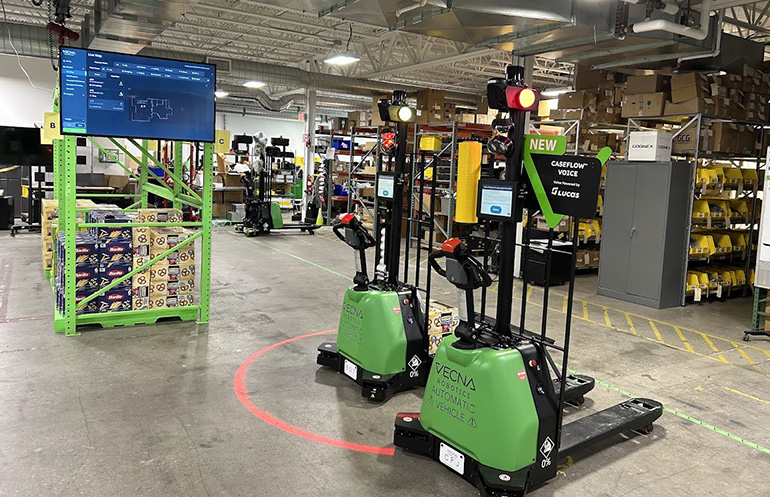
Vecna Robotics, which makes its systems in the United States, is not directly affected by the FCC ruling, according to the report. The company’s CEO, Karl Iagnemma, is scheduled to join the panel alongside Locus Robotics CEO Rick Faulk and a representative of A3.
For buyers, the value of the discussion will be in translating a high-level federal determination into decisions about actual equipment. The central issue is not only which robots are available today, but what a prospective purchase means for implementation, service and supply resilience over time.
As connected robotics spreads across industrial settings, that is a meaningful shift. Policy and cybersecurity considerations are moving closer to the procurement checklist, alongside capability, cost and integration. The FCC ruling has made those questions more immediate for organizations planning their next automation investment.
This article is based on reporting by The Robot Report. Read the original article.
Originally published on therobotreport.com