AI is becoming a mainstream economic force in Southeast Asia
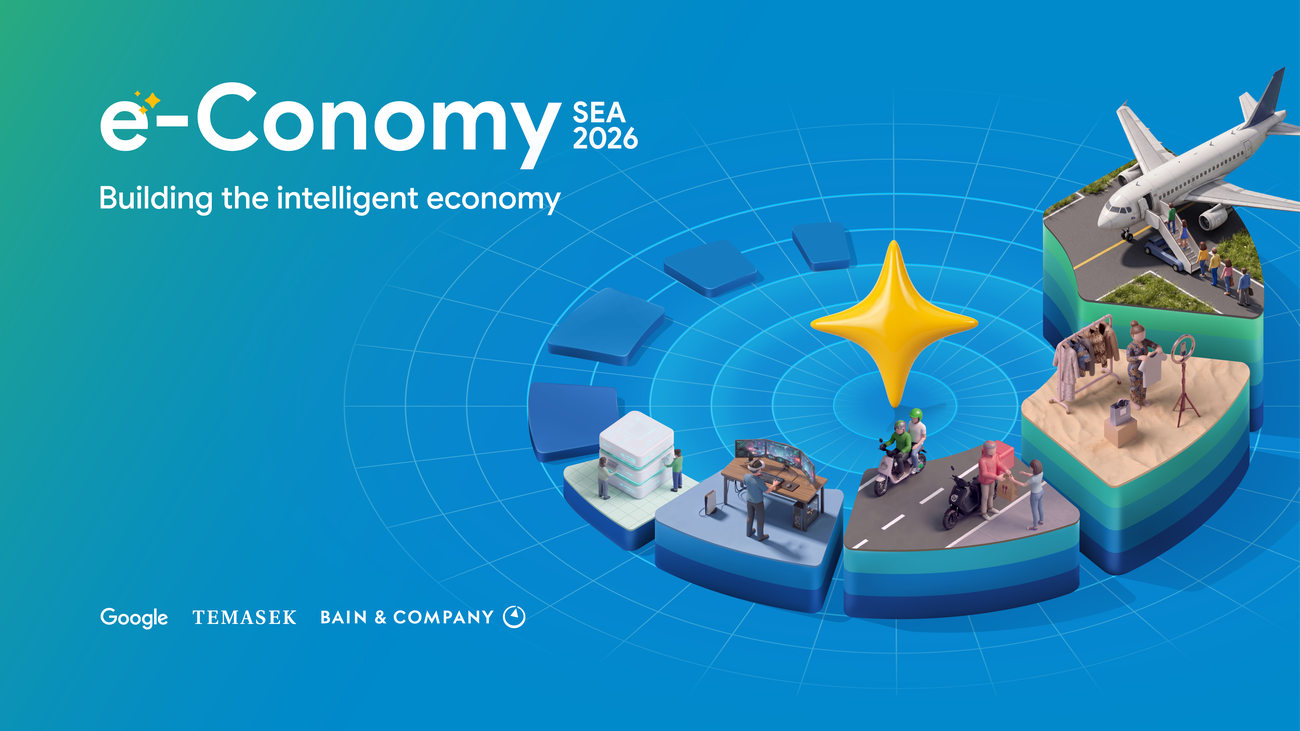
Southeast Asia’s digital economy is projected to reach $368 billion in 2026, with widespread adoption of generative AI increasingly shaping how people work, shop, travel and manage money. The projection comes from the 11th edition of the e-Conomy SEA report, produced by Google, Temasek and Bain & Company.
The report’s longer-term forecast is more striking: it projects that the region’s digital economy could reach $1 trillion by 2035. That outcome is not presented as an automatic consequence of AI enthusiasm. It depends on continued investment in digital infrastructure, improvements in energy efficiency and regional policies that support cross-border digital activity.
What is already clear from the report is the scale of consumer adoption. Generative AI is described as an essential part of daily life for 243 million people in Southeast Asia, equal to 58% of the region’s working population. The report says its rollout is occurring four times faster than the earlier spread of mobile internet.
From experimentation to everyday use
Generative AI has often been discussed as a workplace productivity tool or a source of new chatbots. The Southeast Asian data suggests a broader shift. Consumers are using the technology in activities that touch everyday economic decisions, including shopping, travel and personal finance.
That matters because digital economies grow not only through new technology companies but also through changes in consumer behavior. When a tool becomes routinely useful to a large share of working adults, it can influence demand for online services, reshape how companies reach customers and create pressure for more capable digital infrastructure.
The report characterizes the next stage as a move toward agentic commerce: consumers becoming more willing to let AI systems take on complex tasks, such as comparing options and making purchases. This is still an emerging behavior rather than a settled consumer model. But it points toward an internet experience in which AI does more than recommend products or summarize information; it could carry out parts of the transaction process on a user’s behalf.

The infrastructure constraint
Rapid adoption creates practical constraints. AI services require computing capacity, reliable connectivity and data-center infrastructure. The report identifies expansion of data centers and improvements in energy efficiency as priorities for sustaining the region’s momentum.
That pairing is important. The spread of generative AI can increase demand for computing resources, but the infrastructure supporting that growth has an energy cost. A digital-economy strategy built around AI therefore has to consider both the availability of data-center capacity and the efficiency of the systems that power it.
For governments and companies, this turns AI from a software question into an industrial one. Decisions about infrastructure, electricity use and regional connectivity can affect whether promising services are widely available or remain constrained by capacity and cost.
Why common rules matter
The report also points to unified digital-trade policies as part of the region’s path forward. Southeast Asia is made up of multiple national markets, each with its own rules, institutions and levels of digital development. AI-enabled services, online marketplaces and cross-border data activity can encounter friction when requirements are not aligned.
Regional agreements cannot eliminate every difference between markets, but more compatible digital rules could make it easier for companies to operate across borders and for consumers to access services. In that sense, the economic opportunity is not just about creating new AI applications. It is also about building the conditions that allow those applications to scale across the region.
The report’s projections should be read as forecasts, not guarantees. A $1 trillion digital economy by 2035 would reflect many factors beyond generative AI, including broader internet use, digital payments, e-commerce, investment and policy. Still, the report positions AI as a major accelerator because it is being adopted across multiple sectors rather than in a single niche.
A regional test case for consumer AI
Southeast Asia is becoming an important test case for what widespread consumer use of generative AI looks like. The 243 million users cited in the report indicate that AI is already reaching far beyond specialist communities. The next question is whether that adoption develops into durable services that people trust with more consequential tasks.
Trust will be central to the transition from AI-assisted research and recommendations to agentic commerce. Consumers may be comfortable asking a system to compare prices, but delegating a purchase or a financial task requires confidence in accuracy, security and accountability. The report’s emphasis on infrastructure and policy reflects that reality: adoption alone is not sufficient.
For businesses, the immediate opportunity is to meet users where AI is already part of daily life. For policymakers, the challenge is to support growth while ensuring the foundations—computing capacity, energy efficiency and interoperable digital rules—can keep pace. The region’s forecast is ambitious, but the report makes clear that its realization will depend on those choices.
This article is based on reporting by Google AI Blog. Read the original article.
Originally published on blog.google