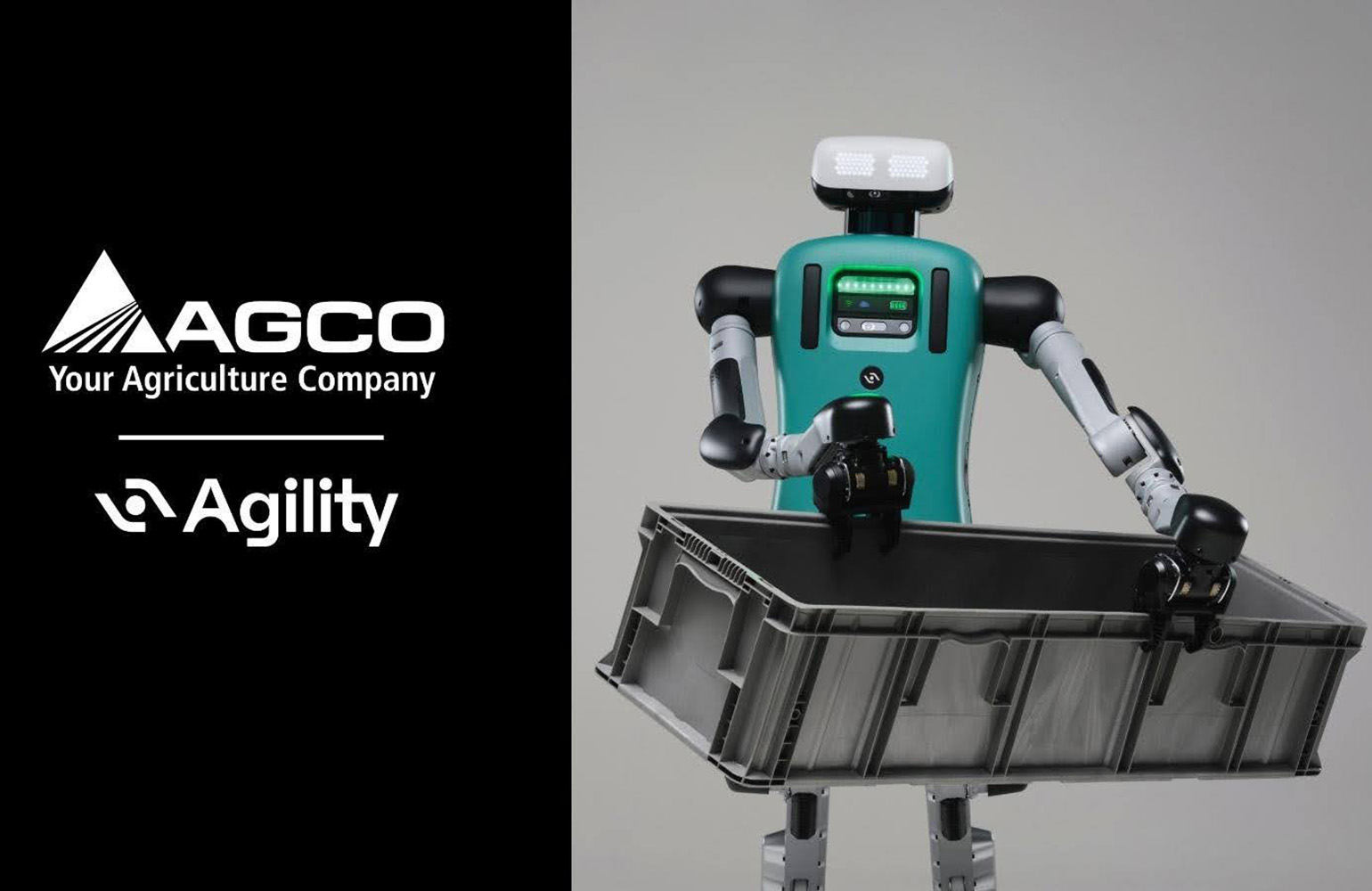
Agricultural-equipment maker AGCO plans to pilot Agility Robotics’ Digit humanoid robot at its production facility in Hesston, Kansas, beginning in 2027. The companies have signed a commercial agreement that places the deployment inside AGCO’s broader effort to build more flexible and intelligent manufacturing operations.
The planned work is notable because it moves the humanoid-robot discussion from demonstrations toward a defined industrial pilot with named tasks, a factory location and a projected start date. The companies describe the robot as a teammate for work that is repetitive, strenuous or hazardous, while emphasizing workforce support and safety governance.
A factory pilot with specific tasks
According to Agility Robotics, Digit will initially support assembly and production operations. The listed tasks include sorting and stacking parts, along with placing totes for storage. Those are structured material-handling activities that can recur throughout a manufacturing shift and can be difficult to automate when workflows vary or have been designed around people.
AGCO says the pilot is intended to help create manufacturing systems that are more flexible and resilient. The company’s manufacturing technology director, Thomas Enghof, described humanoid robotics and AI as important teammates in factories that remain centered on human work. In that framing, the aim is to augment workers rather than simply substitute a robot for a person.
AGCO is headquartered in Duluth, Georgia, and makes agricultural machinery and precision-agriculture technology under brands including Fendt, Massey Ferguson, PTx and Valtra. Its Hesston plant will therefore offer a practical test of whether a humanoid form factor can fit established production operations without requiring an extensive redesign of the facility.
Why humanoid form matters
Industrial automation has long relied on fixed robotic arms, conveyors and specialized machinery. A humanoid system is intended for environments already arranged for people: spaces with aisles, racks, bins and workstations, where tasks can change and workers move through the same areas.
That promise remains dependent on reliable performance, safe integration and useful economics. AGCO’s announcement does not specify a production-scale rollout, the number of robots involved or commercial terms. It does, however, identify the first planned operations and positions the work as a commercial pilot rather than a research-only experiment.
Agility says Digit uses AI to learn and adapt as workflows evolve. It also points to its cloud-based Agility Arc platform, which is designed to deploy and manage robot fleets. The company says that combination can help customers integrate automation without major infrastructure changes or costly facility upgrades. The Kansas pilot will be a concrete setting in which to test that proposition.
Part of a growing deployment list
AGCO joins a list of companies identified by Agility as Digit deployment partners, including Toyota, GXO Logistics and Schaeffler. The pattern reflects growing corporate interest in using humanoid robots for practical factory and logistics work, especially in roles where the environment is built for people and demand for flexible material handling is high.
For manufacturers, the appeal is not only task automation. The companies describe a potential operating model in which robots handle demanding and repetitive work while people bring judgment, oversight and adaptability. Whether that model creates measurable value depends on uptime, task accuracy, safety procedures and the effort required to supervise and maintain the systems.
AGCO’s stated focus on strict safety governance is especially important. A robot operating on a production floor must work around people, parts and changing conditions. The pilot’s gradual scope—beginning with sorting, stacking and tote placement—suggests a way to evaluate performance before attempting broader assignments.
What to watch in 2027
The announced start date gives the partnership time to define workflows and prepare the Hesston site. The most revealing next details will be operational: how many Digit robots are used, which shifts and work cells they support, how frequently people intervene, and whether the systems deliver the claimed gains in flexibility or productivity.
It will also be important to distinguish a pilot from a fleet deployment. A successful pilot can demonstrate technical feasibility for selected tasks, but factory-wide adoption requires repeatability across locations, integration with existing processes and a sustained business case.
For now, the agreement is a signal that AGCO sees humanoid robotics as worth evaluating in a real agricultural-equipment factory. The 2027 Kansas pilot will test whether Digit can turn that strategic interest into dependable support for day-to-day production work.
This article is based on reporting by The Robot Report. Read the original article.
Originally published on therobotreport.com