Indoor robots are moving beyond controlled settings
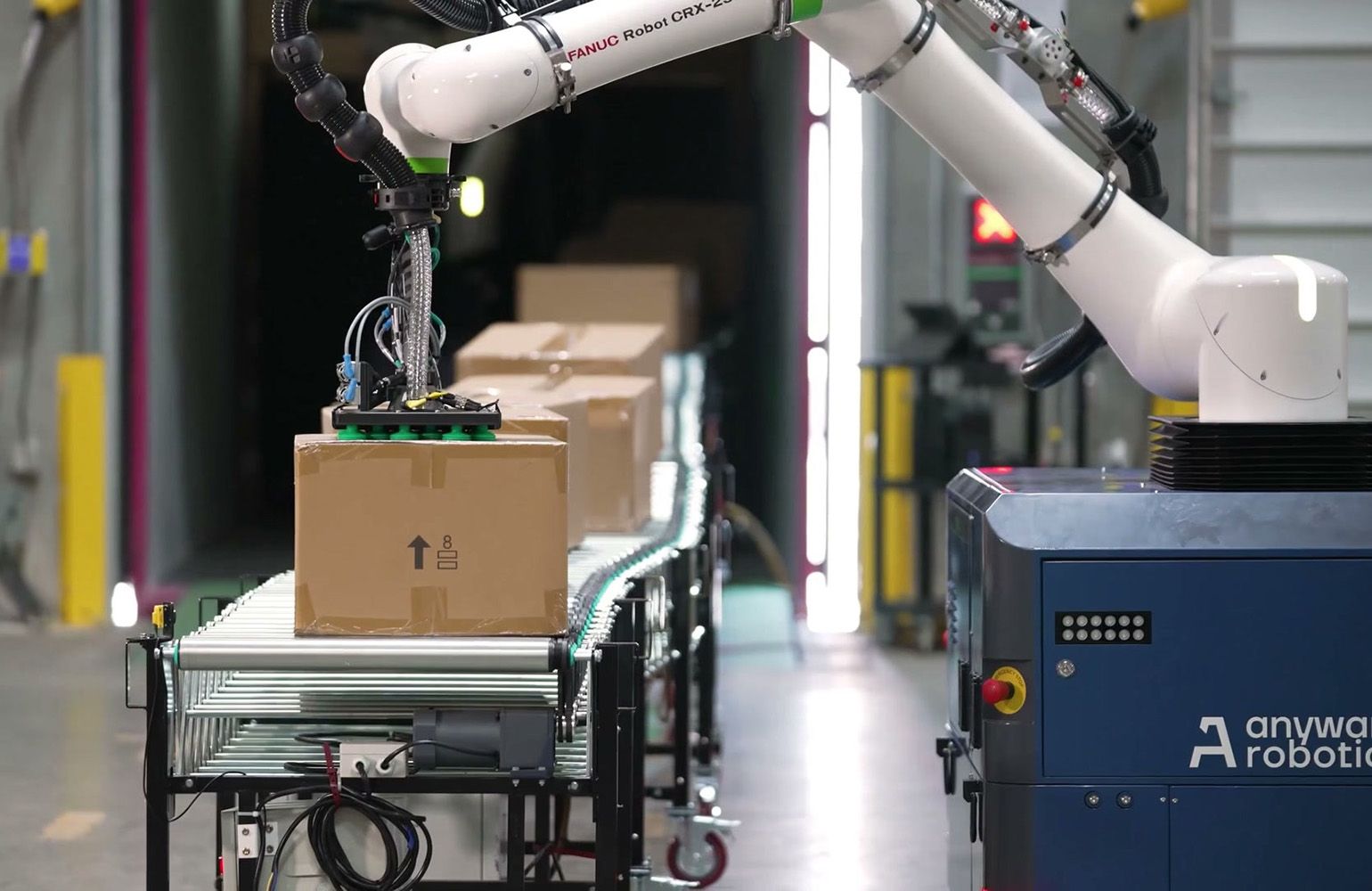
Robots that work in warehouses can often rely on carefully organized routes, predictable lighting and limited interactions with people. The next generation of indoor systems faces a less orderly environment: public places where people move unpredictably, paths narrow without warning and infrastructure was not built around autonomous machines.
That transition is the focus of a scheduled RoboBusiness 2026 discussion featuring Aaron Edsinger, co-founder and chief executive of Hello Robot, and Matt Anderson, co-founder and chief executive of A&K Robotics. Their session, “Shared Spaces: Navigating Challenges for Indoor Robots,” is set for October 20 in Santa Clara, California.
The topic is broader than a single robot or deployment. Consumer-facing environments demand that robots operate around constantly changing obstacles, under diverse lighting conditions and through cluttered or narrow passages. They must also work with existing infrastructure while balancing autonomy with safety.
Navigation becomes a social problem
In busy public settings, safe navigation is not merely a matter of detecting an object and stopping. A useful indoor robot must handle the flow of people around it, account for tight spaces and respond to circumstances that may change from moment to moment. The Robot Report describes these environments as dynamic, crowded and highly unpredictable.
Those conditions help explain why indoor navigation is a central issue for broad consumer acceptance and large-scale deployment. A robot can have a capable arm, a well-designed chassis or a useful service role, but it must still move through the spaces where people live, work and travel. If it cannot do so safely and naturally, its practical value is limited.
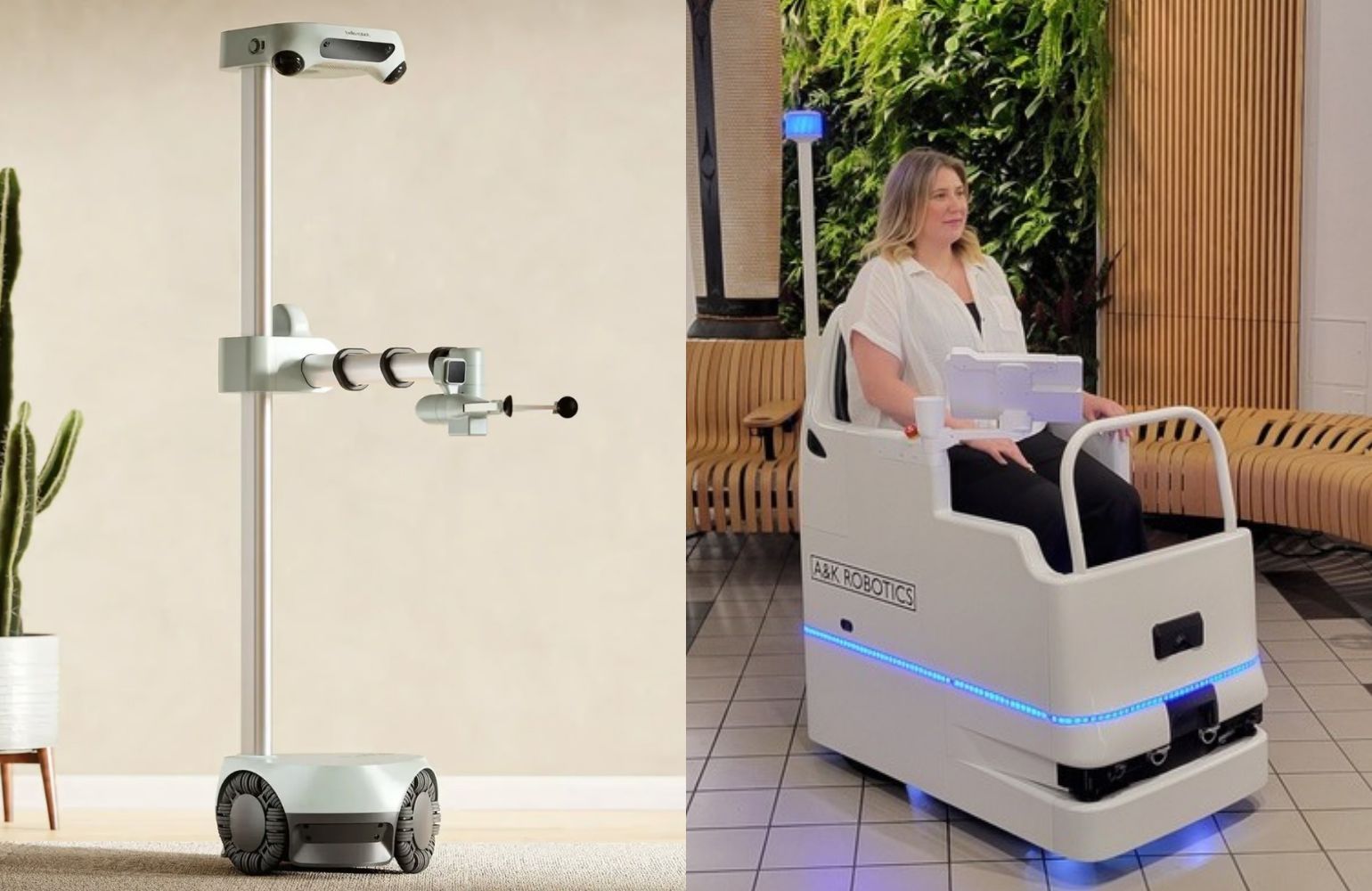
The session brings together two companies working on different aspects of that challenge. Hello Robot develops practical, safe and accessible robots for people. A&K Robotics is building autonomous mobility infrastructure for complex, human-centered environments, including airports.
Two approaches to human-centered robotics
Hello Robot’s Aaron Edsinger has worked across collaborative robotics, consumer applications, manufacturing, healthcare and research. Before founding Hello Robot, he founded Meka Robotics and Redwood Robotics, which were acquired by Google in 2013. He later served as robotics director at Google, where he led business, product and technical development for central robotics investments.
The background is relevant to the shared-space problem because it spans multiple layers of robot design. The event announcement describes Edsinger’s experience as including human-robot interaction, user-experience design, mechanical design, software architecture, real-time control and force-controlled hardware.
A&K Robotics’ Matt Anderson leads product strategy that includes Cruz, a self-driving mobility robot intended to carry passengers through high-traffic environments such as airport terminals. The company also identifies Kineos AI as a platform for socially intelligent autonomy designed to help systems move naturally in dynamic spaces.
Airports illustrate the scale of the challenge. They combine crowds, changing queues, luggage, constrained corridors, varied lighting and a mix of travelers who may be moving slowly, quickly or unpredictably. A mobility system that carries passengers must operate amid all of those conditions while making decisions that preserve safety and confidence.
Infrastructure is part of the equation
The discussion is expected to address more than robot perception and motion. The event description specifically points to integration with existing infrastructure as a challenge. That is a significant constraint for deployments in public venues, where operators cannot assume that buildings will be redesigned around autonomous machines.
For robot makers, this raises practical questions about where a machine can travel, how it interacts with doors and elevators, how it negotiates congestion, and what behavior feels acceptable to nearby people. The answers affect system design as well as public acceptance.
It also highlights a distinction between a successful demonstration and a scalable service. A prototype can be tested in a selected environment. Large-scale deployment requires repeatable performance amid the normal variability of public life: shifting crowds, temporary obstructions and layouts that are often inconvenient for autonomous navigation.
A measure of robotics maturity
The push into shared indoor spaces is a test of how well robotics can connect technical capability with everyday usability. The challenge includes sensing and movement, but it also includes designing behavior that works around people rather than forcing people to adapt to the machine.
That is why the RoboBusiness session frames navigation as critical to consumer acceptance. Indoor robots will be judged not only by their ability to reach a destination, but by whether they do so safely in places built for humans.
Edsinger and Anderson are scheduled to speak at 3:30 p.m. Pacific time on the first day of RoboBusiness, in the Engineering Theater. Their discussion reflects a broader industry shift: as robotics leaves controlled facilities, the ability to share space gracefully may become as important as the ability to automate a task.
This article is based on reporting by The Robot Report. Read the original article.
Originally published on therobotreport.com