A new AI lesson built around neuroscience
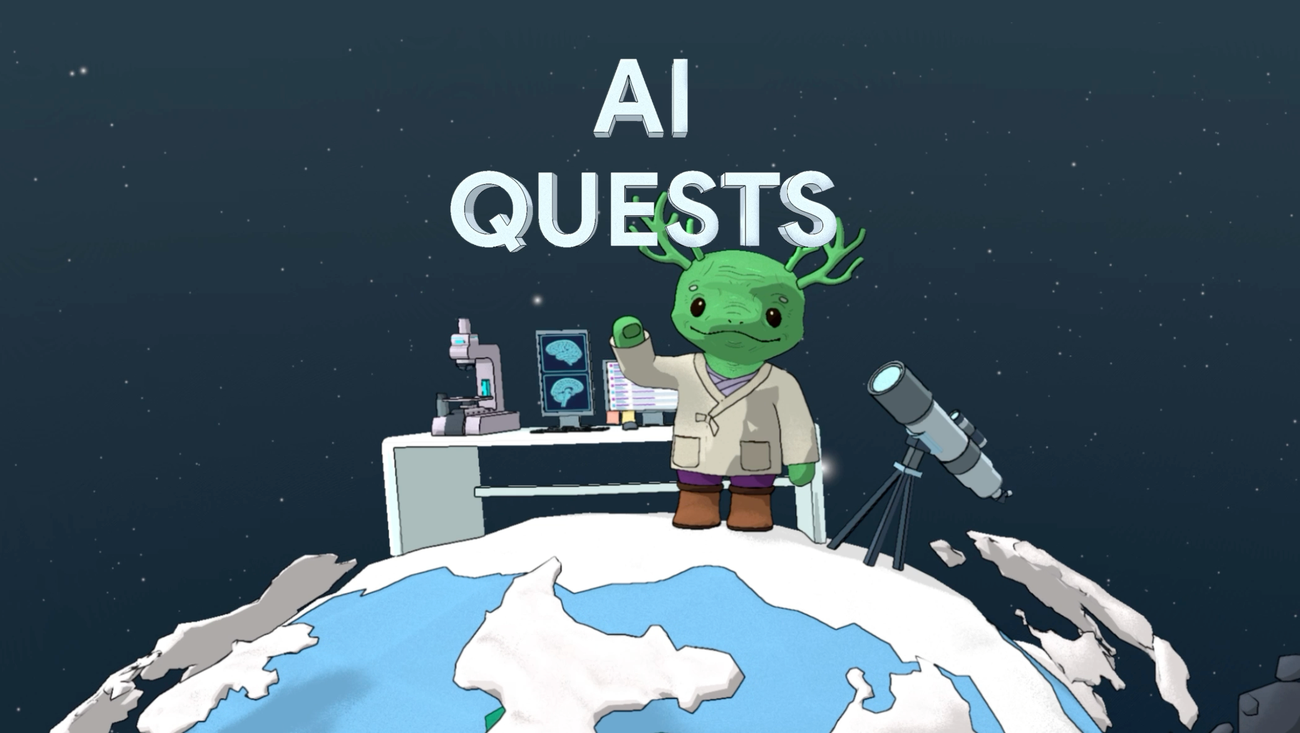
Google Research and the Stanford Accelerator for Learning have launched Polar Peaks, a new interactive lesson intended to teach artificial-intelligence literacy through a neuroscience challenge. The activity is the third release in Google’s AI Quests series and is aimed at students ages 11 to 14.
In Polar Peaks, students take on the role of researchers mapping the human brain. The lesson uses that setting to introduce how AI can support scientific work while placing equal emphasis on the judgment people need when working with AI systems. Students practice tasks including data cleaning and model testing, according to Google.
The launch is notable because it treats AI literacy as more than learning how to prompt a chatbot or recognize a product feature. The lesson connects AI concepts to a research problem: understanding neurons and brain maps. That approach gives students a concrete setting for considering what data a model uses, how its outputs should be tested and why human oversight remains important.
Learning the work around an AI model
The core activities point to an important distinction in AI education. A model is not useful simply because it produces an answer. Its results depend on the data supplied to it, the way it is evaluated and the people responsible for deciding how it should be used.
Polar Peaks asks students to work with data cleaning and model testing as they pursue the brain-mapping challenge. These are foundational ideas for responsible AI use. Data cleaning concerns the quality and preparation of information before it is used. Model testing concerns whether an AI system performs as expected and where its limitations may appear.
Google says the new quest emphasizes the need for human oversight in technology. That framing matters in a classroom context, where the goal is not just to introduce students to AI tools but to help them develop critical thinking about them. By placing learners in the role of researchers, the lesson presents AI as part of a process involving evidence, testing and human decisions.
The brain-mapping theme also gives the material a link to real scientific research. Google describes the game as showing how AI can help scientists study the brain and accelerate research. The activity does not suggest that AI replaces researchers; instead, it presents the technology as a tool that can assist work when it is used with care.
Part of a broader AI Quests program
AI Quests invites students to step into the shoes of Google researchers while tackling major challenges. Before Polar Peaks, the series used flood forecasting and eye-disease detection as its first two scenarios. The new lesson extends that model into neuroscience.
Google says more than 400,000 quests have been completed so far and that the program has been localized into 10 languages. That reach makes the release more than a single classroom exercise: it adds a new subject area to an existing international educational program focused on AI literacy.
The choice of scenarios is also revealing. Flood forecasting, eye-disease detection and brain mapping each connect AI to fields where data, model performance and responsible interpretation can matter. They give educators a way to discuss AI through problems that have social or scientific significance, rather than presenting the technology as an isolated subject.
Support for teachers
Alongside Polar Peaks, Google is releasing training modules for teachers through the Google AI Educator Series. The additional training is intended to help educators bring the lessons into classrooms.
Teacher support is especially relevant for AI instruction because the subject changes quickly and often raises questions that extend beyond technical use. Educators may need to guide conversations about evidence, errors, oversight and the appropriate role of automated systems. A lesson can introduce those ideas, but teachers determine how students discuss and apply them.
The program’s target age group, 11 to 14, places the material at an early stage of students’ formal engagement with AI. At that age, a practical introduction to data cleaning, model testing and human oversight can establish habits that remain useful as AI becomes more present in schoolwork, research and daily life.
A curriculum choice with a responsible-AI focus
Polar Peaks is designed to make AI literacy active rather than abstract. Students are not only told that data matters or that models need testing; they encounter those ideas within a challenge about mapping neurons. The scientific setting gives those concepts a purpose and can help connect technical processes to the decisions that surround them.
Google’s description repeatedly returns to responsibility and critical thinking. That is the central educational proposition of the release. AI can assist researchers and speed up aspects of scientific work, but its use requires people who can assess information, test systems and exercise judgment.
For schools, the launch adds another resource to a growing effort to teach AI as both a capability and a subject for informed scrutiny. Polar Peaks’ focus on neuroscience gives that effort a distinctive entry point: understanding how computational tools can aid the study of the human brain while teaching students why human oversight remains part of the work.
This article is based on reporting by Google AI Blog. Read the original article.
Originally published on blog.google