A partnership aimed at unstructured work
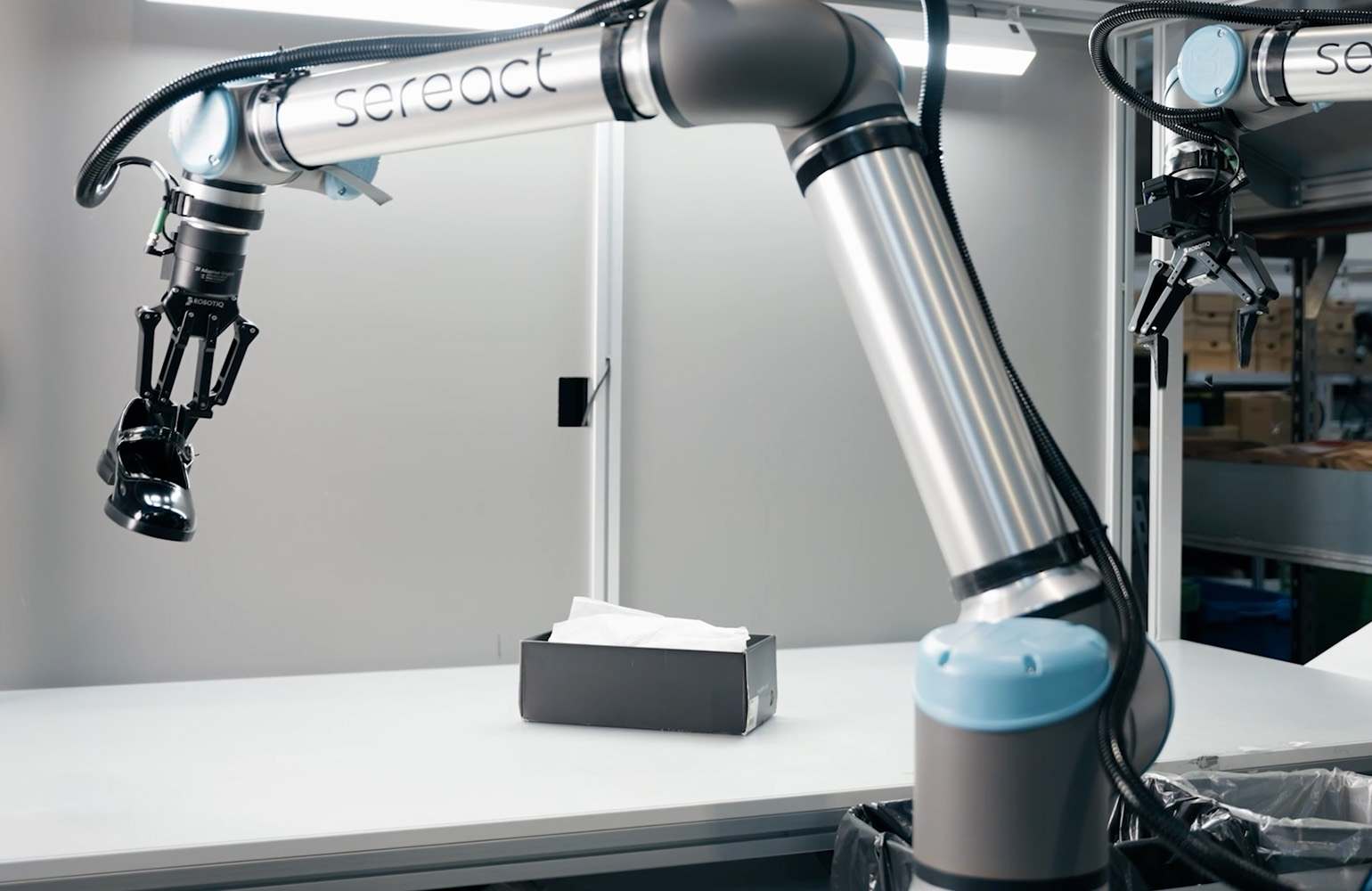
Teradyne Robotics and Sereact have formed a partnership to expand industrial artificial-intelligence systems for retail, logistics and manufacturing. The companies are combining Sereact’s Cortex physical AI platform with robot arms from Universal Robots, a Teradyne Robotics company, to automate work including returns handling and piece picking.
The announcement was made at NVIDIA GTC Berlin 2026. It comes with a notable operational claim: the companies say they have already shipped hundreds of Universal Robots units in dual-arm systems to live customer sites across Europe. At Zalando fulfillment centers in Germany and Poland, the joint systems are being used to autonomously process returned fashion items.
The focus is not a single tightly controlled factory task. It is work involving mixed goods, unknown items and varied packaging—conditions that are common in warehouses and retail supply chains, but difficult for conventional automation designed around predictable parts and fixed layouts.
One software platform across applications
Sereact develops software intended to help robots identify, grasp and handle objects they have not previously encountered. Through the partnership, its Cortex platform runs Universal Robots arms. The companies say the system can support piece picking and sortation, order induction, machine tending, bin consolidation, kitting, packing and broader goods handling.
Sereact co-founder and chief executive Ralf Gulde described Cortex as a production model intended to operate across multiple applications rather than requiring a separate model for each item or task. In the company’s account, the same system can be used for returns, replenishment and kitting, while learning generated by one robot can benefit others.
That is the central promise behind the “physical AI” label used by the partners. The goal is not simply to attach machine-learning software to an industrial arm. It is to give a fleet of machines a common capability for perceiving and handling changing physical environments, so that deployments can extend beyond a demonstration or a narrowly configured pilot.
Why logistics is a proving ground
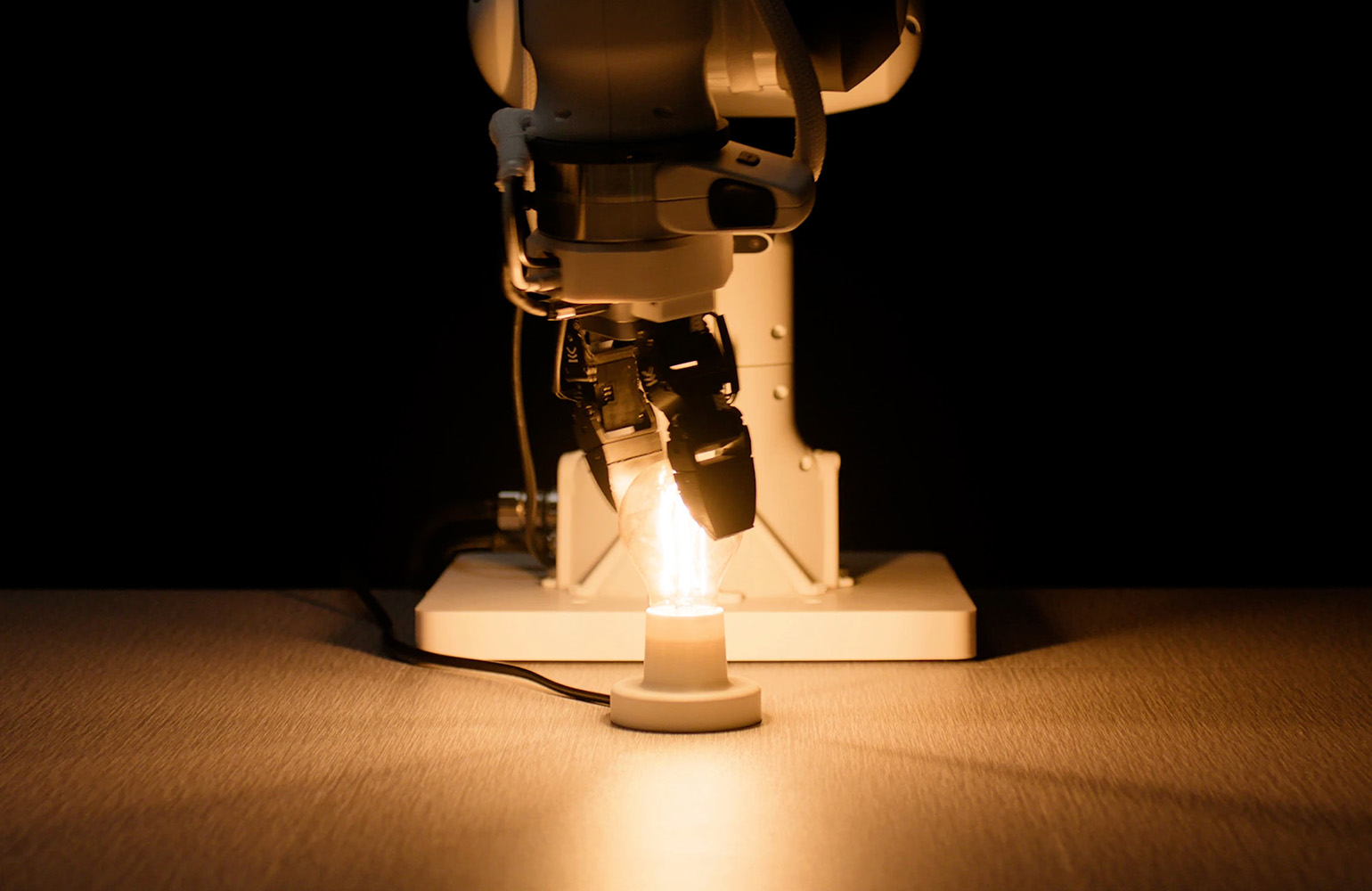
Returns processing and fulfillment are useful tests for this kind of system because the objects arriving at a work cell can vary substantially. Items may be unfamiliar, packed differently or mixed with other goods. A robotic system must do more than repeat a preprogrammed motion; it must identify what is present and select an action that can work in the moment.
The companies say their combined offering handles mixed goods, unknown items and varied packaging. Those are precisely the conditions in which a robot’s hardware, perception software and deployment workflow have to operate together. An arm may be capable of moving quickly and accurately, but it still needs software that can determine how to approach an item and whether a grasp is likely to succeed.
Universal Robots brings a large installed industrial base to the partnership. Teradyne Robotics chief commercial officer Jacob Pascual Pape said the company’s robots are open, connected and proven through more than 100,000 industrial deployments. Sereact’s role is to provide the physical-AI layer intended to extend those arms into tasks that are less structured than traditional robot applications.
From Europe to North America
The companies are also using the partnership to pursue wider geographic deployment. Sereact opened U.S. headquarters in Charlestown, Massachusetts, during the summer, according to the announcement. The new presence is intended to help serve demand in North America, while Teradyne contributes a global distribution and integrator network.
That channel matters in industrial automation. Warehouse and manufacturing systems do not become operational simply because a model can recognize an object in a lab. They need integration with facilities, processes and existing equipment. A partner with established robot platforms and an integrator ecosystem can help move a software capability from a customer trial into a repeatable deployment.
The companies characterize their existing installations as evidence that the technology has moved beyond the demo stage. The available details do not independently quantify performance, cost or reliability, and the announcement does not specify how many sites are running the joint systems. Still, the reported European deployments provide a concrete use case: returned fashion goods at Zalando facilities in Germany and Poland.
The broader industrial question
Physical AI is increasingly framed as an effort to close the gap between AI systems that interpret digital information and machines that must act on real objects. In a warehouse, the relevant question is not only whether software can label an item. It is whether the combined system can pick, sort, consolidate or pack it safely and consistently in a live operation.
Teradyne Robotics and Sereact are positioning their partnership around that gap. By pairing Cortex with Universal Robots arms and targeting applications from returns to machine tending, they are betting that a shared software model can make automation of varied physical work more scalable. The next measure of that claim will be the breadth and durability of production deployments as the partnership expands.
This article is based on reporting by The Robot Report. Read the original article.
Originally published on therobotreport.com