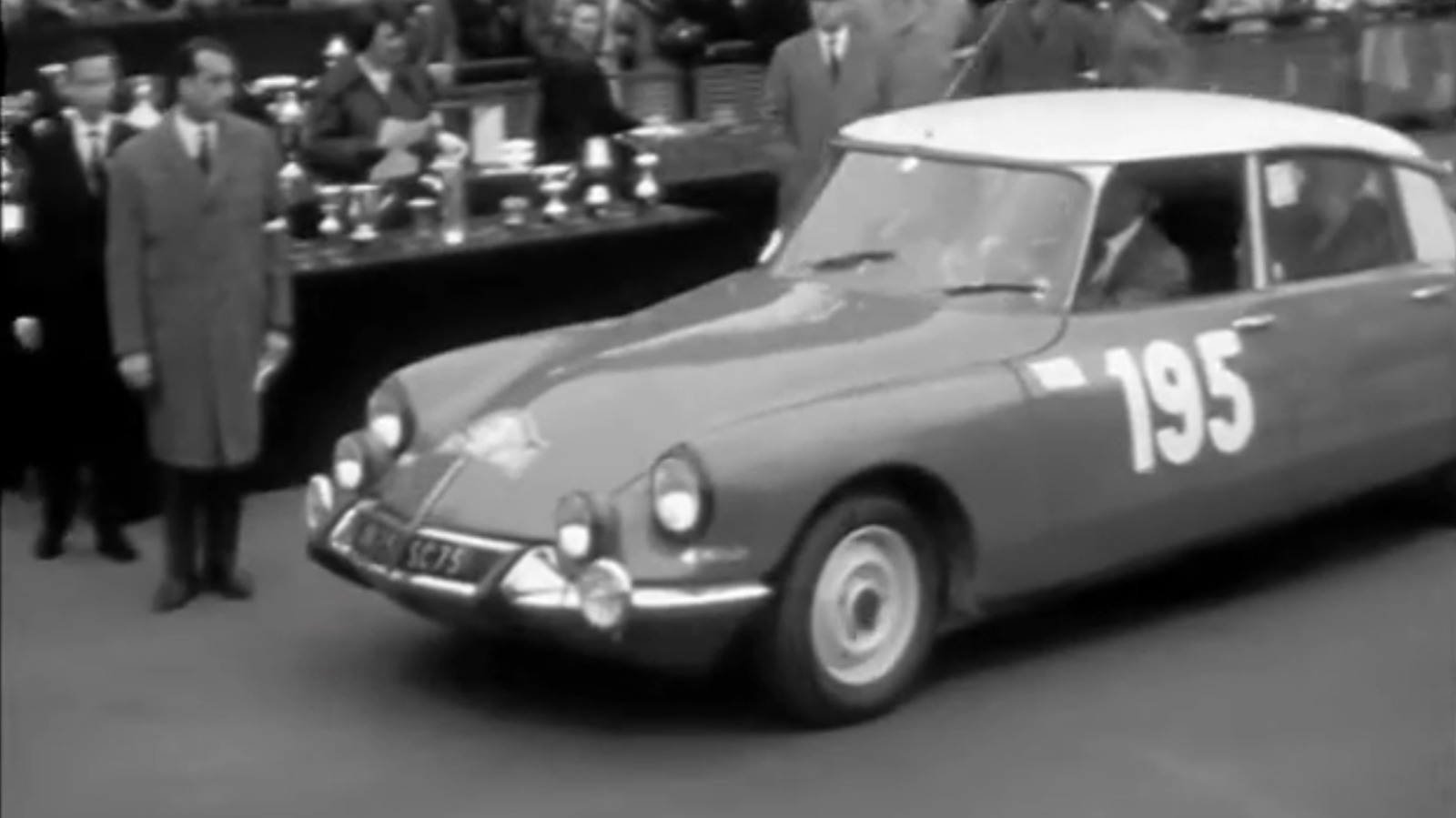
Rolls-Royce has opened the Eric Platford Testway, a test route named in honor of the company's first chief tester. The item, reported by Automotive News, links a piece of present-day vehicle-development infrastructure to one of the oldest roles in the marque's engineering lineage.
The name is the news. Automakers open proving grounds, durability loops, climatic chambers, brake-fade stretches and simulation halls more or less constantly, and most of those facilities end up with functional labels: a site code, a track number, a place name on a map. Putting a person's name on a test route signals something else. It asks the reader to treat testing as a human craft with a history, rather than as a checkbox at the end of a validation matrix.
That framing is worth pausing on. Testing is the part of car development the public rarely sees and the part that most directly determines whether a product justifies its price. A company that names a route after the person who ran that function first is making an argument about what it values — and, implicitly, about who is supposed to carry that standard forward.
What the Announcement Actually Establishes
Stripped to its verifiable core, the disclosure is short. It contains a small number of facts:
- Rolls-Royce has opened a facility called the Eric Platford Testway.
- The route is named in honor of Eric Platford, identified as the company's first chief tester.
- The news was carried by Automotive News.
Everything else sits outside what was disclosed. The announcement does not specify the route's length, its surface composition, its geographic location, the gradients or corner types it incorporates, or the vehicles and powertrains that will be validated on it. It does not state when the facility began operating, how long it took to build, or what engineering targets the company expects it to support. Readers should treat those gaps as open questions rather than as safe assumptions.
That sparseness is not a flaw in the story so much as a characteristic of it. Heritage announcements are rarely technical documents. Their purpose is remembrance and positioning, and they tend to be measured in column inches rather than in specification sheets.

The Weight of the Title "First Chief Tester"
Job titles are historical artifacts, and "chief tester" is an unusually revealing one. In the formative decades of the automobile industry, evaluation was not a desk discipline conducted against a spreadsheet. The people who judged whether a car was fit to sell were frequently the same people who had built, repaired, driven and raced them. They worked by feel, by ear, by smell, by the willingness to drive a machine to the point of failure and then describe precisely what broke.
A chief tester in that environment occupied a strange and influential position: close enough to the workshop to argue with engineers about tolerances, and close enough to the customer to insist that a rattle, a vibration or a dragging brake mattered commercially. The role combined the instincts of a mechanic with the authority of a final gatekeeper. When a chief tester said a car was not ready, the car was not ready.
The announcement does not detail Platford's tenure, the models he evaluated, the era in which he worked, or the methods he used. Those specifics are not part of the release. What the honor does communicate is continuity — an assertion that the function he helped define, finding problems before customers do, remains central to how Rolls-Royce builds and validates cars today.
Why Automakers Keep Naming Things After People
Corporate naming is never purely sentimental. Attaching a founder, engineer or test driver's name to a building, a road or a bench is a way of encoding institutional memory into the physical plant. New employees walk past the name every day. Suppliers visiting the site read it on a sign. The name becomes shorthand for a standard.
That practice serves a practical purpose in an industry with brutal employee turnover and long product cycles. A vehicle program can run for five or six years from first sketch to showroom. The engineers who sign off on a chassis at the start are often not the ones who sign off on it at the end. A named facility is a small, durable reminder that the decisions made in year two matter in year six.
It also has an obvious external function. Luxury marques trade heavily on provenance, and provenance is easier to sell when it is anchored to specific people rather than to abstract adjectives. A testway named for a first chief tester gives dealers, owners and enthusiasts a concrete story to tell — one that points at rigor rather than at ornamentation.

What a Testway Is For, in General Terms
Test routes of this kind exist because laboratories cannot reproduce the compounded conditions of real roads. A closed course lets engineers stack variables on purpose: coarse chip seal followed by polished asphalt, sustained high-speed running followed by repeated low-speed maneuvering, broken surfaces that excite a chassis in ways a smooth proving-ground loop never will.
The point is not simply to see whether something breaks. It is to determine how it behaves as it degrades. A luxury vehicle is judged on the tenth thousand mile as much as the first, and the signs of aging — squeaks, trim movement, damper wear, seal degradation, brake judder — tend to appear gradually and in combination. Extended route testing is one of the few tools that surfaces them before a customer does.
Whether the Eric Platford Testway is built around that philosophy, and how it differs from whatever facilities Rolls-Royce used previously, is not something the announcement answers. Nor does it indicate whether the route is intended for combustion models, electrified models or both — a distinction that matters a great deal, since noise and vibration signatures differ fundamentally between a silenced powertrain and an internal-combustion one.
What to Watch Next
Several follow-up details would turn this from a naming story into an engineering story:
- Specifications for the Testway itself — length, surface variety, and the specific durability and comfort regimes it supports.
- Which current and future models will be signed off there, and whether electric drivetrains are part of the plan.
- Any public accounting of Platford's career: the cars he evaluated, the era he worked in, and the standards he is credited with establishing.
- Whether the naming reflects a broader heritage program, or stands alone as a single commemorative gesture.

The Bottom Line
Rolls-Royce has put a name on a test route and, in doing so, has chosen to spotlight the least glamorous and most consequential part of building a car. The Eric Platford Testway is a modest announcement on its face — one sentence's worth of confirmed detail. But the instinct behind it is legible. Testing is where promises about quality are either kept or quietly abandoned, and the company has decided that the person who ran that function first deserves to be on the sign.
For now, the specifics remain undisclosed, and the honor rests on a title: first chief tester. That is enough to make the point. Whether the route itself becomes part of the company's public story about how it validates its cars depends on details that have not yet been shared.
This article is based on reporting by Automotive News. Read the original article.
Originally published on autonews.com
![Volkswagen's new electric hot hatch delivers more power than the Golf GTI [Images]](https://electrek.co/wp-content/uploads/sites/3/2026/09/Volkswagen-ID.3-GTI-EV-side.jpeg?quality=82&strip=all&resize=1200,628)