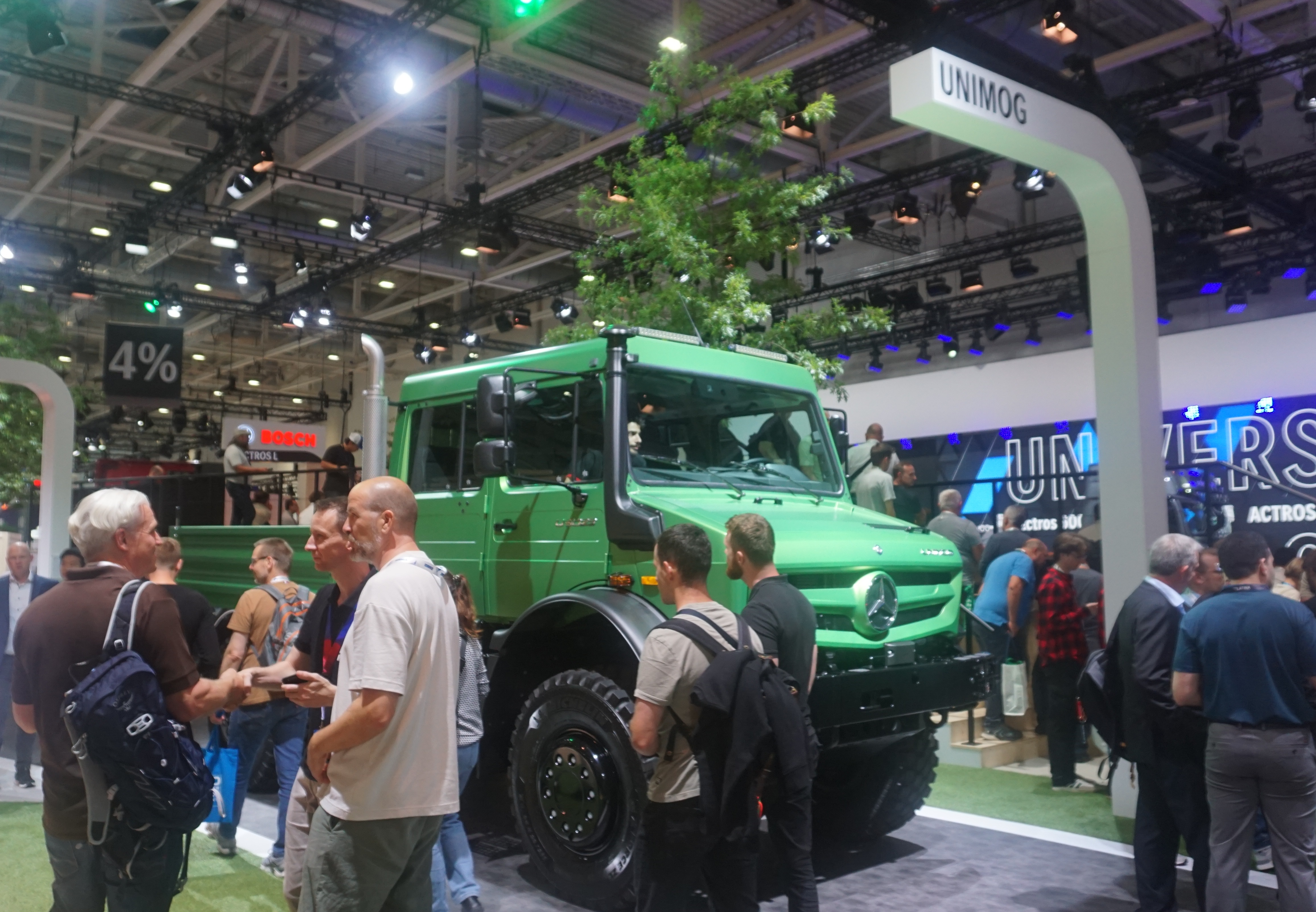
Europe's leading truck manufacturers are not speaking with one voice about Chinese competition. MAN, Volvo and Daimler Truck — the continent's best-known heavy-truck makers — are divided over how to counter Chinese expansion in commercial vehicles, according to Automotive News. That disagreement is more than an industry talking point. It strikes directly at the tariff consensus that has shaped Europe's broader response to Chinese industrial competition, and it suggests that the political unity assembled around passenger cars may be considerably harder to reproduce when the product in question is a tractor unit, a delivery van or a municipal bus.
A Consensus Built Around Passenger Cars
The tariff debate in Europe has largely been framed by passenger vehicles. That framing made the politics relatively manageable. Cars are sold to individual buyers, brand loyalty still carries weight, and the argument for protecting domestic manufacturing can be made in terms of jobs, plant utilization and technological sovereignty without immediately raising uncomfortable questions about who pays.
Commercial vehicles behave differently. The customer is rarely an individual. It is a haulage company, a logistics operator, a construction firm, a supermarket chain or a public transit authority. Those buyers run fleets, calculate total cost of ownership across hundreds of thousands of kilometres, and care about uptime, service networks and residual values at least as much as they care about badge prestige. When a new entrant promises a lower acquisition price or a cheaper drivetrain, the incentive to try it is structural rather than sentimental.
That difference explains why the European truck industry has struggled to arrive at a single position. A tariff regime that protects one manufacturer's home market may raise costs for another manufacturer's customers. A policy that defends the status quo in heavy trucks may be irrelevant to a company whose exposure sits in lighter vehicles or in entirely different geographies.
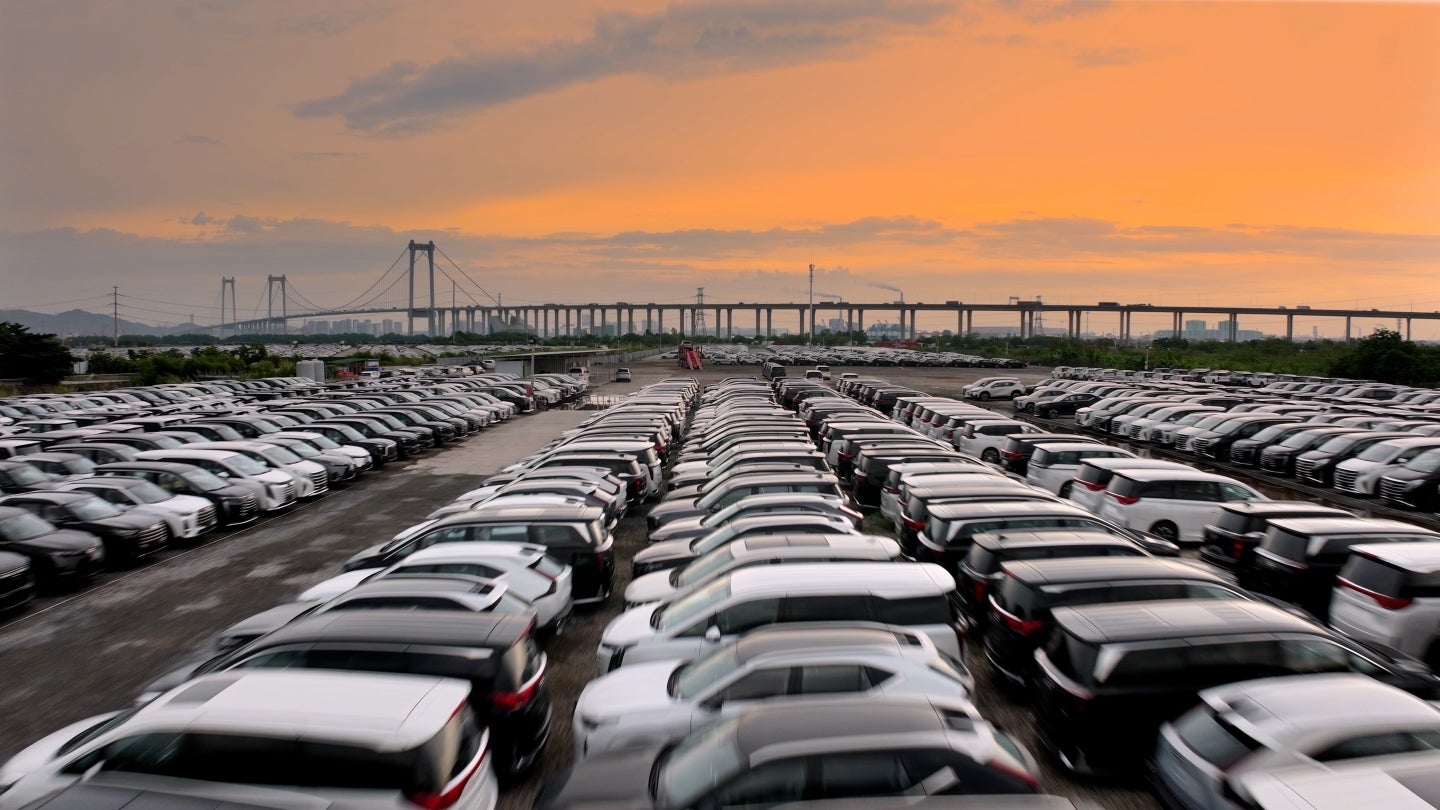
Why MAN, Volvo and Daimler Truck See It Differently
The three companies named in the report are frequently treated as a single European bloc, but their commercial realities are not identical. Truck makers differ in how much they sell into China, how deeply they are embedded in Chinese supply chains, how much of their production footprint sits inside Europe, and how their product lines map onto the segments where Chinese manufacturers are strongest.
Those differences create divergent incentives. A manufacturer with substantial Chinese sales, joint ventures or component sourcing has reason to worry about retaliation and about the stability of a market it depends on. A manufacturer whose competitive position is concentrated in Europe has reason to favour defensive measures that slow an incoming challenger. Multiply those positions across heavy trucks, medium-duty vehicles, vans and buses, and a unified industry line becomes genuinely difficult to construct — not because the companies disagree about the existence of the challenge, but because they disagree about the remedy.
The result is a lobbying environment in which the loudest message is not a single demand but a set of competing ones. That is precisely the condition under which trade policy tends to stall.
Commercial Vehicles Are Their Own Battlefield
There is a second reason the commercial vehicle sector resists a simple tariff answer. The transition to electrified road freight is still at an early stage, and it imposes costs that fleet operators must absorb before they see returns. Battery-electric trucks remain expensive relative to diesel equivalents, charging infrastructure for heavy vehicles is uneven, and payload and range constraints vary sharply by duty cycle.
In that environment, price competition lands differently than it does in the consumer car market. A cheaper electric truck can accelerate fleet renewal and help operators meet emissions targets that regulators keep tightening. It can also undercut incumbent manufacturers before they have recovered their own investment in electrification — investment made under the assumption that European policy would support a managed transition.
Tariffs address the second problem but may worsen the first. Duties raise the landed cost of imported vehicles, which protects domestic producers but also increases the price that hauliers pay for the equipment they need to decarbonize. For an industry with thin margins and long asset cycles, that trade-off is not abstract.
The Policy Dilemma in Brussels
European trade policy has increasingly relied on defensive instruments to respond to Chinese industrial capacity. Those instruments work best when the affected industry presents a coherent case: a clear definition of harm, a shared account of the cause, and a common view of what relief should look like.
A divided truck sector struggles to supply any of the three. Where manufacturers disagree about whether duties are the right tool, or about which segments should be covered, the political case weakens. Member states add another layer of fragmentation, since the countries that host truck plants, the countries that host their suppliers and the countries whose hauliers would bear higher equipment costs do not necessarily see the same calculus.
None of this means tariffs are off the table. It means the commercial vehicle debate is likely to be slower, messier and more segmented than the passenger car debate that preceded it.
What to Watch
- Whether MAN, Volvo and Daimler Truck converge on a shared position, or continue to lobby along separate lines.
- Whether European policymakers treat trucks, vans and buses as one file or as several distinct ones.
- Whether Chinese manufacturers respond to trade pressure by announcing local assembly or manufacturing inside Europe.
- How fleet operators and logistics associations weigh cheaper vehicles against supply-chain and service-network risk.
- Whether the split inside the industry is cited by governments looking for reasons to delay or narrow any measure.

The Bottom Line
The story here is not simply that Chinese manufacturers are expanding into commercial vehicles. It is that the European producers who would be most directly affected cannot agree on how to respond. Tariff consensus, once assembled, is not self-sustaining. It has to be rebuilt for each product category, each supply chain and each set of customers — and in heavy road transport, with its hard-nosed fleet buyers and its expensive electrification agenda, that reconstruction has only just begun.
This article is based on reporting by Automotive News. Read the original article.
Originally published on autonews.com



![Volkswagen's new electric hot hatch delivers more power than the Golf GTI [Images]](https://electrek.co/wp-content/uploads/sites/3/2026/09/Volkswagen-ID.3-GTI-EV-side.jpeg?quality=82&strip=all&resize=1200,628)