A Signature That Changes Nothing — For Now
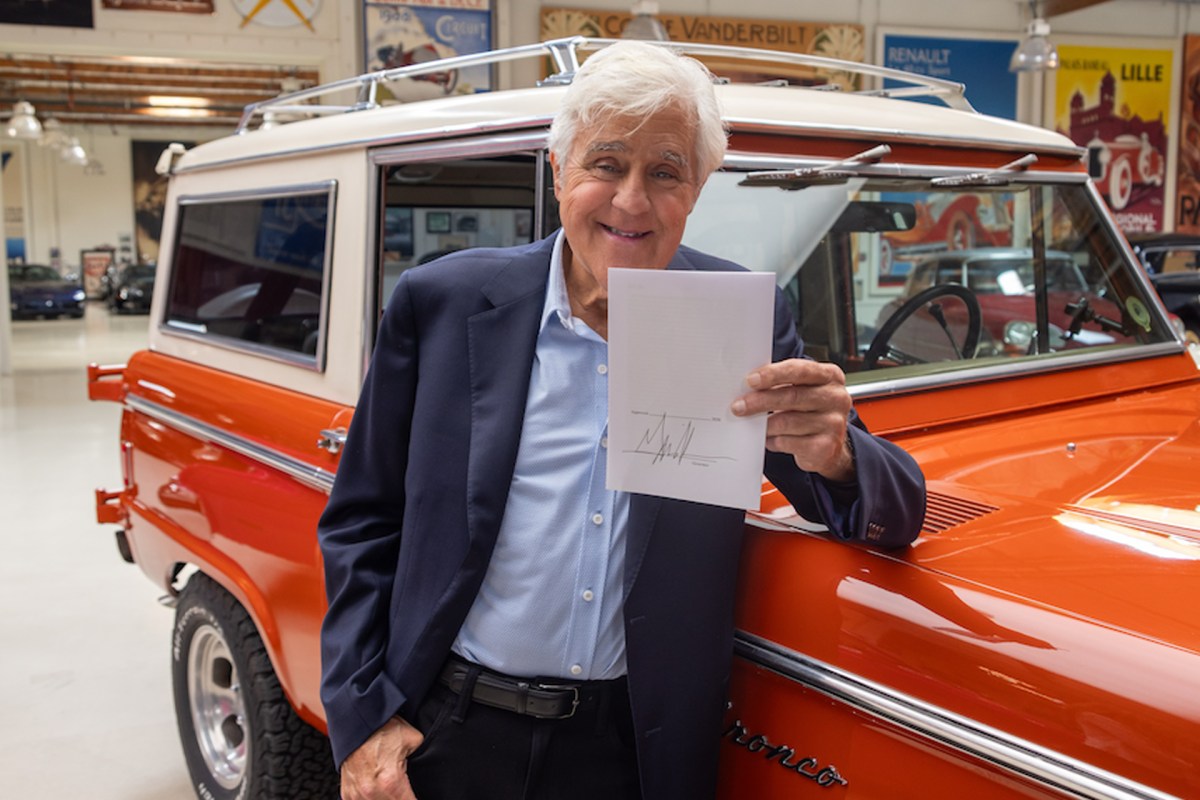
California Senate Bill 1392, better known as "Leno's Law," has cleared its final hurdle. Governor Gavin Newsom signed the measure, handing car collectors in the Golden State a long-sought concession on emissions testing. The nickname comes from comedian and prolific car collector Jay Leno, whose endorsement helped push the proposal into the spotlight.
The celebration, however, should be a patient one. The exemption does not take effect immediately. It begins phasing in on January 1, 2028, which means owners of affected vehicles will keep operating under the current smog-testing regime for some time yet.
The intent behind the bill was straightforward: carve out breathing room for older vehicles that are treated as hobby objects rather than daily transportation, while stopping well short of letting badly polluting cars roam freely. As described by the governor's office, the law is a narrow smog-check exemption — not a broad deregulation of the state's emissions rules.
Why California's Rules Needed Adjusting
California is, by broad agreement, the most car-obsessed state in the country, yet its registration system is genuinely unusual. There is no real annual safety inspection requirement at all. What the state does enforce aggressively is smog testing: vehicles must pass regular emissions checks if their owners want to keep them road legal.
The longstanding exception is age-based. Cars from the 1975 model year or older are exempt from such testing entirely. That cutoff left a gap in the middle of the collector market. Vehicles built just a few years later — the 1976 through 1985 model years — still had to pass emissions checks despite being decades old and, in many cases, driven sparingly as collectibles.
The result was an odd asymmetry. A 1975 model could be registered without ever facing a smog test, while a mechanically similar car built two years later faced the same inspection requirements as a late-model daily driver. Leno's Law was designed to close part of that gap, extending a version of the older-car accommodation to a slightly newer slice of the fleet.
What the New Exemption Actually Covers
As presented by the governor's office, the measure establishes a "narrow smog-check exemption for qualifying collectors cars from the 1976 through 1985 model years that are insured as collector vehicles or driven less than 1,000 miles per year."
Collector cars have now been added to the list of vehicles exempt from smog testing. But old age alone does not unlock the benefit. California defines a collector car using a specific set of criteria:
- The vehicle must be at least 35 model years old.
- It must be used primarily in shows, parades, charitable functions and historical exhibitions — for display, maintenance and preservation — and must not serve as the owner's primary mode of transportation.
- It must either be insured as a collector motor vehicle or be determined to be driven fewer than 1,000 miles per calendar year.
Two additional technical requirements apply on top of those. The car has to actually comply with the exhaust emissions standards for its class and model year, and it must pass a functional inspection of the fuel cap along with a visual inspection for liquid fuel leaks. In other words, the exemption relaxes the testing schedule for qualifying vehicles, but it does not excuse a car that is visibly leaking fuel or otherwise out of spec for its era.
The model-year window itself is deliberately tight. Owners of 1976-1985 vehicles sit at the center of the new provision, while anything newer remains under the state's standard smog-testing expectations.
The Insurance-or-Mileage Loosening
One detail deserves extra attention: the alternative between collector insurance and low annual mileage represents a loosening compared with earlier drafts of the legislation and with the state's existing collector-car accommodation. Under the new framework, an owner is no longer strictly required to carry classic-car insurance if the vehicle can be shown to cover fewer than 1,000 miles in a calendar year.
For collectors whose cars sit in garages for most of the year and emerge only for weekend events, that flexibility matters. Eligibility can be established through documented low usage rather than through a specific insurance product, which widens the pool of owners who can realistically qualify.
![Volkswagen's new electric hot hatch delivers more power than the Golf GTI [Images]](https://electrek.co/wp-content/uploads/sites/3/2026/09/Volkswagen-ID.3-GTI-EV-side.jpeg?quality=82&strip=all&resize=1200,628)
The Catch: 35 Years Isn't a Free Pass
The criterion most likely to trip people up is the age threshold. Being at least 35 model years old is a starting condition, not a qualification on its own. A car can meet the age test and still fail to qualify if it serves as a primary vehicle, if it is not kept for display, maintenance and preservation purposes, or if the owner cannot demonstrate either collector insurance or sub-1,000-mile annual use.
The use restrictions are similarly demanding. The statute frames collector vehicles as objects used primarily in shows, parades, charitable functions and historical exhibitions — language that describes a hobby vehicle rather than a cheap commuter. Anyone hoping to use the exemption as a backdoor way to keep an aging daily driver on the road without passing emissions checks should expect to be disappointed.
What the Law Does Not Do
It is worth being clear about the boundaries. This is not a license to roll coal or otherwise pollute freely; the exemption is explicitly narrow by design. It does not loosen anything for 1975-and-older vehicles, which were already exempt. It does not dismantle California's smog program or remove testing requirements for the vast majority of vehicles on the road. And it does not apply to every old car — only to the specific 1976-1985 window, and only to those examples that satisfy each condition on the checklist.
Owners who assume that any vehicle crossing the 35-year mark automatically becomes smog-exempt would be reading the bill far too generously.
What Owners Should Do Before 2028
Because the phase-in does not begin until January 1, 2028, there is time to prepare. Practical steps for owners in the affected model-year range include:
- Confirm the vehicle's model year falls within the 1976 through 1985 window.
- Decide whether to pursue collector-vehicle insurance or to document annual mileage below 1,000 miles.
- Keep records — maintenance history, event participation and mileage logs — that support claims about how the car is used.
- Address obvious compliance issues, such as a faulty fuel cap or visible fuel leaks, before any inspection.
- Track implementation guidance, since the exemption phases in rather than switching on all at once.
The Bottom Line
Leno's Law delivers a real but modest expansion of California's smog exemptions, extending a measure of relief to a slice of the collector market that had been stranded between the state's generous treatment of pre-1976 vehicles and its strict testing regime for everything newer. The signature is the headline; the eligibility checklist is the story. For owners of 1976-1985 collector cars, the immediate next steps are paperwork and patience — with the first tangible benefits arriving in 2028.
This article is based on reporting by The Drive. Read the original article.
Originally published on thedrive.com