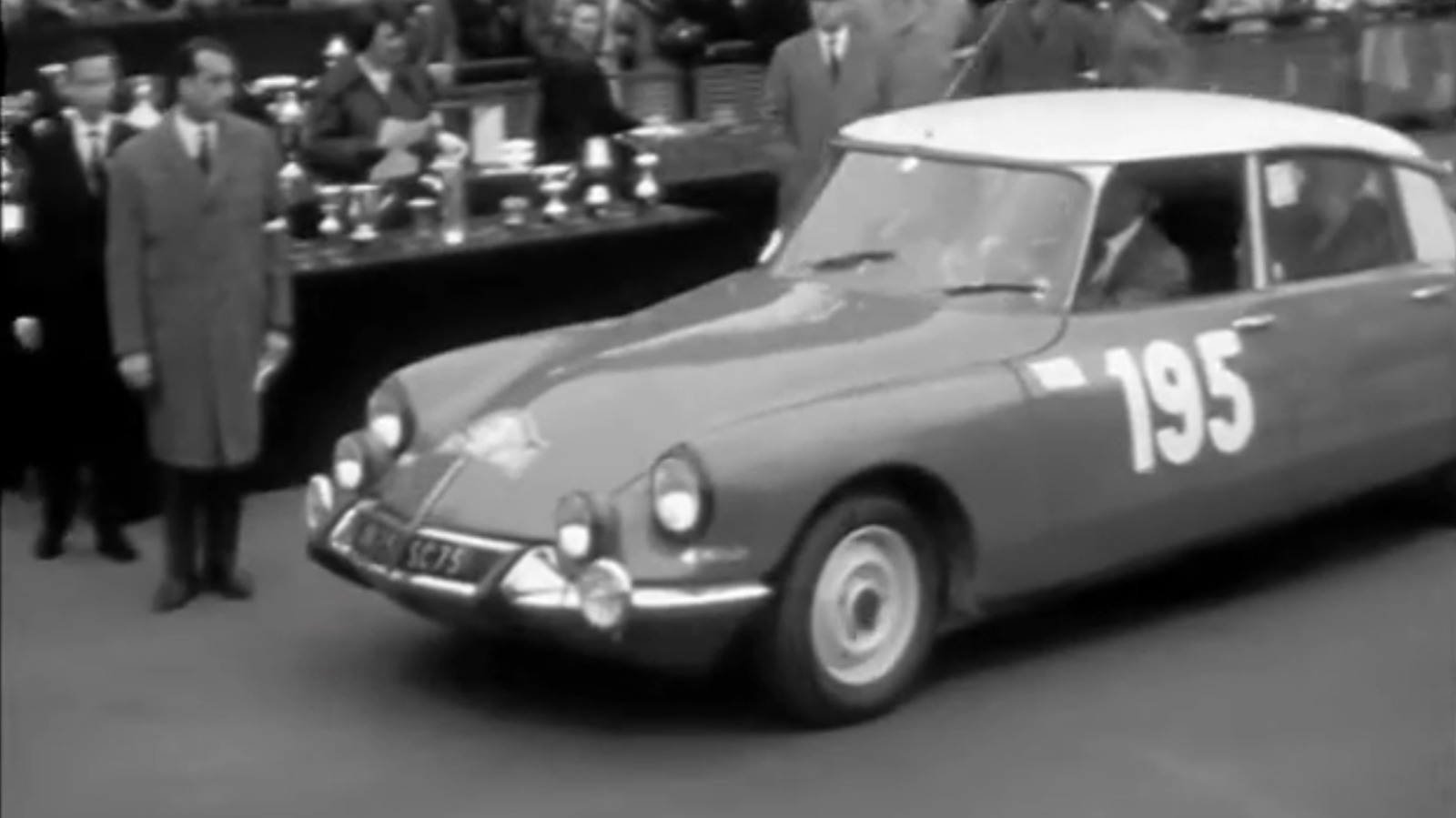
Imagine crossing a finish line in fifth place, only to be handed the winner's trophy. That is exactly what happened to Finnish driver Pauli Toivonen at the 1966 Monte Carlo Rally. His Citroën DS had not been the quickest car over the rally's punishing mountain stages, yet he was declared the official victor. The reason was not a miraculous time correction or a successful mechanical appeal. It was a mass disqualification of the cars that had beaten him.
The result remains one of the most disputed in motorsport history. It left fans angry, officials defensive, and even the beneficiary of the decision uncomfortable with his own victory. To understand how a fifth-place finish became first, you have to go back to the rulebook — and the politics surrounding a tiny British car that had become almost unbeatable.
A Finish Line That Told the Wrong Story
When Toivonen's Citroën DS crossed the line, the running order was clear. Four British cars had completed the rally ahead of him, and three of those were Minis. Then came the announcement: all four were disqualified. The reason given by FIA officials at the time was a headlight design that had been barred from the event. Just like that, the fourth car ahead of him was gone, then the third, then the second, and finally the leader. Toivonen was elevated to first place.
For the crowd, the decision landed like a thunderclap. The Mini had won the previous two editions of the Monte Carlo Rally, and a third consecutive victory looked almost inevitable. Instead, spectators watched the podium being rearranged by paperwork rather than by driving. Fans of the sport — especially British fans — were furious, and many believed the Minis had been deliberately robbed.

The Little Car That Kept Winning
To grasp why officials might have wanted to slow the Mini down, you only need to look at the results from 1964 and 1965.
1964: Hopkirk Leads a Mini Charge
In 1964, Irish rallying legend Paddy Hopkirk won the Monte Carlo Rally in a Mini Cooper S, the performance version developed by John Cooper. The victory was no fluke either: Mini drivers also finished fourth and sixth, showing that the small, nimble car was perfectly suited to the slippery, twisting roads above Monaco.
1965: Mäkinen Makes It Two
The following year, Finnish driver Timo Mäkinen took the top step in a Cooper S. This time the Mini was the only one of its kind in the top ten, but the message was unmistakable. The car that many had dismissed as a humble economy model had now won the sport's most glamorous rally twice in a row.
Whispers began to circulate that officials in Monaco were unhappy with the streak. A Mini three-peat, the rumor went, would embarrass the French automakers that were expected to dominate a rally held on their doorstep. The suggestion was that rule changes might be crafted to give local brands a better shot at winning at home.
Rules, Homologation, and a Handicap
At the time, the Monte Carlo Rally divided cars into groups. Group 1 was the class for production-based machinery, and the rules required that a car be homologated — meaning the manufacturer had to sell 5,000 road-going versions in the exact specification used for racing. If a car was modified in any way for competition, it was bumped into Group 2. And Group 2 cars carried an 18 percent handicap, which effectively put them out of contention for overall victory.
To keep the Mini in Group 1, the British Motor Company built and sold 5,000 rally-spec cars to the public. It was an expensive but straightforward response to the homologation requirement. The manufacturer had jumped through the hoop the rulebook demanded.
The Draft That Changed Everything
But there was more to come. In the first draft of the Group 1 regulations, a detail about lighting became the hinge on which the entire rally turned. The British cars were found to be running a style of headlight that the race had banned. Whether that ban was always intended, or whether it was inserted to catch the Minis, remains a matter of debate. What is not in doubt is the outcome: the four cars ahead of Toivonen were removed from the classification.

Why the Decision Felt Shady
Officials had a rule to point to, but that did not satisfy the skeptics. The disqualifications looked selective, and the timing — after a British car had again looked strong — seemed suspicious. Motorsport has always had its share of controversial rulings, from technical infringements to post-race penalties, but the 1966 Monte Carlo Rally stands out because the punishment went beyond a single competitor. It reshuffled the entire top of the leaderboard and handed victory to a driver who had not been the fastest.
Even the beneficiary of the ruling was uneasy. Toivonen made it clear that he did not like the way the result had been decided. He had come to race, not to collect a trophy awarded by disqualification. His discomfort only deepened the sense that something had gone wrong — not just with the cars, but with the sport itself.
A Victory No One Celebrated
The 1966 Monte Carlo Rally has gone down in history as a scandal rather than a triumph. The Citroën DS that took the official win was a capable machine, and Toivonen was a talented driver. But the asterisk next to their names has never faded. The Mini, meanwhile, gained a different kind of immortality: the car that was so good it had to be disqualified.
The episode also left a lasting question about how rules are made and enforced. Homologation requirements, handicap systems, and technical regulations are supposed to create fair competition. When they are written in ways that target a specific car or a specific team, they can undermine the very legitimacy they are meant to protect.
Decades later, disqualifications remain part of the sport. A single component as mundane as a plank has been enough to strip race results from Formula 1 drivers, showing that technical rulings can still decide championships long after the checkered flag falls. But few decisions have carried the same weight as the one made in Monte Carlo in 1966. That year, the fastest cars were sent home, and a driver who finished fifth was crowned champion. It is a result that still feels wrong — and that is exactly why it is still remembered.
Key Figures and Cars of the 1966 Controversy
- Pauli Toivonen: Finnish driver who finished fifth on the road but was declared the official winner in a Citroën DS.
- Paddy Hopkirk: Irish rally legend who won the 1964 Monte Carlo Rally in a Mini Cooper S.
- Timo Mäkinen: Finnish driver who won the 1965 edition, also in a Mini Cooper S.
- The Mini Cooper S: John Cooper's performance version of the original Mini, dominant in 1964 and 1965.
- The Citroën DS: The car that inherited the 1966 victory after four British entries were disqualified.
- The four disqualified British cars: Three Minis plus one other British entry, all removed over a banned headlight design.
This article is based on reporting by Jalopnik. Read the original article.
Originally published on jalopnik.com