A Car Carrier Big Enough to Be Measured in Football Fields
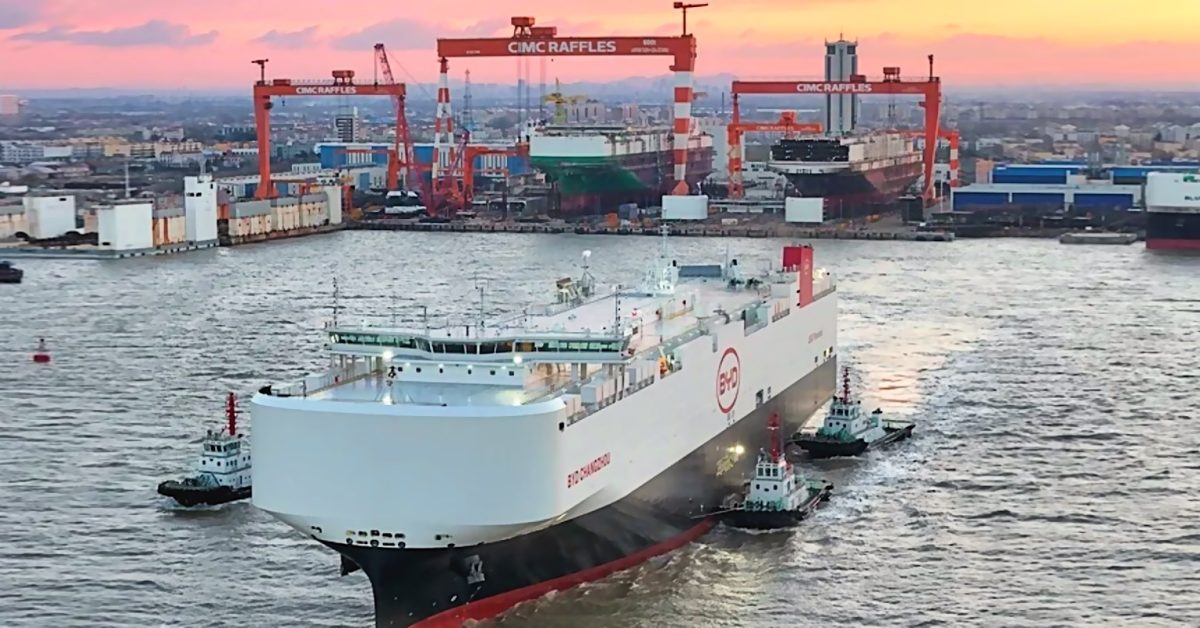
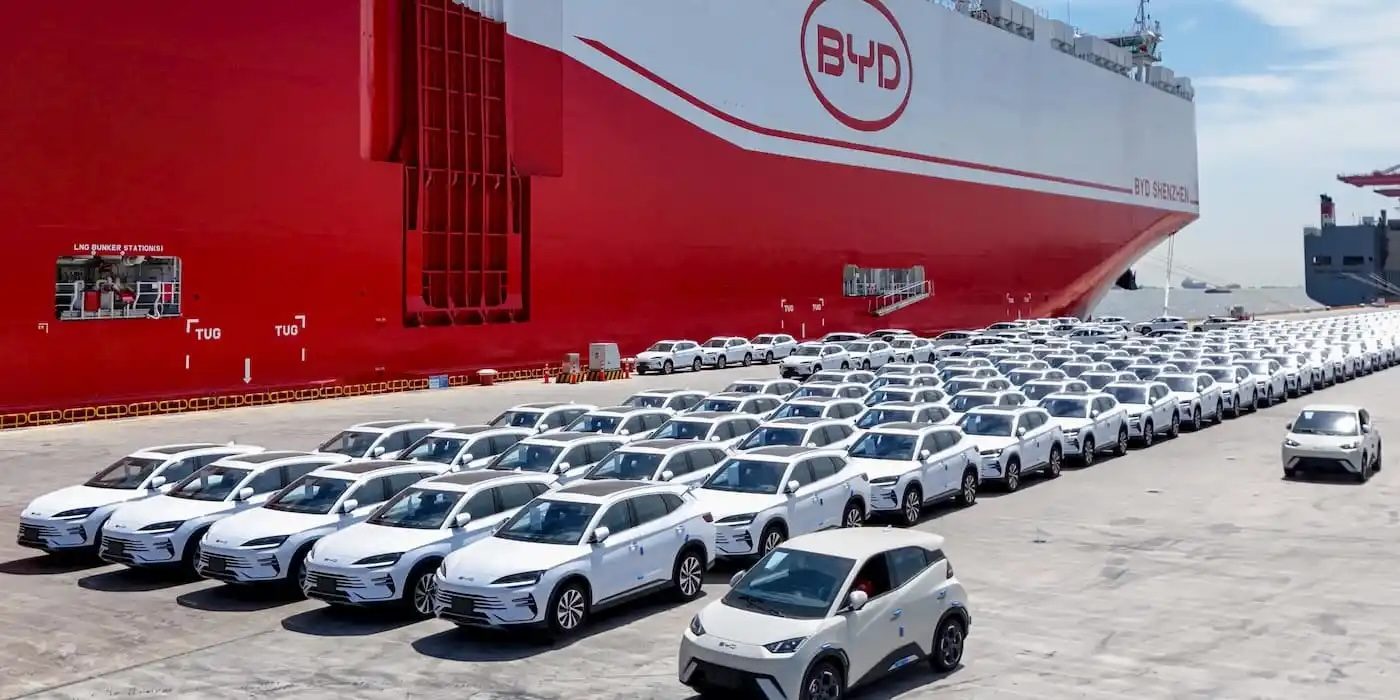
When BYD's vessel Shenzhen set sail on its first voyage, it did so with a claim that is hard to grasp at first glance: enough parking spots for 9,200 vehicles. That figure makes the ship, by the company's own framing, the largest car carrier in the world. Put another way, the deck space devoted to freshly built cars is roughly equivalent to 20 football fields laid side by side — an enormous floating parking structure with an engine and a crew.
Car carriers, often called RoRo ships for the roll-on/roll-off way vehicles are driven aboard and off again, are the unglamorous backbone of the global auto trade. They are also the part of the business that most consumers never think about. A car built in one country and sold in another spends weeks at sea before it ever reaches a showroom, and every one of those weeks carries a cost. BYD's decision to own that step of the journey, rather than simply buy space on someone else's vessel, is the strategic heart of this story.
Ten More Ships on the Way
The Shenzhen was not a one-off experiment. BYD has now ordered ten additional car carriers, extending a bet that controlling ocean freight is as important to its export business as controlling battery production or vehicle assembly. The move follows the pattern set by the first ship: large, purpose-built vessels dedicated to moving the company's own vehicles rather than hauling cargo for third parties.
That distinction matters. A shipping line that carries cars for many manufacturers is chasing whatever cargo pays best in a given quarter. A manufacturer that owns its own fleet is chasing something different — predictability. For a company shipping tens of thousands of electric vehicles a year into Europe, Southeast Asia, Latin America and beyond, the ability to schedule sailings around its own factory output is worth a great deal.
Why Automakers Are Suddenly Interested in Ships
The global fleet of car carriers has been stretched thin for years. RoRo vessels are expensive to build, slow to deliver, and difficult to repurpose once the demand for them shifts. When trade volumes rise quickly, as they did during the surge in electric vehicle exports, charter rates for available ships can climb sharply, and manufacturers find themselves competing for deck space with rivals who are also trying to move metal across oceans.
Owning tonnage changes that calculation in several ways:
- Cost control. A company that owns its ships is insulated from the spot market for vessel charters, where prices can swing dramatically from one quarter to the next.
- Scheduling priority. Dedicated vessels can be routed to match factory output and port availability rather than the priorities of a third-party carrier.
- Capacity certainty. During periods of tight supply, guaranteed deck space is a competitive advantage, not just a convenience.
- Brand control. A ship wrapped in a manufacturer's livery is a moving billboard in every port it enters.
There is a defensive logic at work as well. If a manufacturer cannot secure shipping, vehicles pile up at the docks, dealers go without inventory, and quarterly delivery targets slip. In the electric vehicle business, where competition for buyers is intense and incentives change quickly, that kind of delay can be costly.
The Logistics Layer of the EV Race
Much of the attention on electric vehicles focuses on batteries, charging networks, software and price. The ships that carry them rarely make headlines. Yet the past few years have made clear that logistics is not a background detail — it is a bottleneck that can shape which companies grow and how fast.
BYD's approach fits a broader philosophy of bringing more of the supply chain in-house. The company has long been known for manufacturing a wide range of its own components rather than relying entirely on outside suppliers. Extending that instinct to ocean transport is a natural next step for an automaker whose growth depends on reaching customers far from its home market.
For buyers, the implications are indirect but real. If a manufacturer can move cars more efficiently, it has more room to compete on price and availability in overseas markets. If it cannot, its vehicles sit idle on a dock while competitors' cars reach dealerships first.
Risks Inherent in Owning the Waves
Running a fleet is not without hazards. Ships are capital-intensive assets with long construction timelines, and demand for vehicles can shift faster than a shipyard can deliver a hull. If export volumes slow — because of tariffs, currency swings, local manufacturing mandates or a broader cooling in EV demand — a manufacturer can find itself paying to maintain capacity it no longer fully needs.
There are operational complications too. Ports must be able to accommodate very large car carriers, and congestion at either end of a route can erase the scheduling advantages that ownership is meant to deliver. Sailing a ship is a specialized business, and automakers are, at their core, manufacturers rather than maritime operators.
Still, the calculus appears to favor ownership for a company with BYD's export ambitions. The alternative — competing for scarce deck space at unpredictable prices — introduces uncertainty into exactly the part of the business the company is trying to scale.
What to Watch Next
The interesting questions now concern deployment rather than procurement. Where will the ten new vessels be assigned? Which routes will BYD prioritize, and how quickly will the added capacity enter service? Will the ships remain dedicated to BYD's own vehicles, or will they occasionally carry cargo for others to offset costs during slower periods?
Answers to those questions will reveal how confident the automaker is in the durability of its overseas demand. Ordering a single record-setting ship is a statement. Ordering ten more is a forecast — a wager that the vehicles will be there to fill them, and that the company that controls the sea route controls the market it reaches.
The Shenzhen, with its 9,200 parking spots and its football-field proportions, was the opening move. The fleet now under construction is the strategy.
This article is based on reporting by Electrek. Read the original article.
Originally published on electrek.co