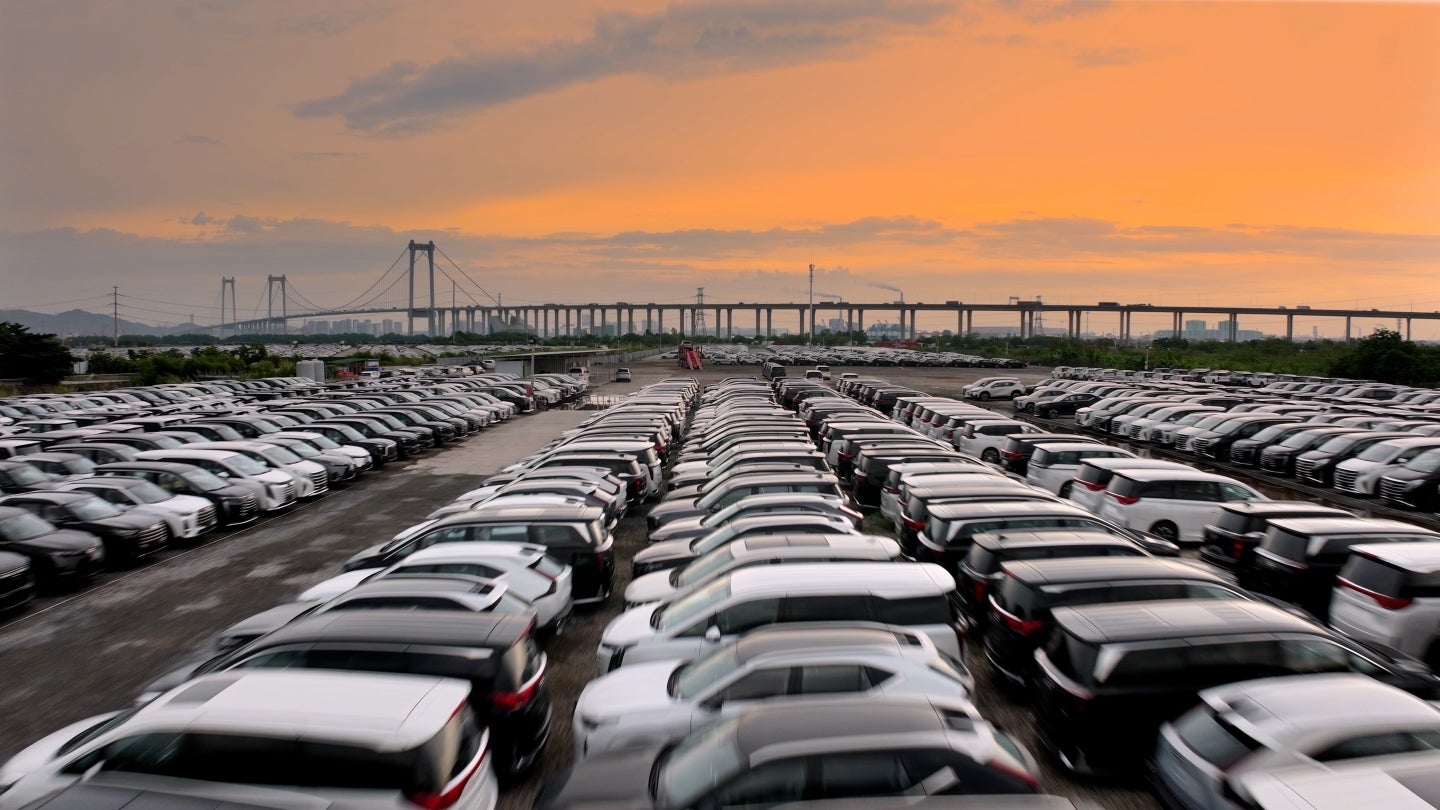
China has made clear it will keep a close eye on the European Union's handling of its automotive industry, signaling that any new measure affecting Chinese carmakers will draw scrutiny from Beijing. The posture follows reports that the EU asked China to cap hybrid vehicle sales at 15 percent as a way to head off a wider trade conflict, according to Automotive News.
The message runs on two tracks. On one side sits China's stated intention to safeguard its automakers, an industry it treats as a strategic asset. On the other sits the EU's apparent effort to manage competitive pressure and avoid escalation. Those two priorities are now pointed at the same narrow question: how many hybrids Chinese manufacturers can sell.
What the Reported Request Actually Says
As reported, the EU asked China to limit hybrid vehicle sales to 15 percent. That figure is the flashpoint of the dispute. Beijing has not accepted it, and its public position so far is procedural rather than concessive: it will watch what Brussels does next.
The watchfulness matters because the reported request is framed as a trade-war avoidance mechanism. In other words, the 15 percent threshold is presented not as a punishment but as a pressure valve, a negotiated limit intended to keep both sides away from broader retaliation. Whether it functions that way depends on what follows.
It is also worth being precise about what is and is not known. The report does not specify whether the cap would apply to China's domestic market, to exports headed for Europe, or to some other measured share. Nor does it indicate a timeline, an enforcement mechanism, or which categories of hybrid vehicles would be covered. Those gaps are precisely why Beijing's "monitor closely" language is meaningful: the substance of any final measure is still unsettled.
Why Hybrids Sit at the Center
Hybrids occupy a commercially sensitive middle ground in the global auto market. They are closer to conventional gasoline vehicles in how they are bought, fueled, and serviced, yet they carry part of the efficiency story that regulators and consumers now expect. For manufacturers, that makes them a volume product rather than a niche one, a segment that can carry a brand's sales while fully electric lineups mature.
That combination is why a percentage cap attracts so much attention. A limit on hybrid sales touches unit economics, dealer networks, and production planning at once. It also touches the question of how quickly any market transitions away from internal combustion, since hybrids are often the bridge product that keeps buyers moving in that direction.
For China, the concern is direct: a cap of the kind reportedly discussed would constrain the reach of Chinese automakers in a segment where they compete. For the EU, the concern is equally direct: managing the pace of that competition without triggering the trade war it is trying to avoid.
What "Safeguard" Means in Practice
China's stated goal of safeguarding its automakers is broad, and that breadth is the point. It can cover diplomatic engagement with Brussels, legal and technical arguments about how any cap would be defined, and support for domestic manufacturers affected by whatever emerges. It also signals to Chinese industry that the government is engaged on its behalf.
Monitoring, in trade terms, is rarely passive. It usually precedes a decision about whether to respond, negotiate, or both. By saying publicly that it will track EU moves closely, Beijing keeps its options open without committing to a specific reaction, a posture that preserves leverage while talks continue.
For automakers on both sides, that ambiguity is itself a planning problem. Investment decisions, model rollouts, and export strategies run on multi-year timelines, and an unresolved cap on hybrids makes forecasts harder to build.
The Trade-War Logic Both Sides Are Trying to Avoid
The reported request is explicitly linked to avoiding a trade war, which tells you how both capitals are framing the stakes. A negotiated limit, however uncomfortable, is presented as preferable to a cycle of measures and countermeasures that would raise costs and disrupt supply chains.
That framing also explains why the hybrid question has become a test case. It is narrow enough to be negotiable and important enough to matter. If a workable arrangement emerges, it could serve as a template for handling other friction points. If it does not, the dispute becomes evidence that the two sides cannot settle differences through limits.
- Whether the reported 15 percent figure is confirmed, revised, or dropped.
- How the cap would be defined: market share, export volume, or another metric.
- Which hybrid categories fall inside or outside the limit.
- Whether Beijing responds with negotiation, its own measures, or both.
- How Chinese automakers and European dealers adjust their plans in the meantime.
What Comes Next
For now, the clearest signal is China's insistence that it will watch the EU's automotive moves closely. That is a statement about attention, not yet about action, but in trade policy attention is the first step. The reported 15 percent hybrid limit, if it advances, will be measured against Beijing's stated commitment to protect its automakers.
The two positions are not necessarily irreconcilable. A limit designed to prevent a trade war is, by definition, an attempt to find a number both sides can live with. The question is whether 15 percent is that number, and whether the mechanism behind it can be defined clearly enough to be enforced.
Developments Today will continue to track the EU's automotive measures and Beijing's response, including any movement on the reported hybrid cap, as the two sides work through a dispute that neither appears eager to escalate.
This article is based on reporting by Automotive News. Read the original article.

Originally published on autonews.com



![Volkswagen's new electric hot hatch delivers more power than the Golf GTI [Images]](https://electrek.co/wp-content/uploads/sites/3/2026/09/Volkswagen-ID.3-GTI-EV-side.jpeg?quality=82&strip=all&resize=1200,628)