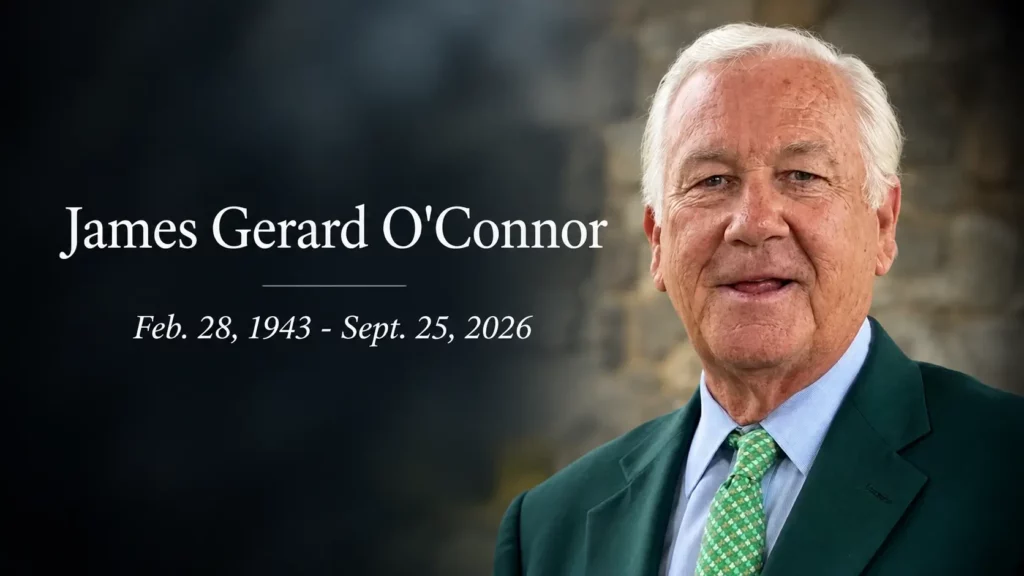
Jim O'Connor, a Ford Motor Co. sales and marketing executive who spent 40 years with the automaker and became a favorite of the company's dealer network, died Sept. 25, according to Automotive News. He was 83.
The trade publication remembered O'Connor as both a career sales and marketing leader at Ford and a figure who earned the trust of the independently owned dealers who sell the company's vehicles. That pairing — corporate executive and dealer advocate — is rarer than it may sound, and it is the thread running through the public account of his working life.
Four Decades Inside Ford
Forty years at a single automaker is a long arc by any measure. It means O'Connor's tenure overlapped with repeated waves of change in how cars and trucks are positioned, priced, advertised and pushed out to the showroom floor. Sales and marketing organizations at major manufacturers are where product plans meet the buying public, and the people who lead those functions spend their careers translating engineering and manufacturing decisions into messages that resonate with customers and with the retail businesses that carry the brand.
An executive who stays that long typically accumulates a wide network inside the company and outside it. In O'Connor's case, Automotive News framed that network in terms of the dealer body — the franchise operators who, unlike factory employees, run their own businesses and answer to their own balance sheets while carrying a manufacturer's name on the sign above the door.

The Job Behind the Title
Sales and marketing roles at a large automaker sit at an awkward intersection. On one side is the factory: production targets, inventory planning, brand strategy, national advertising. On the other side is the retail network, which has its own economics, its own local market conditions and its own opinions about which vehicles will move and which will sit.
Dealers do not work for the manufacturer in the traditional sense. They are independent businesses that invest their own capital in facilities and inventory, which means factory decisions about allocation, incentives and product mix land directly on their bottom line. An executive who can bridge that gap has to be able to explain corporate priorities to skeptical business owners and then carry those owners' concerns back into the building.
Why Dealers Remember
The phrase used to describe O'Connor — a dealer favorite — is a specific kind of compliment. It suggests he was seen by retail operators as someone who understood their side of the business rather than treating them purely as a distribution channel. In an industry where manufacturer-dealer friction is a recurring theme, being remembered warmly by the retail network is a durable form of professional respect.
It is also the part of his legacy that outlasts any single product cycle. Vehicles are redesigned, campaigns end, and organizational charts get redrawn. The relationships an executive builds with the people who actually sell the cars tend to persist in memory far longer.
What the Public Record Does Not Say
The available notice is brief. It confirms his employer, his function within the company, the length of his career, the esteem in which dealers held him, his age and the date of his death. It does not detail the specific assignments he held over four decades, the vehicle programs he was associated with, the regions or divisions he oversaw, or his background before joining Ford.
It likewise does not list survivors or funeral arrangements. Readers looking for a full biographical accounting of his life will not find it in the initial report, which is built around the essentials: who he was professionally, how long he served, and how the retail side of the business regarded him.
A Career Measured in Relationships
O'Connor's story is a reminder that the automotive business is not only an engineering and manufacturing enterprise. It is also a relationship business, conducted through thousands of franchised dealerships that serve as the human interface between a global corporation and individual buyers.
The executives who thrive in that space are the ones who can hold two perspectives at once — the company's and the dealer's. By the account of those who covered the industry, O'Connor managed that balance well enough to be remembered as an advocate by the very people who had every reason to be critical of the factory.
Key Facts at a Glance
- Who: Jim O'Connor, a sales and marketing executive at Ford Motor Co.
- Tenure: 40 years with the automaker.
- Reputation: Described as a favorite of Ford's dealer network and as a dealer advocate.
- Age: 83.
- Date of death: Sept. 25.
- Reported by: Automotive News.
Ford's retail network and the broader industry will remember a career defined less by a single headline than by four decades of continuous presence in the part of the business where corporate strategy meets the customer at the counter.
This article is based on reporting by Automotive News. Read the original article.

Originally published on autonews.com