Genesis turns its Neolun concept into a production EV flagship
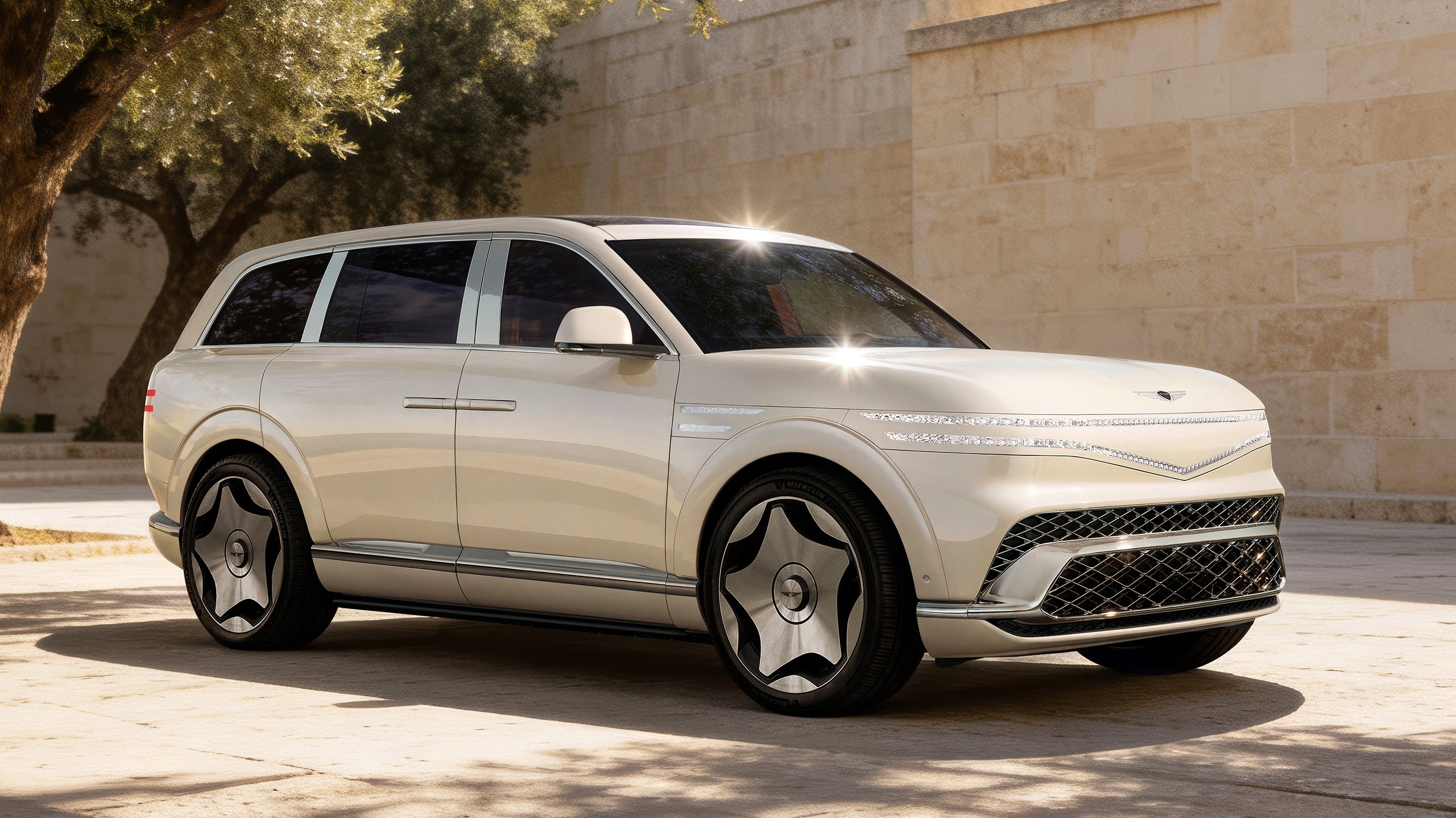
Genesis has launched the 2027 GV90, an all-electric flagship SUV that carries over one of the most conspicuous elements from the brand’s earlier Neolun concept: rear-hinged coach doors. In a luxury market that often talks about differentiation while delivering variations on the same template, the GV90 appears designed to make a stronger statement about where Genesis wants to sit in the premium electric hierarchy.
According to details reported by The Drive, the GV90 rides on Genesis’s bespoke eMP architecture, which the company says is reserved for flagship Genesis products. The SUV pairs a 123.5-kilowatt-hour battery with dual motors producing a combined 657 horsepower and 590 pound-feet of torque. Genesis also quotes an estimated range of 310 miles for the seven-seat version.
Those numbers place the GV90 squarely in the large luxury EV segment, but the vehicle’s positioning is not primarily about headline acceleration. Genesis is using the model to package prestige, design theater, and engineering novelty into a single product, with coach doors and an unusually structured cabin as the core of its pitch.
The feature that defines the launch
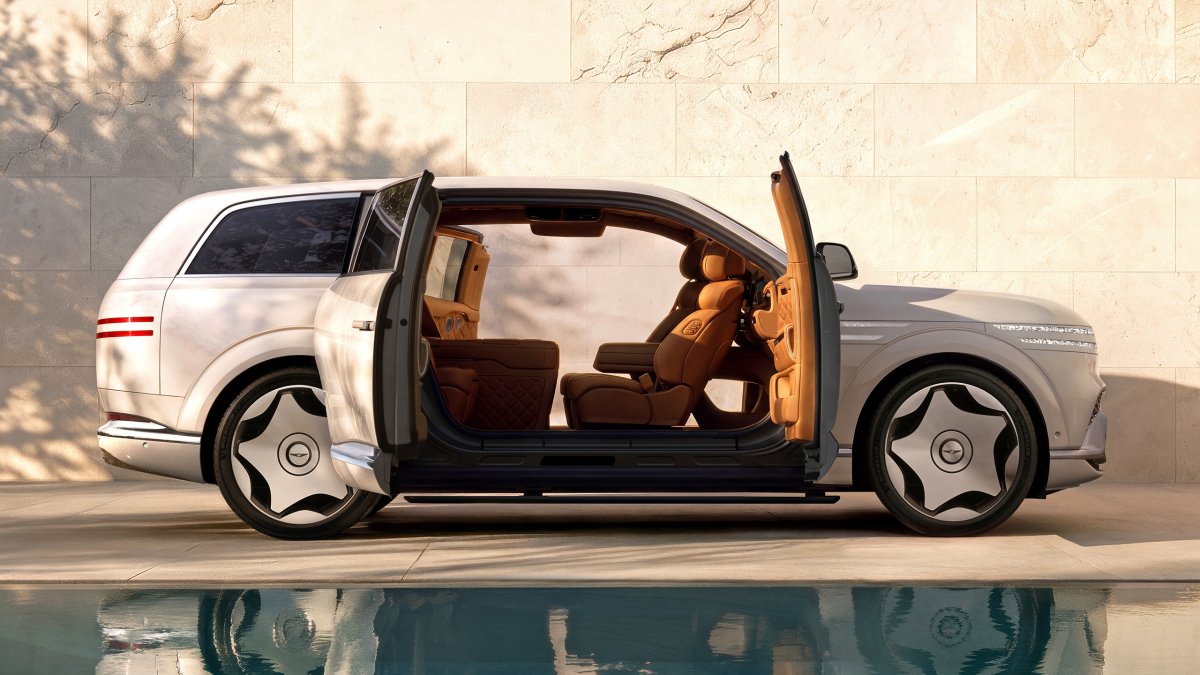
The most distinctive version of the SUV is the Neolun model, which uses what Genesis calls the “Neolun Arch Gate” door system. Rear-hinged doors are not new in high-end vehicles, but the implementation here is unusual. As described in the source text, the rear doors can open simultaneously and independently rather than requiring the front doors to manage the sequence. The system works because the rear doors first slide outward and then rotate open.
That mechanism helps explain why prototypes reportedly showed removed rear-fender body panels: the packaging demands more hardware than a conventional setup. Genesis is betting that the visual impact and access benefits justify the complexity. In production-car terms, this is a bold choice. Coach doors remain rare because they are mechanically complicated, structurally demanding, and expensive to execute well.
Genesis is also making a structural claim central to the design’s credibility. Despite eliminating a traditional B-pillar, the automaker says the GV90’s cabin is surrounded by a frame that is 50% thicker than that of “conventional vehicles,” and that the SUV performs as well as B-pillared vehicles in collisions. The Drive notes that extensive aluminum use in the underbody is intended to offset at least some of the weight penalty from the reinforced structure.
Luxury EVs are becoming architectural objects
The GV90 reflects a broader trend in premium EV design: the top end of the market is no longer just competing on battery size, screen count, or acceleration. It is increasingly competing on spatial experience. That means entry, seating layout, cabin openness, and dramatic user interactions are becoming part of the product brief.
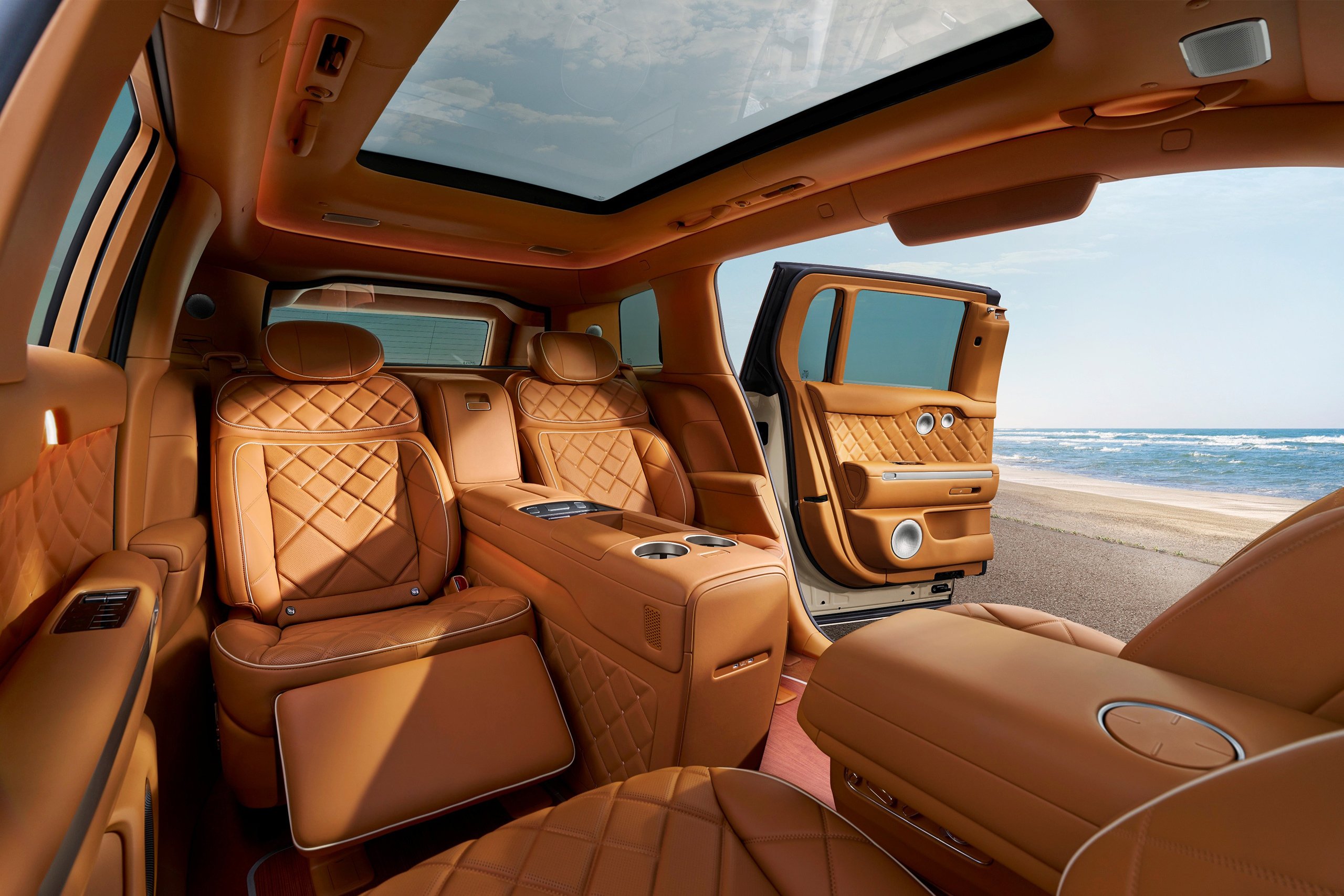
Genesis leans into that framing with swivel front seats and an expansive glass ceiling, features that push the vehicle toward lounge-like presentation. Even without the full cabin details from a formal design deep dive, the launch materials described in the source text suggest the company is trying to turn the GV90 into an interior experience first and a conventional SUV second.
That is strategically sensible. Luxury buyers shopping this segment will already expect long range, strong power, advanced driver assistance, and premium materials. What manufacturers need is a narrative that sets one large electric SUV apart from another. Genesis appears to have concluded that architecture and ceremony are more defensible than simply adding another performance trim.
Performance still matters, even if it is not the point
Genesis is careful not to abandon the expected EV fundamentals. With 657 horsepower and 590 pound-feet of torque, the GV90 has enough output to meet flagship expectations. Electronic limited-slip differentials on both the front and rear motors suggest a focus on stability and traction management rather than raw straight-line spectacle alone.
The chassis package reinforces that emphasis. Multi-chamber air suspension and rear-wheel steering are aimed at producing a calmer, more controlled ride in a vehicle that is almost certain to be heavy given its size, battery, and structural reinforcements. Rear-wheel steering should also help offset some of the maneuverability compromises that come with large three-row SUVs.
The estimated 310-mile range on the seven-seat version is solid rather than class-defining, but that may be enough for the customer Genesis is chasing. Buyers in this class often prioritize comfort, status, and distinctiveness over absolute efficiency. The 123.5-kWh battery is substantial, and the platform choice signals that Genesis sees this vehicle as a technological and brand halo rather than a volume play.

What the GV90 says about Genesis
The more important question may not be whether the GV90 outsells rivals. It is what the model says about Genesis as a manufacturer. For a younger luxury brand, a flagship is partly a commercial product and partly an argument about identity. The GV90 argues that Genesis wants to compete through bold industrial design, feature experimentation, and a willingness to bring concept-car ideas into production.
That is not risk-free. Novelty can age badly, and complex mechanisms create manufacturing and long-term reliability questions that simpler vehicles avoid. Weight is another obvious concern. The source text notes that Genesis had not yet published the SUV’s curb weight. In a battery-electric luxury SUV with reinforced structure, powered coach doors, an expansive glass roof, and multiple seating features, weight will matter for efficiency, dynamics, and tire wear even if customers are willing to accept some tradeoffs.
Still, a conservative flagship would have been easier for Genesis to build and easier for consumers to ignore. The GV90 instead tries to occupy a harder space: the point where luxury transport, brand theater, and engineering ambition meet. That gives Genesis a clearer signature in a crowded premium EV field.
A launch aimed at brand elevation
The 2027 GV90 is not just another electric SUV announcement. It is a brand-level move. Genesis is using it to elevate its flagship credentials, test how far production design can stretch without snapping, and present electric luxury as something more experiential than a spec sheet.
If the vehicle delivers on structural safety, ride quality, and day-to-day usability, the coach doors will become more than a styling stunt. They will signal that Genesis can translate dramatic concept language into a real production format. If not, they will remain the most memorable symbol of an overly ambitious experiment.
Either way, the GV90 marks a meaningful launch in the transition of luxury EVs from high-powered alternatives to internal-combustion SUVs into fully self-conscious design objects. Genesis is betting that at the flagship end of the market, that distinction matters.
This article is based on reporting by The Drive. Read the original article.

Originally published on thedrive.com