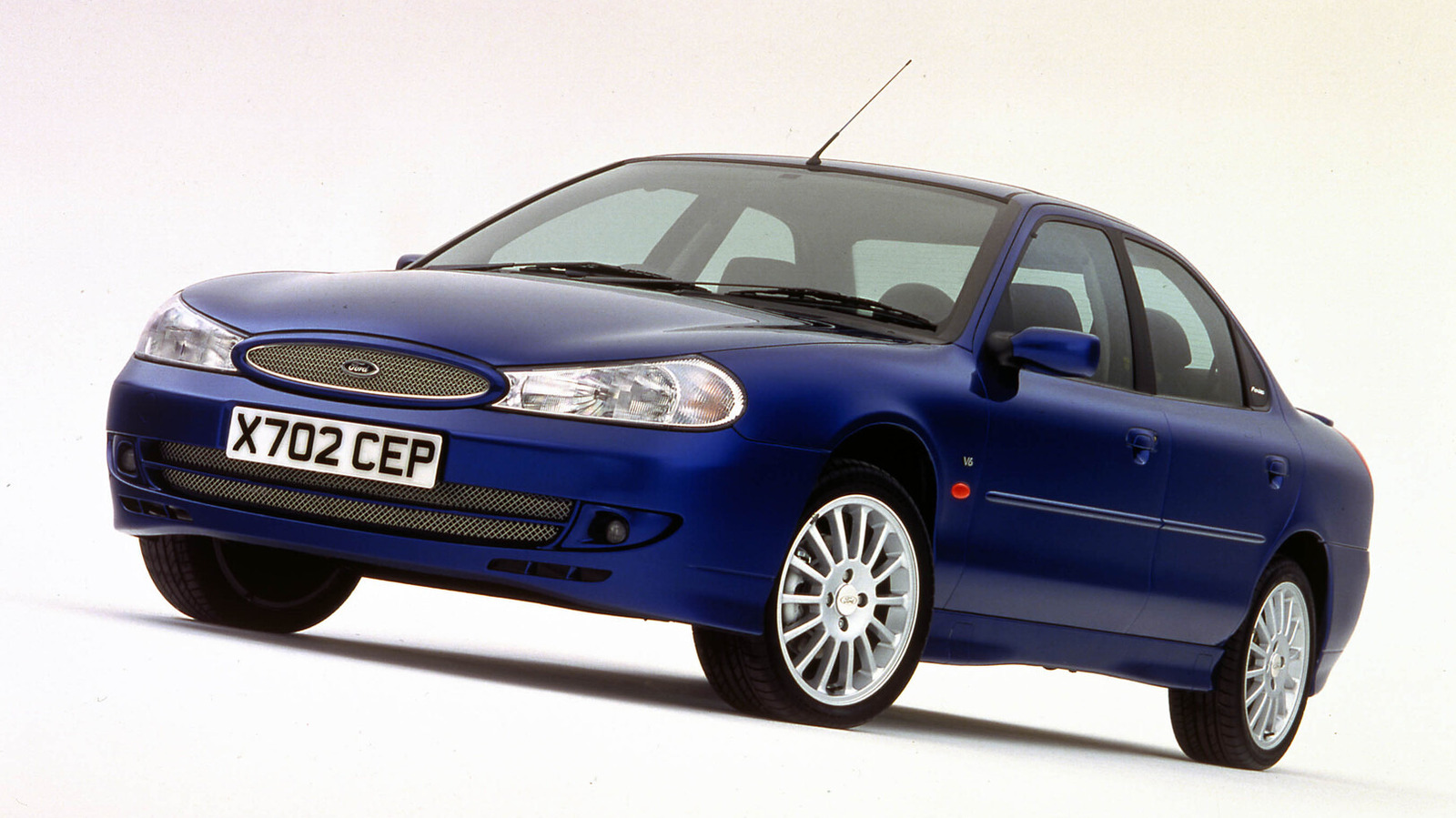
Ford has spent decades building the same car twice — once for Europe, once for North America — and then watching the two versions land very differently with buyers. Few examples illustrate the split better than a pair of late-1990s sport sedans: the Ford Mondeo ST200 sold in the United Kingdom and the Ford SVT Contour sold in the United States. They shared an engine, a gearbox, and the same basic mission. They did not share a fate. The ST200 was adored by British enthusiasts, while the SVT Contour never caught on Stateside — and as the saying goes, sales numbers don't lie.
Two Names, One Car, Two Different Audiences
More than 25 years ago, Ford handed American buyers something derived from a European sports sedan, but fitted with a slightly different body. The car that landed in U.S. showrooms was badged the Ford SVT Contour. Across the Atlantic, essentially the same machine wore the Ford Mondeo ST200 nameplate. The SVT was conceived as America's answer to the rising popularity of the sport compact class: roughly 200 horsepower, a manual transmission as the only option, more enthusiastically tuned suspension, and bespoke bodywork that announced its performance intent from a distance. The ST200 delivered the same engine, the same transmission, and the same focus on driving enjoyment. On paper, the two cars were close relatives. In showrooms, they lived in different worlds.

The Basics: What Made Both Cars Special
Neither car was a cosmetic exercise. Both the SVT and the ST200 were thoroughly tuned for performance, and both earned reputations for responsive steering, good grip, and a firmer ride. Paired with a smooth-shifting manual gearbox and a torquey 2.5-liter V6, the complete package was widely regarded as genuinely fun to wheel around.
Power, Torque, and a Well-Breathed V6
The first-year 1998 SVT Contour produced 195 horsepower and 165 pound-feet of torque. Ford found those numbers inside the 2.5-liter V6 by fitting a better-breathing intake tube and manifold, a larger throttle body, more performance-oriented camshafts, and a wider exhaust system. The ST200 was no slouch either: when it reached showroom floors in 1999, it put down 202 horsepower and 173 pound-feet of torque. Both cars hit 60 mph in around 7.5 seconds, which was respectable punch for a front-drive sedan of the era.
Chassis, Brakes, and a Missing Set of Wheels
Chassis hardware mattered as much as output. Ford USA did borrow one important piece from the European car: the Mondeo's 10.9-inch front brake rotors went onto the SVT Contour. But the transfer stopped short of complete. The ST200's 17-inch wheels — the ones with the touring-car-racer look — never made the crossing. The SVT Contour made do with 16-inch wheels instead, a small detail that enthusiasts of the period noticed immediately.
What Reviewers Felt Behind the Wheel
Contemporary accounts diverged in tone as much as in measurement. Writing for Car Throttle about his high-mileage ST200, Mike Fernie described a car that could be thrown into corners, compressing its stiffened sport suspension with complete composure while the steering loaded up progressively in a manner that felt steeped in motorsport. On the American side, Don Schroeder's review for Car and Driver treated the Contour SVT as a pleasure to drive. The hardware was similar enough that the difference in reception had less to do with the engineering than with the market receiving it.

Why the U.K. Embraced the ST200
The British market had long treated the quick family sedan as a legitimate category rather than a curiosity. A Mondeo was ordinary transportation in the U.K., which meant a hotter, sharper Mondeo read as an aspirational upgrade of a car people already knew and trusted. U.K. enthusiasts responded to the ST200's combination of a manual gearbox, a torquey V6, and suspension tuning that rewarded commitment. It was the kind of car that made sense in a country where driving culture pushes buyers toward machines that are fast without being enormous — and British buyers rewarded Ford for building it.
Why U.S. Buyers Moved On
The American reception was cooler, and the reasons are structural as much as emotional. The SVT Contour arrived as Ford's answer to the sport compact boom, but it was still a Contour underneath — a car whose mainstream identity did not naturally telegraph performance. Enthusiasts who wanted a fast Ford in that era had other traditions to draw on, and the sport compact class itself was crowded. The bespoke bodywork and the manual-only drivetrain signaled seriousness to the people who looked closely. The trouble was getting enough people to look closely in the first place.

The Wider Pattern: Global Cars and the Markets Left Out
The Contour-versus-Mondeo story is not an isolated quirk. In a global economy, cars sold in the U.S. usually appear elsewhere near-identically — particularly the enthusiast models. The Porsche 911 is much the same here as it is in Europe, and the Volkswagen GTI is likewise largely consistent across markets, save for a few select trims. That consistency makes the exceptions sting. Europe, for instance, gets the current fastest front-wheel-drive production car around the Nürburgring Nordschleife, the GTI Edition 50, which American buyers simply cannot have. Ford's 1990s experiment ran the same dynamic in reverse: a European-flavored performance sedan was adapted for America, and America declined the invitation.
What the Split Still Teaches
More than a quarter-century later, the lesson holds. Strong engineering does not guarantee a receptive audience, and a badge carries different weight in different countries. In the U.K., the Mondeo ST200 became a car enthusiasts still discuss with affection — a manual-only sport sedan that delivered on its promises. In the U.S., the SVT Contour became a footnote: a genuinely enjoyable machine that arrived in the right global company but the wrong local conversation. The two cars were siblings, built from the same recipe with the same intent. Only one of them got a hometown welcome.
This article is based on reporting by Jalopnik. Read the original article.
Originally published on jalopnik.com