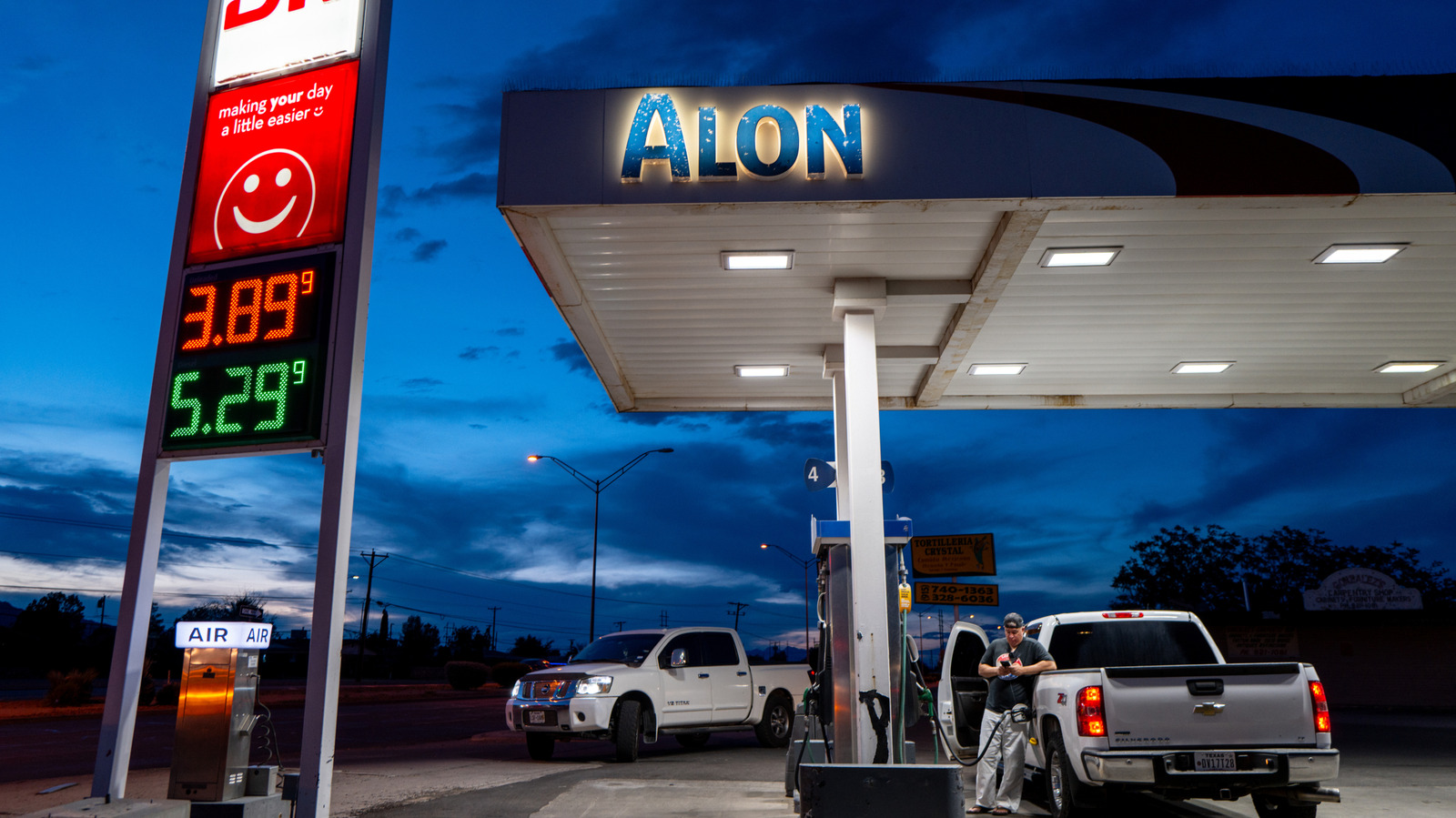
The national average price of diesel fuel in the United States jumped by almost 10 cents overnight, putting the cost of a gallon squarely in record-breaking territory. New data pegs the national average at $5.7862 per gallon, up from $5.6879 the previous day.
With the all-time high of $5.8159 still only a few pennies away, diesel could set a new record within days if the current pricing momentum continues. The move adds to a months-long run-up that has already more than doubled costs in the span of a year. At this time last year, the average price was $3.7047 per gallon.
Why Diesel Prices Matter Beyond the Pump
Passenger diesel vehicles are relatively rare in the United States compared with other markets, and much of the attention paid to fuel prices focuses on gasoline. But diesel is the workhorse fuel of the American economy. It powers the heavy-duty trucks that carry freight on highways, the trains that move goods across the country, and the farm equipment that plants and harvests crops. Construction machinery, delivery fleets, and a wide range of industrial equipment also depend on diesel.
That means a sharp and sustained increase in diesel prices does not simply hurt pickup truck owners. It raises the operating cost of nearly everything that moves products from one place to another. When the cost of moving goods goes up, retailers and manufacturers face higher shipping bills, and those costs tend to ripple through the broader economy. Diesel supplies are especially critical during the fall harvest season, when agriculture relies on fuel to bring in the year's crops.

An Overnight Jump Toward an All-Time High
The latest jump is small in absolute terms but important because it puts the market on notice. Before the increase, diesel was already expensive. Now it is almost exactly at the level that would establish a new record. The previous high-water mark stands at $5.8159.
Markets were watching diesel closely even before this latest climb. The move happened over the course of a single day, suggesting that the supply picture is deteriorating quickly rather than gradually. The kind of double-digit, daily swing seen here is the sort of price action that typically follows a disruptive event or a major reassessment of available supply.
Refinery Disruptions and a Shrinking Supply Base
The current pressure on diesel prices is not being caused by a simple drop in crude oil output. Instead, it is being driven by an inability to turn enough crude into diesel fuel. Over the last six months, a series of attacks and military actions has taken refineries offline in key production regions.
Airstrikes in the Middle East have hit multiple refineries, while Ukraine has mounted strikes against Russian refineries. Those strikes have taken out processing capacity and, according to analysts, dealt a severe blow to Russia's ability to sell diesel to other countries. Russia is the world's second-largest exporter of diesel fuel, behind the United States. The loss of that export capacity has been particularly damaging to Eastern European markets that relied heavily on Russian supplies, and it has left the rest of the world competing for a smaller pool of available diesel.
Global diesel demand, meanwhile, has remained steady. With production disrupted and demand holding firm, refiners in the United States and Canada have been able to charge higher prices for their output. Energy analyst Gregory Brew told NBC News that more alarm bells are going off for diesel than for other crude oil products, a reflection of how tight the market has become.

Stockpiles at Historic Lows
The U.S. is heading into fall with diesel inventories that look unusually thin. According to the federal Energy Information Administration, U.S. diesel stockpiles in late August had fallen to seasonal levels not seen since the 1980s. That comparison to the 1980s is a strong signal for how scarce spare supply has become.
Normally, refiners can draw down stockpiles or increase imports to smooth over short-term disruptions. But with inventories already low and global producers in a similar squeeze, there is far less cushion available to absorb any additional supply hiccup. Even small refinery outages, pipeline issues, or changes in shipping routes could translate into much bigger price movements at the pump.
Capacity Constraints and Squeezed Retailers
One of the most important details in the current diesel market is that refinery capacity itself has become a bottleneck. Even if crude oil were plentiful, it must still be processed into diesel. Many refiners are already running at, or above, 100 percent utilization, trying to extract as much diesel as possible from every barrel. Those high utilization rates are generating strong profits for oil companies, but they also mean there is not much spare processing power left in the system.
Retailers are feeling the pressure as well. The sharp increase in wholesale diesel prices has put a squeeze on the margins of gas stations and other fuel sellers. They can attempt to pass along higher costs to customers, but there is a limit to how fast or how far they can raise retail prices without damaging demand. Fuel retailers have been absorbing elevated costs for the better part of six months, since the introduction of new tariffs on a range of goods. That backdrop makes it harder for them to keep absorbing wholesale increases without eventually pushing the cost down the line.
The combination of record-low inventory, refinery constraints, and continued attacks on refining infrastructure creates a high-risk situation. Diesel prices are now hovering near the peak that the market previously treated as a worst-case scenario.

What to Watch in the Coming Days
The next few days will be critical for diesel consumers and for the broader economy. If the national average crosses $5.8159, the United States will set an all-time record for diesel prices during a period of peak seasonal demand. Even if it does not cross that line, the fact that it came so close illustrates how fragile the fuel supply situation has become.
For truckers, farmers, and every business that depends on freight, the rise in diesel prices is not just a number. It is an operational cost that will be felt in everything from food prices to the cost of delivered goods. With stockpiles already at generationally low levels and refiners unable to quickly boost output, there may be little relief on the horizon unless geopolitical tensions ease or significant new refining capacity comes online.
This article is based on reporting by Jalopnik. Read the original article.
Originally published on jalopnik.com