A Redesigned RAV4 Confronts a Crowded Segment
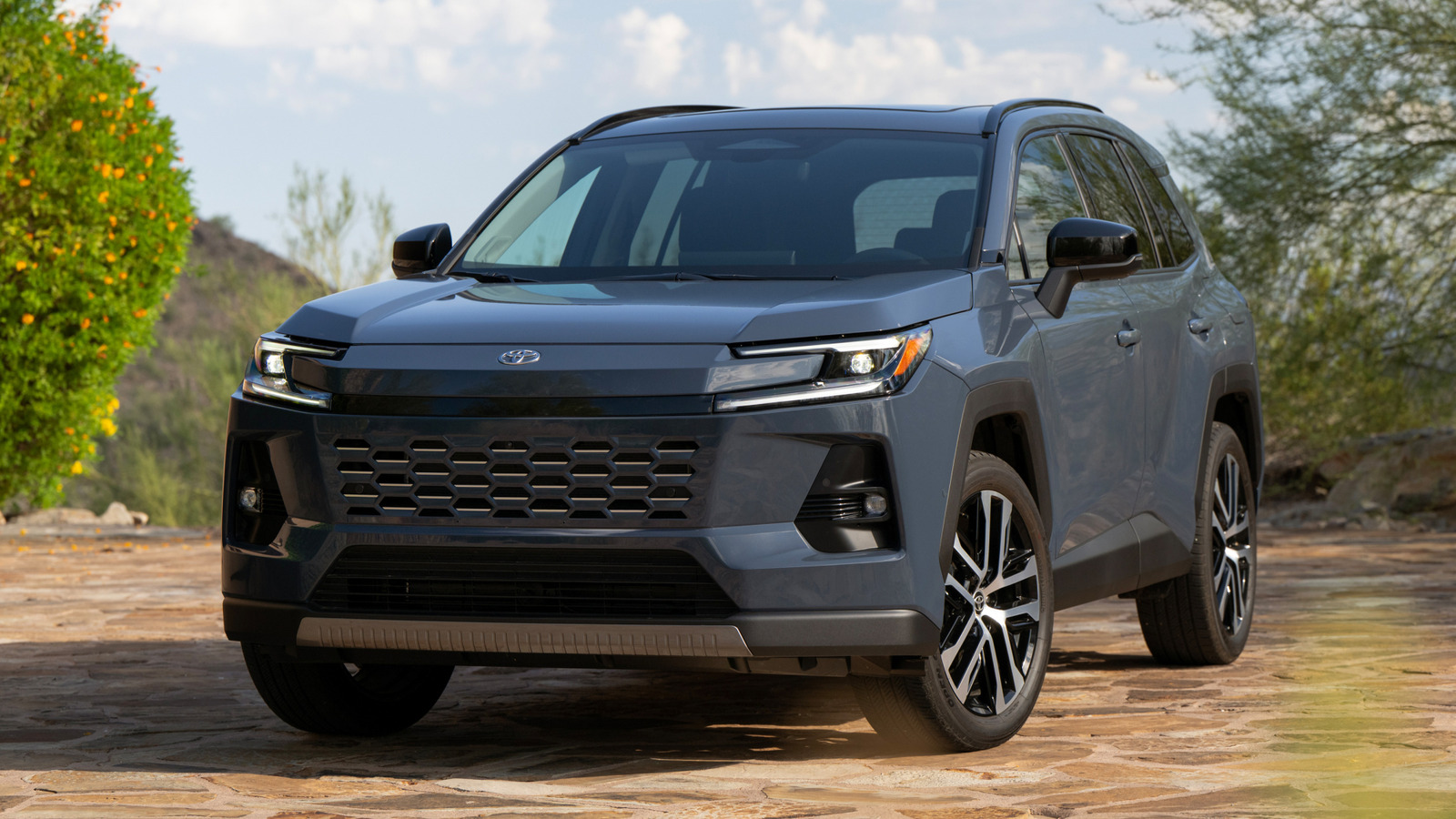
Toyota's RAV4 has long been one of the most in-demand compact SUVs on the market, and the 2026 model year brings a significant redesign. That refresh arrives in a segment that is anything but empty. Shoppers cross-shopping small SUVs can choose from the Honda CR-V, Mazda CX-50, Hyundai Tucson, Subaru Forester, Kia Sportage and a long list of others, each with its own blend of efficiency, equipment and pricing strategy.
Comparing the RAV4 against those rivals means looking past a single entry price. The more revealing exercise is examining how each brand builds its trim staircase — and where the hybrid and plug-in hybrid premiums actually land once you move off the base model.
What the 2026 RAV4 Costs Before Destination
Toyota sells the redesigned RAV4 in both hybrid and plug-in hybrid form, and the two lineups have very different entry points. The conventional hybrid opens at $31,900 for the base LE trim. The cheapest plug-in hybrid, the SE, starts at $41,500. Both figures exclude a $1,595 destination and handling fee that applies across the RAV4 range.
Toyota also limits how much choice buyers get depending on which powertrain they pick. The hybrid is offered in six trim levels, while the plug-in hybrid catalog is narrowed to four. That shorter PHEV list pushes buyers toward better-equipped — and more expensive — configurations much earlier in the shopping process.
Hybrid RAV4 Trims and MSRPs
- LE — $31,900 (base)
- SE — $34,700
- XLE Premium — $36,100
- Woodland — $39,900
- XSE — $41,300
- Limited — $43,300 (top of the non-PHEV range)
Plug-In Hybrid RAV4 Trims and MSRPs
- SE — $41,500 (base)
- Woodland — $45,300
- XSE — $47,200
- GR Sport — $48,500 (range-topper)
Honda CR-V: The Benchmark Rival
The Honda CR-V is widely regarded as one of the most reliable and fuel-efficient small SUVs available, and it remains the most direct comparison for Toyota shoppers. For 2027, the CR-V starts at $31,520 for the base LX with a gas-only powertrain, a figure that excludes a $1,550 destination charge. That puts the gas CR-V a modest $380 below the hybrid RAV4 LE on sticker.
Where the two brands diverge is electrification. Honda's entry-level gas-electric CR-V, the Sport Hybrid trim, costs nearly $5,000 more than the gas-only LX. Toyota, by contrast, makes a hybrid the default starting point of the RAV4 lineup. In practice, that means a buyer who wants a hybrid CR-V pays a substantial premium to get one, while a buyer who wants a hybrid RAV4 simply buys the least expensive version Toyota sells.
Mazda CX-50 and Subaru Forester: The Sub-$30,000 Play
Mazda takes a different tack with the CX-50. The brand offers a gas-only model with an MSRP just under $30,000, which undercuts every RAV4 currently on the price sheet. The cheapest hybrid CX-50, the Preferred trim, starts at $34,750 — within $50 of the hybrid RAV4 SE at $34,700. Mazda's destination and handling charge is $1,595, identical to Toyota's.
Subaru's Forester follows a broadly similar pattern. The gas-only version sits in the sub-$30,000 ballpark, giving budget-focused shoppers a lower entry point than the RAV4 hybrid LE. Should buyers want the hybrid Forester, the cheapest one — the Premium trim — carries a starting MSRP of $34,730, fractionally below the equivalent RAV4 SE. Subaru's destination and handling fee is $1,450, the lowest of the group examined here.

Hyundai Tucson and Kia Sportage: Three Powertrains, Two Brands
The Korean duo of Hyundai and Kia takes the broadest approach, offering gas-only, hybrid and plug-in hybrid versions of both the Tucson and the Sportage. The Tucson range begins at $29,700 for the gas-only SE model and stretches all the way to a top-spec plug-in hybrid Limited at $48,900 — which lands $400 above the range-topping RAV4 GR Sport at $48,500.
Hyundai's trim naming creates some confusion along the way. The hybrid Tucson also starts with the SE badge, but it commands a $1,600 premium over the gas-only SE. Buyers comparing the two need to watch the powertrain designation closely, because the badge alone does not tell them what they are paying for.
The 2027 Kia Sportage goes a step further on price. Its entry-level gas-only LX starts at $28,990, undercutting the gas Tucson SE by a narrow margin and sitting well below every RAV4 trim. Kia applies the same naming convention to its base hybrid, which also wears the LX badge.
Destination Fees and the Real Out-the-Door Math
Destination and handling charges are easy to overlook, but they matter in a segment where base prices are separated by a few hundred dollars. Toyota charges $1,595, Mazda matches at $1,595, Honda sits at $1,550 and Subaru comes in at $1,450.
Those gaps are small in isolation, yet they can flip a comparison. A brand that appears cheaper on MSRP can lose that advantage once delivery fees are added, particularly when the difference between two base trims is only a few hundred dollars. Anyone building a serious shortlist should compare out-the-door figures rather than advertised starting prices, and should confirm equipment levels at each trim rather than assuming a lower price means a comparable vehicle.

What the Comparison Adds Up To
The RAV4's competitive position depends heavily on which version a buyer is considering. As a hybrid, it starts at $31,900 — close to the gas-only Honda CR-V LX and Mazda CX-50, and above only the cheapest gas models from Kia, Hyundai, Subaru and Mazda. Toyota's decision to make the hybrid the default entry point gives it a different value story than rivals that charge a four-figure premium to electrify.
Climb the RAV4 ladder, though, and the picture shifts. The plug-in hybrid lineup begins at $41,500 and ends at $48,500 for the GR Sport, a range that overlaps directly with fully loaded PHEV versions of the Tucson and Sportage. Meanwhile, the non-PHEV RAV4 peaks at $43,300 for the Limited trim.
With a redesigned 2026 RAV4 facing six or more credible alternatives, the segment offers buyers real choice rather than a foregone conclusion. The deciding factors are likely to be which powertrain each shopper actually wants, how much equipment they need at the trim level they can afford, and how each brand's destination fee and hybrid premium shift the final number.
This article is based on reporting by Jalopnik. Read the original article.
Originally published on jalopnik.com