Why the Early Universe Looked So Strange
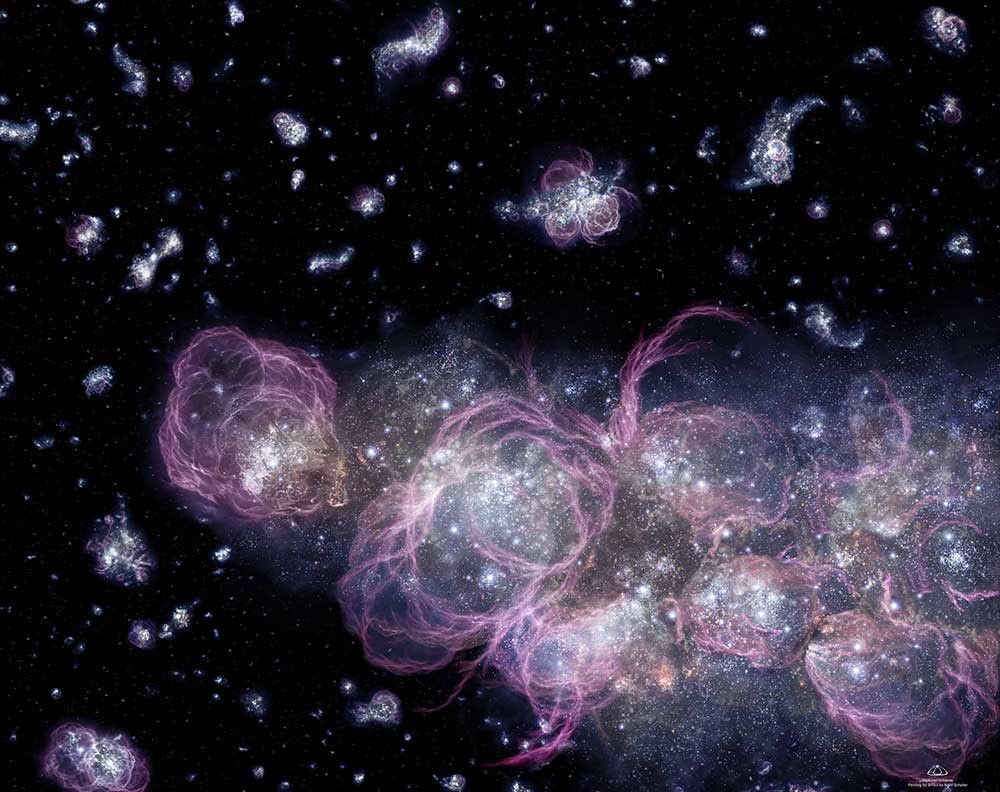
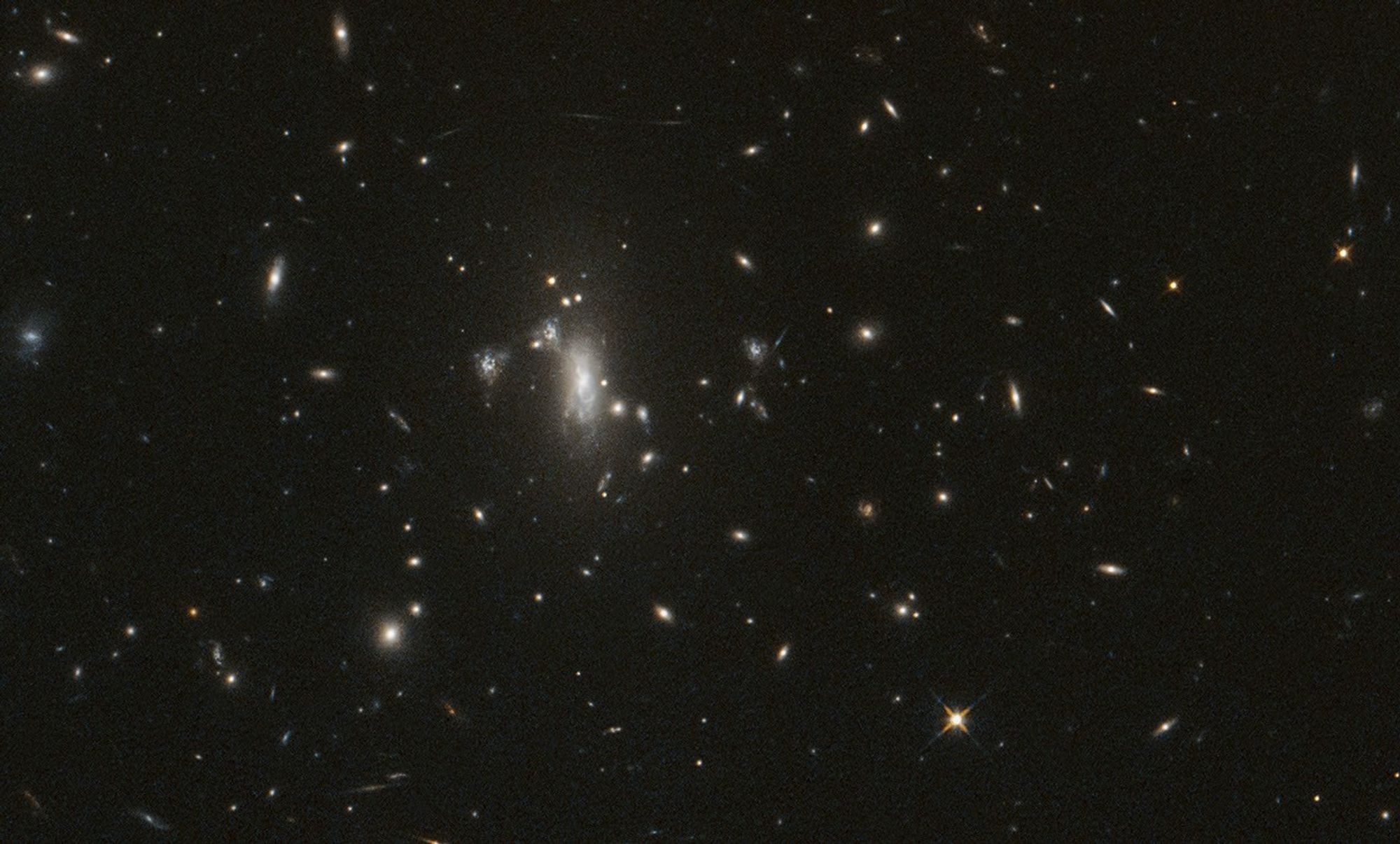
When astronomers peer across billions of light-years, they are looking back in time, and what they see does not match the tidy spiral and elliptical galaxies that populate our cosmic neighborhood. The galaxies of the early Universe, and the stars burning inside them, appear noticeably stranger, and researchers have long wanted to know why. A team at the University of Utah is attacking that question from an unusual angle: instead of focusing only on the faintest, most distant objects Hubble can detect, they are studying nearby stars that function as stand-ins for the ancient ones.
The earliest stars in the cosmos began forming roughly 100 million years after the Big Bang. They lived fast, died young, and scattered the elements they manufactured back into space, where that material was recycled into later generations of stars. Along the way, they reshaped the galaxies that hosted them, a feedback process that astronomers are still working to model in detail.
A Nearby Shortcut to the Distant Past
Led by Grace Telford, an assistant professor of physics and an astronomer at the University of Utah, the team carried out a survey called the Treasury of Extremely Metal-Poor O Stars, or TEMPOS. Rather than trying to capture the feeble light of stars that blazed more than 13 billion years ago, the survey examined stars in relatively close-by galaxies that share important physical characteristics with their ancient counterparts.
The observations depended on ultraviolet light streaming from those stars, detected with the Cosmic Origins Spectrograph aboard the Hubble Space Telescope. Ultraviolet radiation offers a crucial window into the hottest and most massive stars, and most of it is blocked by Earth's atmosphere, which is precisely why Hubble's vantage point above the atmosphere matters so much for this kind of work.
Reading the Fingerprints of Ancient Stars
In astronomy, calling a star metal-poor does not mean it lacks iron or nickel in the everyday sense. It means the star contains only trace amounts of any element heavier than helium. The infant Universe was composed almost entirely of hydrogen and helium, so the first stars had virtually no heavier elements to work with. By locating local stars with similarly low metal content, Telford's team is assembling a dataset that allows the physics of those conditions to be studied closely, something that is impossible to do directly for objects sitting at the edge of the observable Universe.
The Outsized Influence of Massive Stars
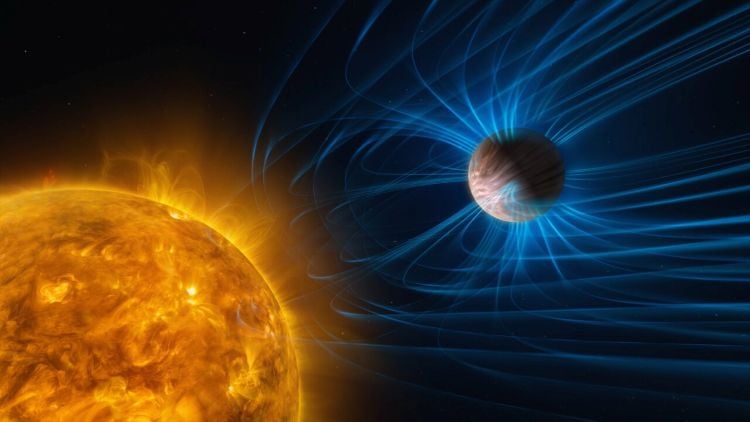
The stars targeted by TEMPOS are massive, and that characteristic matters enormously for how galaxies evolve. Telford explains that stars like these burn extremely hot and bright, racing through their fuel and ending their brief lives as supernova explosions that deposit a great deal of energy and material into the gas around them. Through that process, they heat the surrounding gas and regulate how much of it stays cool enough to collapse and form new stars, effectively governing the evolutionary path of their host galaxies.
That regulatory role is one reason the early Universe looked so different from the one we inhabit. When massive stars are common, they can suppress or trigger star formation in successive waves, leaving galaxies with unusual shapes, colors, and stellar populations. Understanding how the first generations of stars behaved therefore translates directly into understanding how the first galaxies assembled.
From O-Type Giants to Wolf-Rayet Winds
O-type stars rank among the biggest and brightest in the Universe, and they live short lives by stellar standards. Some of them, as they near the end of their existence, become Wolf-Rayet stars, which cast enormous amounts of mass into space through powerful stellar winds. Those winds strip away the stars' outer layers and expose their hot inner regions. Observations of Wolf-Rayet systems, including binary pairs, help astronomers understand the intense mass loss that shapes the final chapters of massive stars and the chemical enrichment they leave behind.
Hubble's Long Look Back in Time
Looking as far back in cosmic time as possible has been a central mission for the Hubble Space Telescope since its first deep field survey in 1995. Even in those early images, the tiny, distant galaxies looked odd, not quite matching the galaxies we see closer to home. That mismatch raised a chicken-and-egg question that still drives research: did the stars form first, or did the galaxies?
Evidence points toward the stars coming first. The first stars were likely monsters, forged from the vast reservoirs of hydrogen available in the infant cosmos, and they were more than ten times more massive than the Sun. Their sheer size and luminosity meant they lived furiously and died quickly, seeding the cosmos with heavier elements and setting the stage for the galaxies that followed. Population III stars, as this first generation is known, formed a few hundred million years after the Big Bang and are effectively invisible today because they vanished so long ago.
Why This Matters for Galaxy Evolution
By identifying local metal-poor O stars and studying their ultraviolet spectra, the TEMPOS team is assembling something like a reference library, a set of nearby objects whose measured behavior can inform models of the earliest stellar generation. Models built from analog stars give astronomers a way to reason about stars they can never observe directly.
- Better models of Population III stars: nearby metal-poor O stars provide measurable benchmarks for mass, temperature, and mass-loss rates that can be scaled to the first stellar generation.
- Clearer picture of galaxy assembly: because massive stars regulate the gas available for star formation, their behavior shapes when and where galaxies build new stars.
- Improved interpretation of distant observations: when Hubble and its successors capture the light of faraway galaxies, models informed by TEMPOS help explain what is being seen.
- A bridge across cosmic time: the survey links stars that can be studied in fine detail today with the unreachable stars that shaped the Universe's first galaxies.
The Road Ahead
The TEMPOS dataset is being used to single out stars worthy of deeper astrophysical study, and each new target adds detail to an increasingly nuanced picture of how massive, metal-poor stars behave. The work does not merely satisfy curiosity about the distant past; it also sharpens the theoretical tools astronomers use to interpret every new deep-field image, from Hubble's archives to future observatories.
The early Universe remains a strange place in our imaginations, a cosmos of enormous, short-lived stars whose explosions lit up young galaxies and enriched the gas around them. Telford and her colleagues are working to make that strangeness legible, star by star, using the nearest available analogues to reconstruct a chapter of cosmic history that ended long before the Milky Way took shape.
This article is based on reporting by Universe Today. Read the original article.
Originally published on universetoday.com