New
SpaceMore in Space→
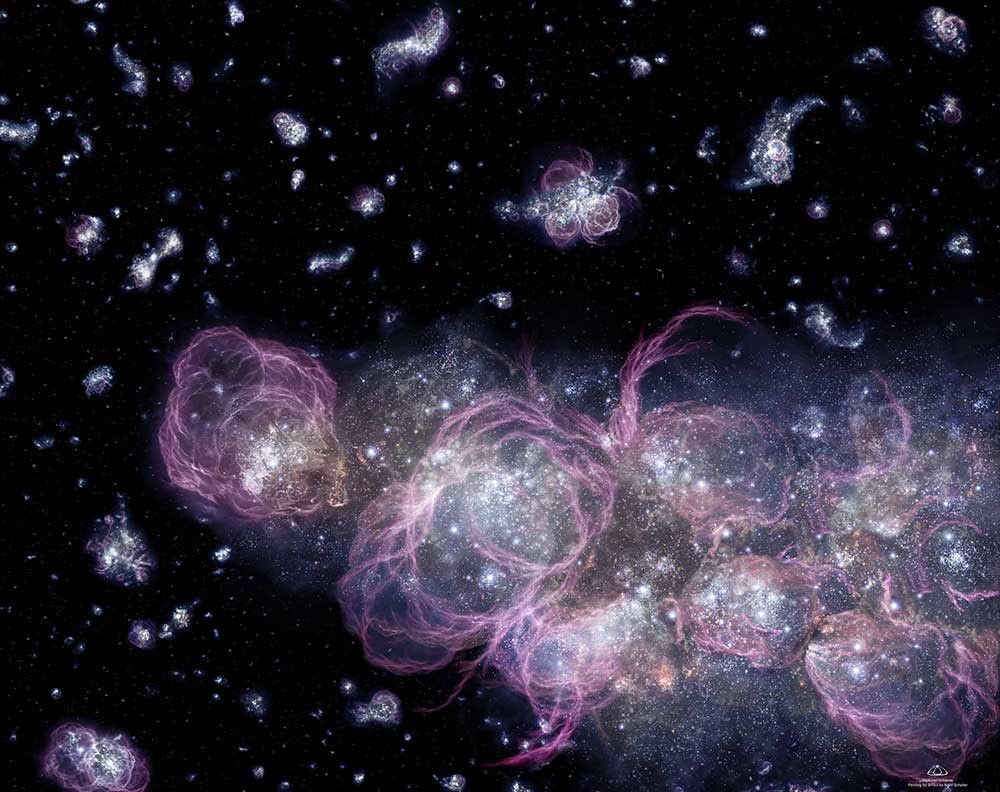
Strange Early Universe Galaxies Were Shaped by Weird, Massive Stars
Key Takeaways
- A University of Utah team led by Grace Telford conducted the TEMPOS survey, using Hubble's Cosmic Origins Spectrograph to study ultraviolet light from metal-poor O stars in nearby galaxies.
- The earliest stars formed roughly 100 million years after the Big Bang, lived fast, died young, and recycled material into later stellar generations.
- Massive stars shape their host galaxies by heating surrounding gas and regulating how much can cool and collapse into new stars.
- Nearby metal-poor O stars serve as analogs for the Population III stars that formed a few hundred million years after the Big Bang and are now unobservable.
DE
DT Editorial Team··via universetoday.com