SpaceX lines up another Starlink mission to close out June
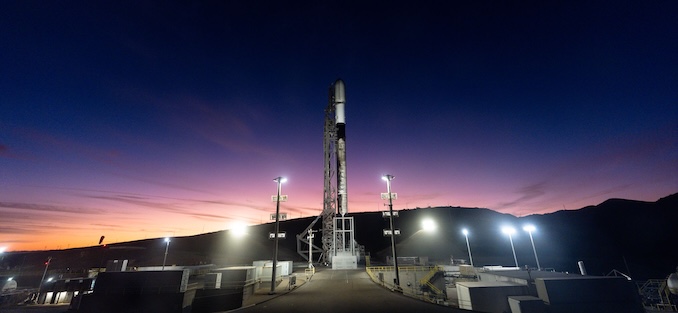
SpaceX is scheduled to launch another batch of Starlink satellites from California on Sunday morning, capping off a month in which the company devoted most of its Falcon 9 flights to expanding its low Earth orbit broadband network. According to mission details published by Spaceflight Now, the flight is set to lift off from Space Launch Complex 4 East at Vandenberg Space Force Base at 7:36 a.m. Pacific Daylight Time on June 28.
The mission, designated Starlink 17-40, is expected to carry 24 satellites. Once deployed, those spacecraft will join an already vast constellation that Spaceflight Now, citing tracking statistics from astronomer Jonathan McDowell, says exceeds 10,700 satellites currently in orbit. The scale of that network has made Starlink one of the defining infrastructure projects of the commercial space era, turning frequent rocket launches into the operating rhythm of a telecommunications system built in space.
That broader context matters because this mission is not being framed as a one-off milestone or a debut flight. Instead, it illustrates how routine orbital deployment has become for SpaceX. The company is using a Falcon 9 first-stage booster identified as B1088, and this flight will mark the booster’s 17th mission. Spaceflight Now notes that its prior assignments included NASA’s SPHEREx, the rideshare mission Transporter-12, and NROL-126.
A launch cadence that now looks industrial
The numbers attached to this mission show just how concentrated SpaceX’s launch activity has become around Starlink. Spaceflight Now reports that, after this flight, Falcon 9 will have launched 75 times in the first half of 2026. Of those, 59 missions supported the Starlink constellation. That means the majority of the company’s launch manifest so far this year has been dedicated to deploying or maintaining its own broadband system.
The monthly breakdown provided in the source underscores the consistency of that effort. In January, SpaceX flew 13 Falcon 9 missions, nine of them for Starlink. February saw 11 Starlink launches out of 12 total. March reached 13 Starlink flights out of 15, followed by nine out of 11 in April, eight out of 11 in May, and 10 out of 13 in June once Starlink 17-40 is included.
Those figures point to something larger than simple launch frequency. They suggest a company operating at a tempo more commonly associated with manufacturing or logistics than with the older model of spaceflight, where launches were discrete national events. For SpaceX, the Falcon 9 has become the transport layer for a constantly expanding orbital service business. Starlink is not just a payload customer. It is the reason a large share of the launch schedule exists at all.
That cadence also helps explain why reusability remains central to the program. Repeated flights by the same booster shorten turnaround times, lower the need for freshly built first stages, and allow the company to sustain a high-volume schedule. B1088’s 17th flight is another example of how heavily SpaceX is leaning on its refurbished fleet to keep up with deployment demand.
What to watch on the mission
After liftoff, the Falcon 9 is expected to fly on a south-southwesterly trajectory from Vandenberg. The launch profile also includes another recovery attempt for the first stage. A little more than eight minutes after launch, B1088 is scheduled to land on the drone ship Of Course I Still Love You in the Pacific Ocean.
If the landing succeeds, Spaceflight Now says it would mark the 206th recovery on that vessel and the 630th booster landing overall. Those figures are a reminder that recovery has become a standard operational step rather than an experimental add-on. Booster landings still carry technical risk, but the statistical framing around this mission shows they are now treated as part of a mature launch architecture.
That architecture has commercial implications beyond launch cost. Reliable reuse supports schedule density, and schedule density supports constellation growth. In Starlink’s case, constellation growth underpins service expansion and redundancy. Each additional launch adds capacity, replenishes the network, or helps refine coverage in specific orbital shells. Even when a mission lacks the novelty of a first launch or a high-profile science payload, it can still be strategically significant because it feeds the company’s larger system.
The California launch site is particularly important for this pattern. Vandenberg allows SpaceX to send payloads into trajectories that complement launches from Florida, broadening the range of orbital insertions available to the company. For a network measured in the many thousands of satellites, geographic flexibility on the ground supports precision in space.
Starlink’s growth is reshaping the meaning of “routine”
The Starlink 17-40 mission is easy to describe in a sentence: a Falcon 9 will launch 24 more broadband satellites. But the deeper story is that such missions are now common enough to serve as the backbone of a continuously operating orbital buildout. The company’s own mission totals show that Starlink remains the primary driver of SpaceX’s 2026 launch campaign.
That does not mean every flight is equal in public visibility. Crewed missions, NASA science launches, and national security payloads still attract more attention. Yet the steady pace of Starlink flights may be more consequential for the long-term structure of commercial space. They demonstrate that launch is no longer limited to marquee events. It can function as recurring infrastructure support for a private network with global ambitions.
Sunday’s mission therefore represents both a near-term event and a data point in a larger industrial trend. In the near term, the objectives are clear: put 24 satellites into orbit and recover the booster. In the broader view, the mission reinforces how SpaceX has turned repeatable launch and recovery into a platform for scaling a space-based communications business at unprecedented speed.
If the flight proceeds on schedule, it will close June with another addition to the world’s largest active satellite constellation and extend a first-half launch record dominated by a single objective: building out Starlink, one rapid-turnaround Falcon 9 mission at a time.
This article is based on reporting by Spaceflight Now. Read the original article.

Originally published on spaceflightnow.com