SpaceX Prepares for Historic Falcon 9 Launch
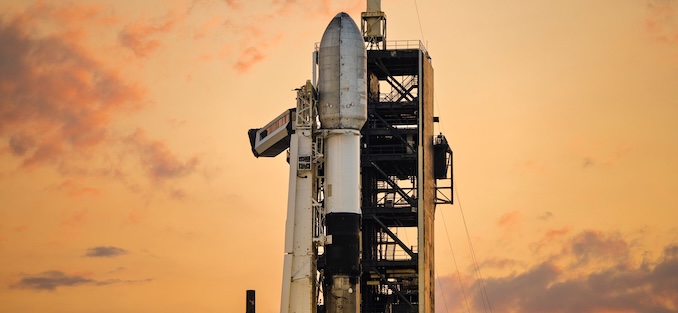
SpaceX is poised to achieve a new milestone in rocket reusability as it prepares to launch its flight-leading Falcon 9 booster, tail number B1067, on a record-breaking 35th flight. The mission, designated Starlink 10-35, will lift off from Space Launch Complex 40 at Cape Canaveral Space Force Station during a window opening at 6:07 a.m. EDT (1007 UTC) on Monday, June 8, 2026. This launch will add 29 broadband internet satellites to the ever-growing Starlink constellation, which now comprises more than 10,500 spacecraft in low Earth orbit.
Weather Outlook Favorable for Launch
The 45th Weather Squadron has forecast a 90 percent chance of favorable weather at the opening of the launch window, decreasing to 75 percent as the morning progresses. Meteorologists are monitoring the potential for thick clouds in the area, which could violate launch constraints. According to launch weather officers, high pressure at the surface and aloft, combined with abundant dry air, will keep conditions quiet across the Spaceport over the weekend. However, a change is expected early in the week as an upper-level disturbance brings more moisture, leading to a thickening of the mid- and upper-level cloud deck. This could increase the threat of thick cloud layer violations later in the window.
Booster B1067: The Fleet Leader
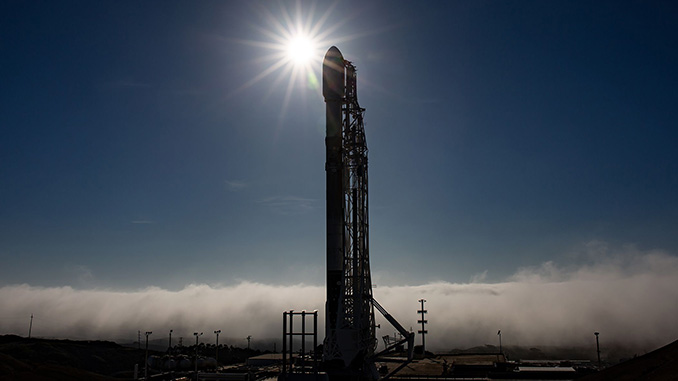
Booster B1067 has become the workhorse of SpaceX's Falcon 9 fleet, having completed 34 flights prior to this mission. Its upcoming 35th launch will set a new record for the company, surpassing its previous achievements in rocket reusability. As of June 7, 2026, SpaceX has seven Falcon boosters that have flown more than 25 times: B1063 (32 flights), B1067 (34 flights), B1069 (31 flights), B1071 (33 flights), B1077 (28 flights), B1078 (28 flights), and B1080 (26 flights). This demonstrates the company's success in refurbishing and reusing its first-stage boosters, a key factor in reducing launch costs.
SpaceX's Reusability Philosophy
SpaceX's commitment to reusability is central to its business model. In documents published prior to the company's initial public offering, SpaceX noted that out of 165 Falcon 9 launches in 2025, only eight used a booster making its first flight. This statistic underscores the maturity of the Falcon 9 fleet and the company's confidence in its reusable technology. According to SpaceX's prospectus filed with the U.S. Securities and Exchange Commission, the Falcon 9 boosters have been engineered and demonstrated to support up to 40 flights. However, the company has established a maximum accounting useful life of 25 flights as an estimate based on forecasted utilization, reflecting its strategic transition to the Starship system.
Starlink 10-35 Mission Details
The Starlink 10-35 mission will be the 53rd dedicated launch for the Starlink constellation. The rocket will follow a north-easterly trajectory after liftoff, deploying the 29 satellites into low Earth orbit. This launch continues SpaceX's rapid deployment of its broadband internet network, which aims to provide global coverage. With each mission, the constellation grows, enhancing capacity and reducing latency for users worldwide.
Live Coverage and Viewing Information
Spaceflight Now will provide live coverage of the launch, beginning approximately one hour before liftoff. Viewers can tune in to watch the historic flight of booster B1067 as it attempts to set a new reusability record. The launch will be visible from the Cape Canaveral area, weather permitting.

Implications for the Future of Spaceflight
The successful 35th flight of B1067 would further validate SpaceX's approach to rocket reusability, demonstrating that Falcon 9 boosters can reliably fly multiple times with minimal refurbishment. This achievement not only reduces the cost of access to space but also paves the way for even more ambitious reuse targets with the Starship system. As SpaceX transitions to Starship, the lessons learned from Falcon 9's reusability will be invaluable in developing fully reusable launch vehicles capable of carrying humans to the Moon, Mars, and beyond.
This article is based on reporting by Spaceflight Now. Read the original article.
Originally published on spaceflightnow.com