NASA and GE take hybrid-electric propulsion from lab work to public flight
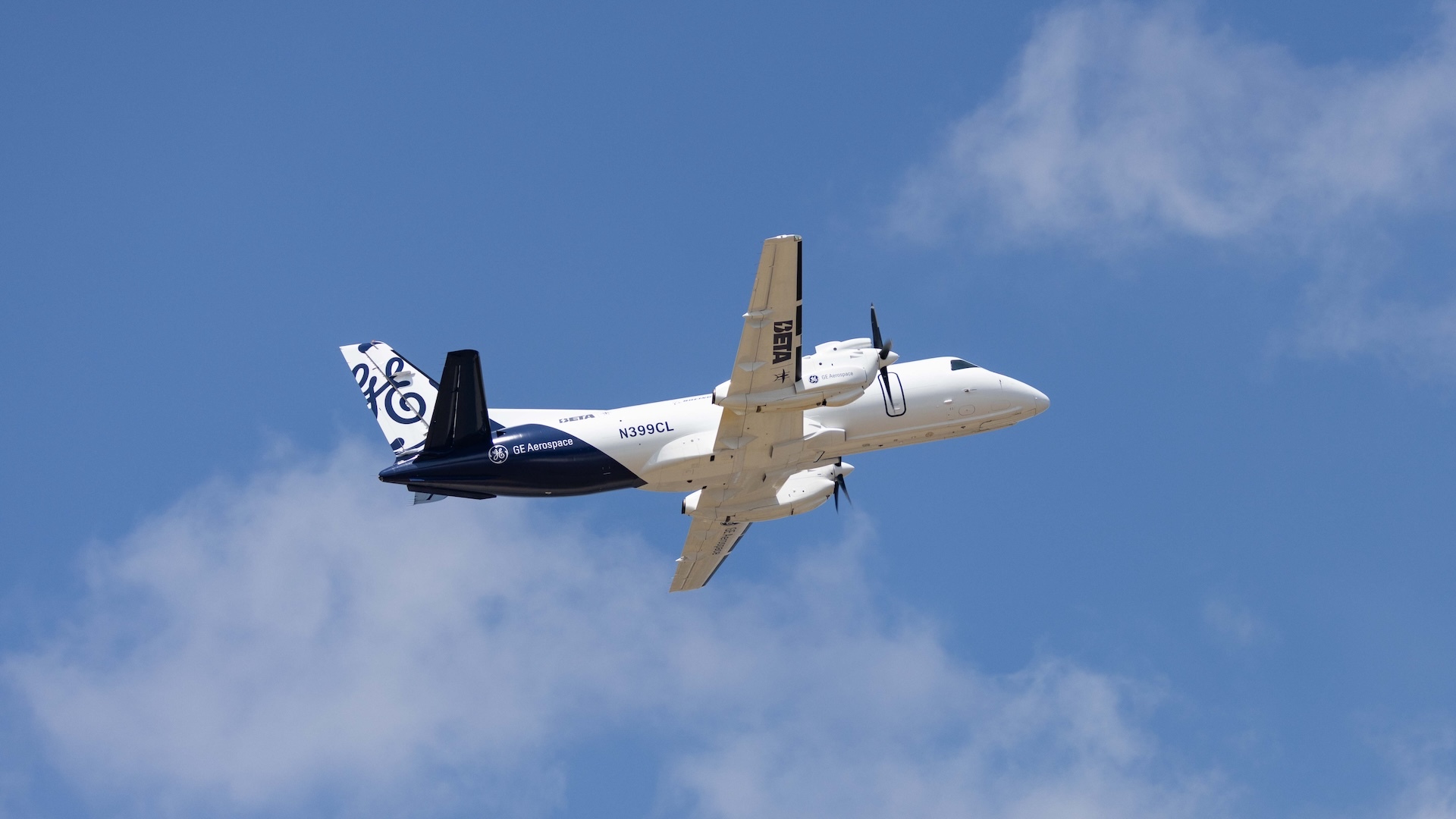
A modified Saab 340B aircraft powered in part by a megawatt-class hybrid-electric propulsion system made its public debut at the Farnborough International Air Show in the United Kingdom, giving one of aviation’s most closely watched efficiency technologies a high-profile demonstration outside the test environment.
The flight system was built by GE Aerospace in collaboration with NASA, BETA Technologies, and Boeing. According to NASA, the aircraft has already completed historic test flights in recent months and became the first hybrid-electric-powered aircraft to fly above 30,000 feet. Farnborough marked the first public showing of that capability on one of the world’s biggest aerospace stages.
For NASA, the moment is less about a single air-show appearance than about validating years of government-backed aeronautics work aimed at reducing fuel burn without forcing aircraft makers to sacrifice the performance required for commercial service. The system combines electric motors, a gas turbine, and onboard energy storage in a single architecture designed to inform future aircraft powertrains.
Why this flight matters
Hybrid-electric propulsion has long occupied a difficult middle ground in aviation. Fully electric aircraft remain constrained by battery weight and range limits, especially for larger airframes. Conventional turbine aircraft, meanwhile, still dominate regional and mainline fleets because they deliver the payload, reliability, and endurance airlines need. Hybrid systems are being pursued as a bridge: a way to cut fuel use and operating costs while staying within realistic engineering bounds for aircraft larger than small experimental platforms.
That is what makes the Farnborough demonstration notable. NASA said the engine was designed to show the capacity to power an aircraft around the size of a regional-class jet. That places the work closer to the market segment where efficiency gains could have meaningful commercial value, rather than remaining confined to a niche technology demonstrator.
The public debut also follows a technical milestone that carries weight inside the industry. Flying above 30,000 feet is not just a symbolic threshold. It points to performance in a flight regime relevant to real airline operations, where propulsion systems must function reliably in thinner air and colder conditions while maintaining efficiency and safety margins.
From long-horizon research to a working aircraft
NASA framed the demonstration as the outcome of a long research arc rather than a sudden breakthrough. The agency said the testing drew on work from its former Electrified Powertrain Flight Demonstration project as well as its ongoing Subsonic Vehicle Technologies and Tools project. It also relied on years of testing at NASA facilities.
That matters because hybrid-electric propulsion has repeatedly been discussed in aviation as a promising future concept, but moving from component tests to an integrated aircraft system is where programs often stall. Power electronics, thermal management, weight, certification complexity, and integration with existing aircraft architectures all become much harder at scale.
By putting a megawatt-class system on a Saab 340B, the program moved the discussion beyond subscale prototypes. It did not produce a new commercial aircraft, and NASA did not present the flight as a ready-for-market product. Instead, the agency described it as a technology pathfinder whose designs and lessons are expected to help future hybrid systems.
NASA Aeronautics Division director Laurie Grindle said the achievement reflects the agency’s role in exploring possibilities, validating them through research and testing, and working with industry to turn those ideas into useful technologies. That emphasis is central to how NASA is positioning the effort: not as a one-off headline, but as a public proof point that foundational aeronautics research can transfer into industry-led hardware.
What the system is designed to do
The hybrid-electric engine integrates three core elements:
- Electric motors that can contribute propulsion power.
- A gas turbine that remains part of the power system.
- Energy storage capability that supports the hybrid architecture.
NASA said the goal is to reduce fuel burn and costs without sacrificing performance. In practical terms, that framing suggests a strategy built around augmentation rather than total replacement. Instead of trying to eliminate turbine propulsion outright, the architecture uses electrification where it can provide measurable efficiency gains while retaining the performance envelope of a turbine-based aircraft.
For airlines, the appeal of that model is straightforward. If a propulsion system can lower fuel consumption while preserving dispatch reliability and useful payload, it could reduce operating costs in a segment where margins are often tight. Regional aviation is especially sensitive to those economics because aircraft frequently operate shorter sectors with frequent cycles and cost pressure from both fuel and maintenance.
NASA also linked the project to broader public benefits, saying the work could help reduce energy use and support U.S. companies. That aligns with a wider industrial policy logic increasingly visible across transportation technology: public research support is being used not only to pursue emissions or efficiency goals, but also to maintain domestic technical leadership in sectors likely to shape future manufacturing and export markets.

What comes next
The demonstration does not answer every commercial question around hybrid-electric aviation. Certification, lifecycle economics, infrastructure needs, maintenance complexity, and scale-up pathways all remain major hurdles. Farnborough is a showcase, not a market entry.
Even so, the achievement changes the tenor of the conversation. A megawatt-class hybrid-electric system has now been integrated into a recognizable regional-aircraft platform, flown publicly, and linked by NASA to a series of successful recent tests at operationally meaningful altitude. That gives aircraft manufacturers, suppliers, regulators, and airline planners something more concrete than concept art or laboratory data.
It also shows how the near-term future of cleaner aviation may be defined less by all-or-nothing technology bets and more by layered transitions. Hybrid-electric propulsion is one such transition path: ambitious enough to change aircraft design, but pragmatic enough to work within the constraints that have kept aviation hard to decarbonize.
For now, the Farnborough flight stands as an indicator of technical maturity rather than a final destination. But in an industry where propulsion changes happen slowly and only after years of validation, that is precisely why it matters.
This article is based on reporting by NASA. Read the original article.
Originally published on nasa.gov