A long-planned test of satellite servicing is moving from concept to flight
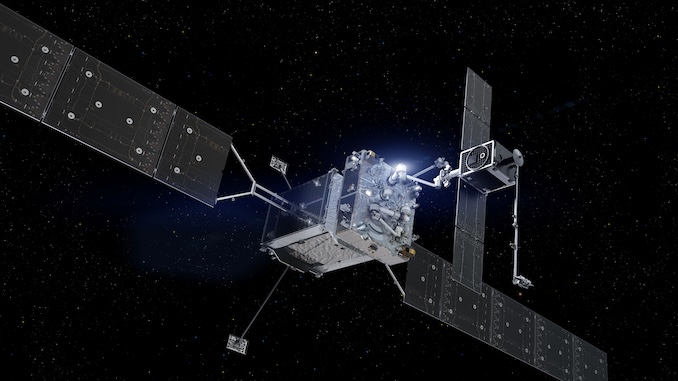
SpaceX is set to launch one of the more consequential in-orbit servicing missions attempted in years: Northrop Grumman’s Mission Robotic Vehicle, or MRV, alongside three Mission Extension Pods. The mission is designed to do something space operators have wanted for decades but rarely achieved at commercial scale: reach aging satellites in geosynchronous orbit, attach propulsion support hardware, and keep those spacecraft working years beyond their original design life.
The payload combines commercial satellite life-extension goals with a robotics program backed by U.S. defense research. At the center is MRV, a servicing spacecraft equipped with the Robotic Servicing of Geosynchronous Satellites payload, or RSGS. That system includes two robotic arms and interchangeable tools developed at the U.S. Naval Research Laboratory with DARPA support.
If the mission performs as planned, it would mark a significant step beyond launching replacement satellites whenever a platform nears fuel exhaustion. Instead, operators could begin treating some spacecraft as maintainable infrastructure.
What the mission is carrying
The launch stack includes MRV and three Mission Extension Pods, known as MEPs. Those pods are designed to be installed onto client satellites already operating in geosynchronous orbit. Each pod carries maneuvering fuel and is intended to add as much as eight years of usable life to a host spacecraft.
Northrop Grumman has already identified initial customers. According to the mission details, satellites owned by Optus in Australia and SES in Luxembourg are among the planned clients. After launch, MRV and the pods are expected to spend about a year traveling outward before beginning operations in geosynchronous Earth orbit.
That timeline matters. This is not a quick demonstration with an immediate docking event after launch. It is a sustained, multi-stage effort involving orbital transfer, rendezvous, robotic manipulation, and installation work at one of the most valuable regions of space for communications infrastructure.
Why geosynchronous servicing matters
Geosynchronous orbit hosts many of the world’s most important communications satellites. These spacecraft support television distribution, broadband links, secure communications, and other services that depend on persistent coverage over fixed regions of Earth. Because satellites in this orbit are expensive and strategically important, extending their operational life can have substantial commercial value.
In many cases, a satellite remains technically useful when its maneuvering fuel runs low. Power systems, payload electronics, and communications hardware may still function, but station-keeping becomes harder to sustain. A spacecraft that can no longer maintain position may need to be retired even if its core mission hardware still works.
The logic behind MRV and the pods is simple: if fuel is the limiting factor, then adding propulsion capability can postpone replacement. But the execution is difficult. Servicing spacecraft must approach, inspect, align with, and attach hardware to satellites that were often never designed to be serviced on orbit.
Robotics is the real test
The mission’s long-term significance is not just about adding fuel reserves. It is about proving that robotic servicing in geosynchronous orbit can be done reliably enough to support a broader market.
The RSGS system gives MRV the ability to carry out tasks beyond installing the extension pods. The mission description says the vehicle can also perform inspection, relocation, repairs, upgrades, and other operations. That makes MRV more than a tug. It is being positioned as a multi-role orbital maintenance platform.
Those ambitions place the mission in a larger shift in space operations. For years, spacecraft were treated as essentially disposable once launched: highly capable, extremely costly, but mostly inaccessible after deployment. Robotic servicing suggests a different model, one closer to infrastructure management than one-time deployment.
The technical challenge is substantial. Autonomous rendezvous and docking have a long development history, but precision robotic work on client spacecraft remains far more demanding. Tool use, controlled contact, and safe manipulation around valuable satellites leave little room for error.
A program decades in the making
The roots of this mission stretch back more than 20 years. The Naval Research Laboratory began exploring autonomous rendezvous and docking concepts in the early 2000s, including work linked to RescueSat and later the SUMO program, which examined how a robotic spacecraft might dock with a wide range of satellites.
That history shows how difficult the problem has been. The industry has long understood the value of refueling, repositioning, and repairing spacecraft, but turning those ideas into operational systems has taken years of robotics, guidance, navigation, and mission design work. MRV is arriving not as an isolated novelty, but as the product of persistent technical development and government-backed experimentation.
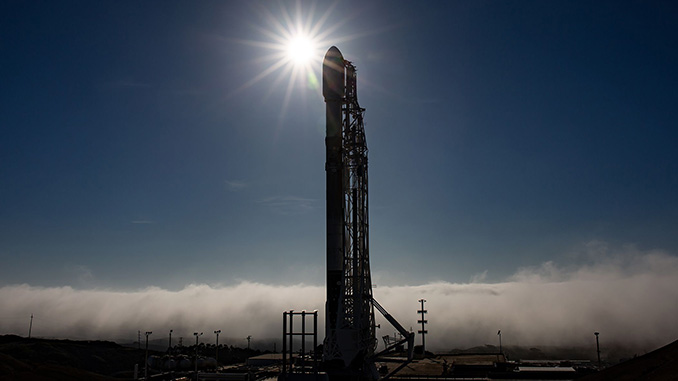
The launch vehicle also carries its own operational note. SpaceX is using Falcon 9 booster B1069 for its 32nd and final flight, with the company citing the extra performance required for this geosynchronous transfer mission. The rocket will launch from Cape Canaveral’s Space Launch Complex 40 during a four-hour window opening at 5:15 p.m. EDT on Tuesday.
What success would change
If MRV can reach geosynchronous orbit, install its pods, and support early customers, the mission could strengthen the case for a new servicing layer in commercial space. Satellite operators may gain a practical way to delay replacement orders, manage fleets more flexibly, and protect revenue from high-value spacecraft already on orbit.
Just as important, a successful mission would expand confidence in robotic intervention around existing satellites. That could create a path toward more ambitious forms of orbital work, including relocation, inspection after anomalies, hardware upgrades, and possibly eventual debris mitigation support.
For now, the mission remains a test of whether a servicing architecture built over decades can transition into regular operations. The launch is only the opening move. The real milestone will come much later, when MRV begins working on client spacecraft in geosynchronous orbit and shows whether satellite maintenance can become part of the normal economics of space.
This article is based on reporting by Spaceflight Now. Read the original article.

Originally published on spaceflightnow.com