Astronomers identify a Milky Way proton PeVatron near Altair
Astronomers say they have pinned down one of the Milky Way's most powerful natural particle accelerators, providing unusually strong evidence for a long-sought source of the galaxy's highest-energy cosmic ray protons.
The object, known as LHAASO J1912+1014u, lies in the direction of Altair and had already drawn attention after earlier observations detected extremely energetic gamma rays coming from the region. The new development is not merely that the source is bright or extreme. It is that researchers now say they can identify it specifically as a proton PeVatron, an astrophysical accelerator capable of pushing protons to peta-electron-volt energies.
That matters because cosmic rays have posed a stubborn question for astrophysics for decades. They are mostly protons, and some reach energies far beyond what human-built accelerators can produce. Scientists have had strong theories about where at least some of them come from, but proving that a specific galactic object is accelerating protons rather than electrons at those energies has been much harder.
Why PeVatrons are so difficult to confirm
A PeVatron is effectively a cosmic machine that can accelerate particles to around a peta electron volt. The scale is enormous. As described in the source material, that is roughly a thousand times the energy reached by the Large Hadron Collider. If such accelerators exist in the Milky Way, they would explain how at least a portion of the highest-energy galactic cosmic rays are generated.
The problem is that astronomers usually detect these environments indirectly. When ultra-energetic particles slam into surrounding gas or radiation fields, they can produce gamma rays. Those gamma rays are observable, but they do not always reveal what kind of particle made them. Very energetic electrons can create gamma-ray signatures that resemble those generated by protons, leaving room for ambiguity.
LHAASO J1912+1014u was first flagged in 2024 by observatories in Tibet and China because it emitted gamma rays at exceptionally high energies. That made it a serious PeVatron candidate. But a candidate is not a confirmation. Without better evidence, the source could still have been explained by fast electrons or by more ordinary remnants of a violent event such as a stellar explosion.
A multi-observatory case
The new study tackled that ambiguity by combining evidence from different parts of the electromagnetic spectrum rather than leaning on one instrument alone. According to the source text, a team led by Tsunefumi Mizuno of Hiroshima University brought together observations from NASA's Fermi Space Telescope, radio data, and X-ray measurements.
That multiwavelength approach is what turns the result into a stronger claim. Each band offers a different piece of the environment around the source. Gamma rays show where the extreme energy is being expressed. Radio and X-ray observations help researchers evaluate whether a population of electrons is present in a way that could plausibly explain the signal. If the electron-based explanation weakens while the proton-collision interpretation remains consistent, confidence rises that the source is indeed accelerating protons to PeV energies.
In practical terms, the researchers appear to have used the combined data to distinguish between two competing narratives. One was a leptonic scenario, in which electrons dominate the production of the observed gamma rays. The other was a hadronic scenario, in which protons are accelerated and then interact with surrounding material, producing gamma rays as a consequence. The reporting indicates that the evidence favored the proton explanation strongly enough for the source to be called a confirmed proton PeVatron.
Why this result matters beyond one object
The significance of that label goes beyond the source itself. Astrophysicists have long suspected that the Milky Way contains natural proton accelerators powerful enough to account for the upper end of the galaxy's cosmic ray spectrum. Finding one conclusively helps anchor that theory in an actual place rather than a statistical inference.
It also sharpens the picture of how violent environments in the galaxy shape the radiation field around us. Cosmic rays are not just an abstract curiosity. They are part of the energetic ecology of the Milky Way, affecting interstellar chemistry, magnetic processes, and the particle environment through which stars and planets move.
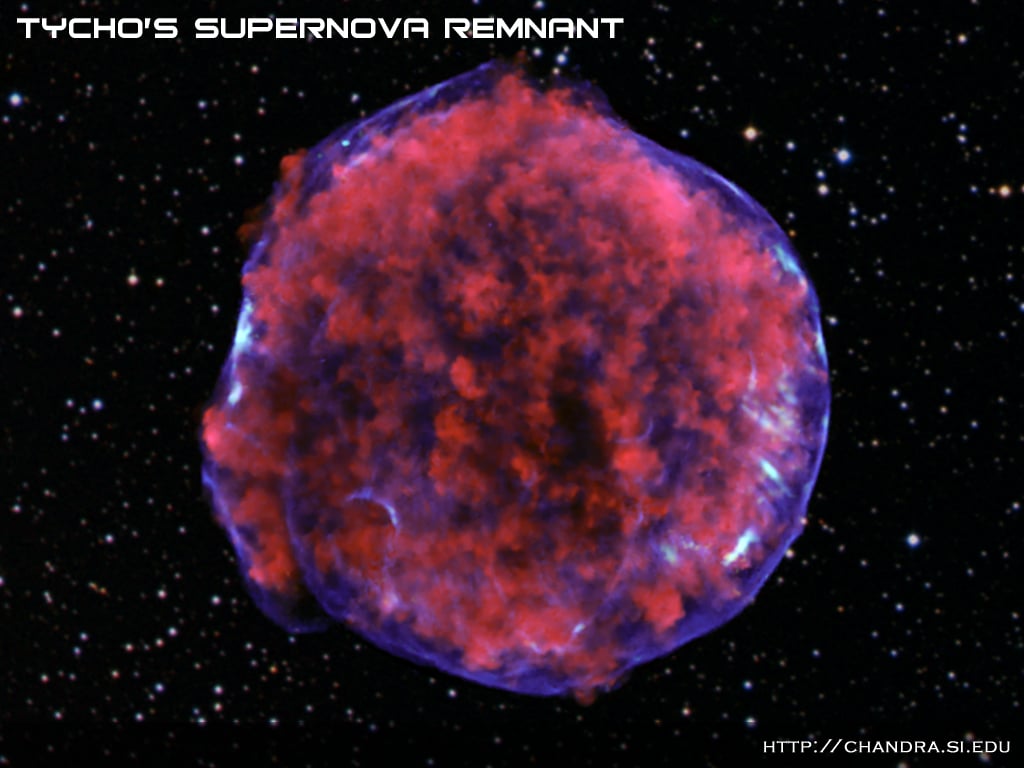
The source article notes that supernova remnants have long been considered likely sites for particle acceleration, and earlier X-ray observations of remnants such as Tycho's supernova offered evidence that shock waves can accelerate particles to high energies. But there has remained a difference between showing that a class of object can accelerate particles and proving that a specific source is producing the most extreme galactic protons. LHAASO J1912+1014u appears to narrow that gap.
That makes the result valuable as both a discovery and a methodological demonstration. The finding suggests that combining gamma-ray, radio, and X-ray observations can decisively sort out sources that would otherwise remain ambiguous. In a field where many candidate PeVatrons have been proposed, that is a useful roadmap for future work.
A clearer map of the high-energy Milky Way
The Milky Way is full of remnants, pulsars, shock fronts, and energetic clouds, but only a small subset are likely to be capable of reaching PeV scales. Confirming even one source gives astronomers a better template for what to look for next. It may help them identify other regions where proton acceleration dominates, and it may refine models of how particles escape those regions and spread through the galaxy.
There is also a conceptual payoff. Human particle physics often progresses by building larger and more precise machines. Astrophysics has the opposite opportunity: nature has already built machines vastly more powerful than ours, and the challenge is to understand how they work from a distance. A confirmed proton PeVatron is one of the clearest examples of that dynamic. It is a laboratory we cannot visit, but one that leaves observable signatures across the sky.
For now, LHAASO J1912+1014u stands out because it transforms a plausible story into a documented one. The object near Altair is no longer just a bright gamma-ray mystery or a promising lead in the hunt for cosmic accelerators. Based on the evidence summarized in the report, it is now one of the strongest identified examples of a Milky Way source capable of launching protons to the highest energies yet tied convincingly to a specific galactic accelerator.
That does not end the cosmic-ray mystery altogether. It does, however, mark a substantial step toward answering a question that has persisted for years: where, exactly, does the Milky Way make some of its most extreme particles? Astronomers now appear to have one solid answer.
This article is based on reporting by Universe Today. Read the original article.
Originally published on universetoday.com