Roman Arrives at Kennedy Space Center
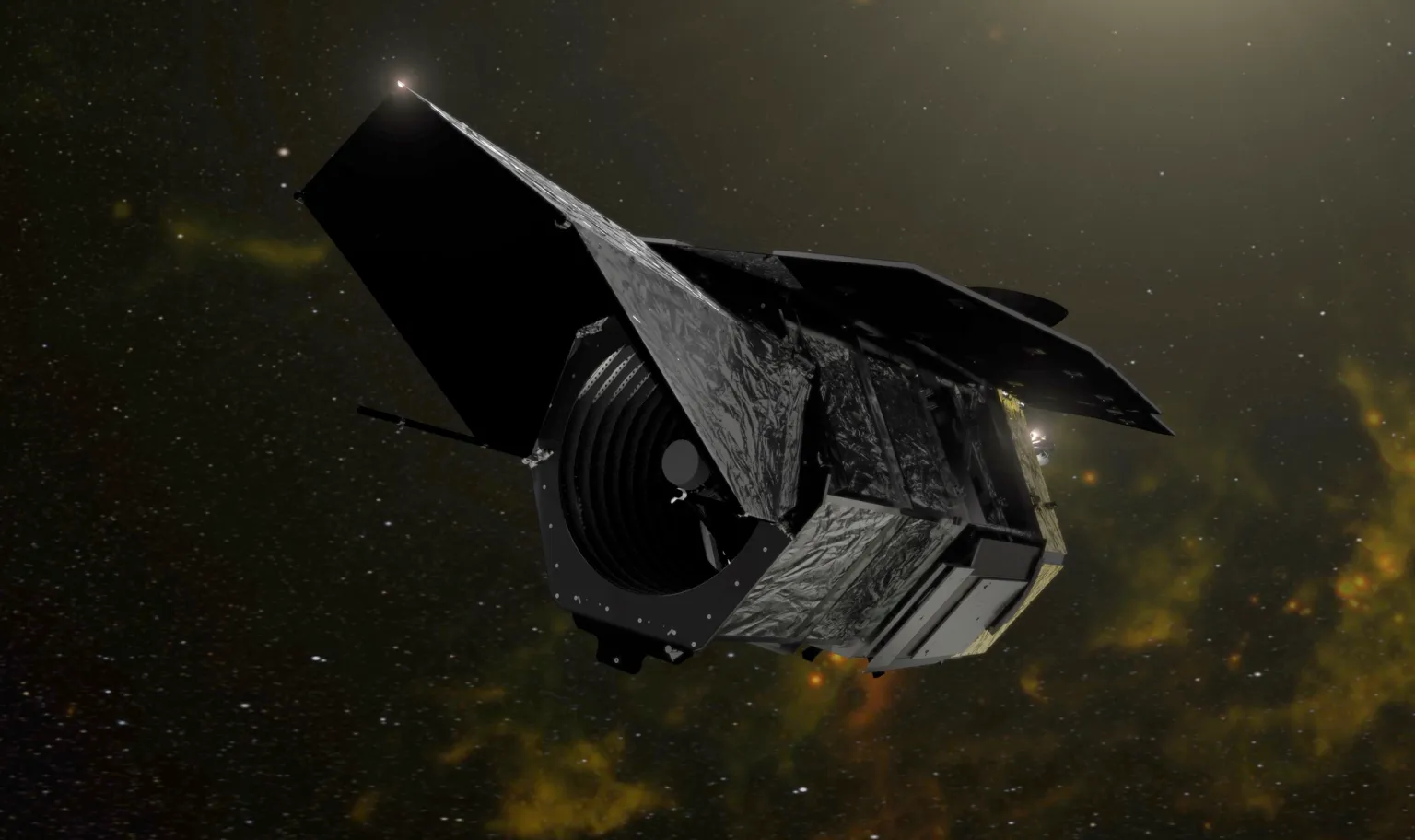
NASA’s Nancy Grace Roman Space Telescope has entered the last major stretch before launch. The observatory arrived at the Kennedy Space Center in Florida on June 21, setting up a sequence of final tests, inspections and fueling operations ahead of its planned August 30 liftoff.
The arrival is more than a logistics milestone. It signals that one of NASA’s most important astrophysics missions of the coming decade is now transitioning from assembly and transport to hands-on launch-site preparation. According to the source report, the agency is also running ahead of an earlier schedule that had pointed to a 2027 launch, putting Roman roughly eight months ahead.
That schedule gain matters because Roman is designed to extend and complement the legacy of Hubble while operating with survey power on a far larger scale. Once deployed, it is expected to tackle some of the biggest questions in cosmology and exoplanet science, using a combination of wide-field imaging and a coronagraph instrument that will help researchers study worlds beyond the Solar System.
A Carefully Managed Delivery
Getting Roman to Florida required an unusually controlled journey. NASA placed the telescope in a protective transportation container with environmental controls, then moved it to Baltimore. From there, the agency’s Pegasus barge carried the observatory down the coast to Cape Canaveral, where it was offloaded and transferred to Kennedy Space Center.
That kind of handling is routine only in the sense that major spacecraft always demand extreme care. In practical terms, each step is designed to limit contamination, vibration and thermal stress. Roman is a precision observatory, and preserving its condition during transit is a mission requirement, not a shipping preference.
After arriving at the Cape, the telescope was taken to Kennedy’s Payload Hazardous Servicing Facility, which had recently completed upgrades in anticipation of Roman’s arrival. The report says the spacecraft then underwent cleaning to remove contaminants picked up during the trip before being moved through the facility’s airlock and unboxed in a clean room. From there, it was placed vertically and lifted by crane onto the facility work platform known as the Pantheon.
These details may seem procedural, but they represent a transition into one of the highest-stakes phases of any space mission. By the time a flight telescope reaches the launch site, most of the design and fabrication risks are behind it. What remains is ensuring that transportation, final integration and fueling do not introduce problems at the last minute.
What Happens Before Launch
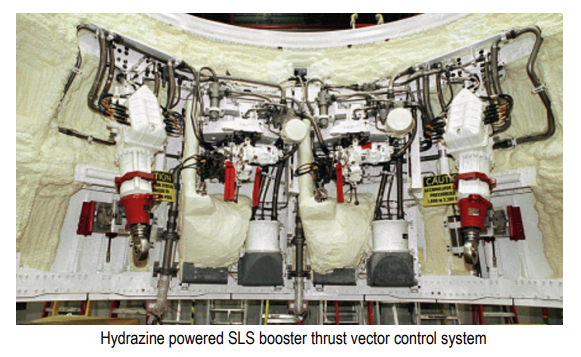
NASA technicians now have a concentrated checklist to work through over the coming weeks. The report says that includes testing Roman’s six solar panels, inspecting the observatory’s insulation and thermal blankets, and loading about 290 gallons of hydrazine fuel into its tanks.
Fueling is especially significant because it marks one of the last irreversible preparations before launch. Hydrazine loading is a hazardous operation handled under strict procedures, and once it is complete the mission moves closer to the point where launch processing becomes a countdown rather than an open-ended preparation cycle.
The remaining work is also a reminder that a space telescope is not finished when it leaves the factory floor. Launch-site validation helps confirm that deployable systems, protective materials and spacecraft subsystems remained in expected condition through transit and are ready for ascent and operations.
If the current schedule holds, Roman will launch on August 30. That places the mission on the near-term calendar for space science rather than in the category of distant flagship projects still years from flight.
Why Roman Matters Scientifically
Roman is named for Nancy Grace Roman, NASA’s first female executive and the agency’s first Chief of Astronomy. The report notes her work in the 1960s and 1970s on stellar classification and stellar motions, as well as her advocacy for space telescopes that helped lay the groundwork for Hubble. Naming Hubble’s wide-field successor after her gives the mission both scientific and institutional weight.
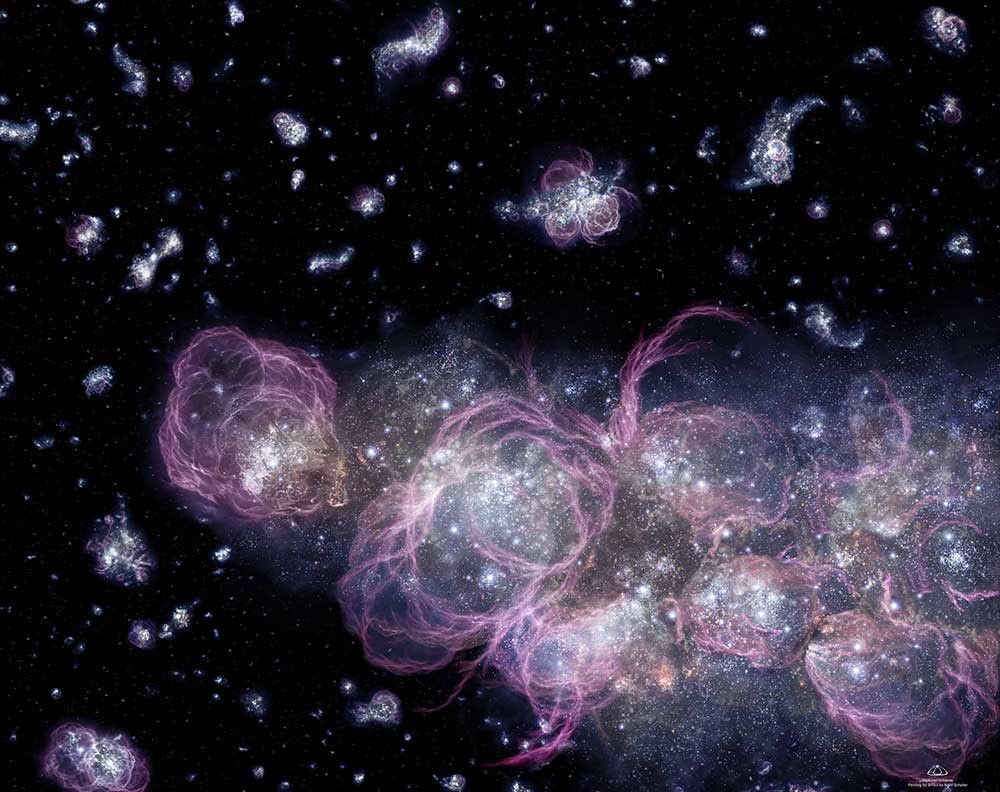
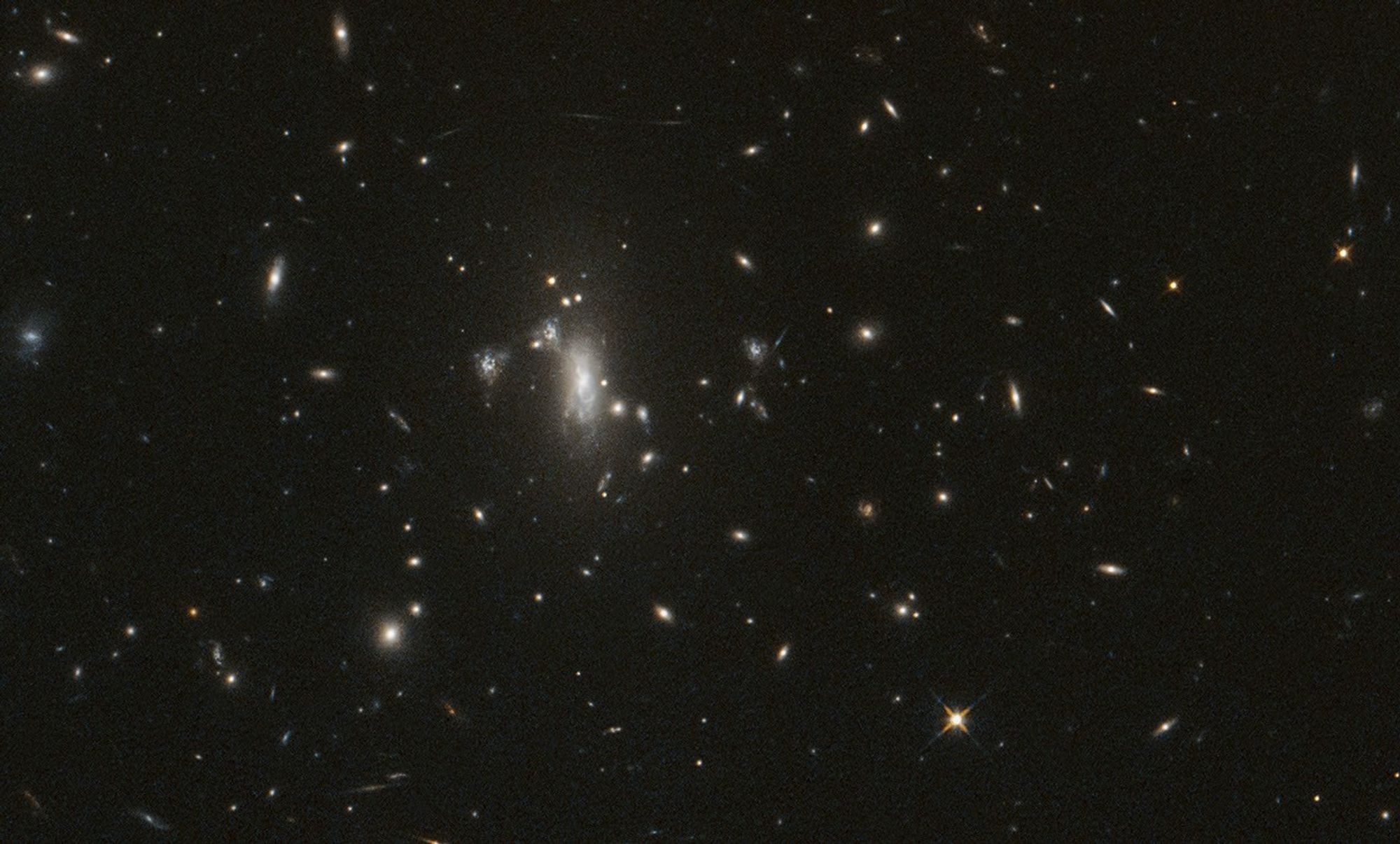
The telescope’s scientific promise comes from scale. Roman carries a 2.4-meter primary mirror, but the defining feature highlighted in the report is its field of view, which is said to be at least 100 times that of Hubble. That combination is expected to let the observatory collect and measure light from a billion galaxies during its five-year primary mission.
In practical terms, Roman is being built to do deep, wide surveys of the universe that would be far less efficient with narrower-field instruments. That should make it especially valuable for mapping cosmic structure, studying the expansion history of the universe and identifying large populations of astronomical objects for follow-up by other observatories.
The mission is also expected to contribute to exoplanet science through its coronagraph instrument. Coronagraphs work by suppressing the overwhelming glare of a host star, making it easier to observe much fainter nearby objects. While the report does not go into mission-level performance claims beyond noting the instrument, its inclusion is still notable: Roman is not only a cosmology machine, but also a technology and science platform for direct exoplanet observation.
A Major Summer Marker for NASA
Roman’s arrival in Florida gives NASA an important summer benchmark. Space missions often feel abstract until hardware reaches the launch site. Once that happens, timelines become more concrete, public visibility increases and the remaining work narrows to a finite set of tasks.
For NASA, the telescope represents a chance to field an observatory that can expand on Hubble’s legacy in a distinctly modern way: not just with sharp images, but with enormous survey efficiency and the ability to generate data sets at scales suited to contemporary astrophysics. For the broader space sector, Roman is a reminder that flagship science missions are still advancing even as commercial launch, lunar programs and national-security space draw much of the day-to-day attention.
The next milestone is straightforward but unforgiving: complete final checks, fuel the spacecraft and keep the August 30 launch date on track. With Roman now at Kennedy, the mission has moved out of long development limbo and into the final operational sprint before liftoff.
This article is based on reporting by Universe Today. Read the original article.
Originally published on universetoday.com