Pandora has sent back its first views from orbit
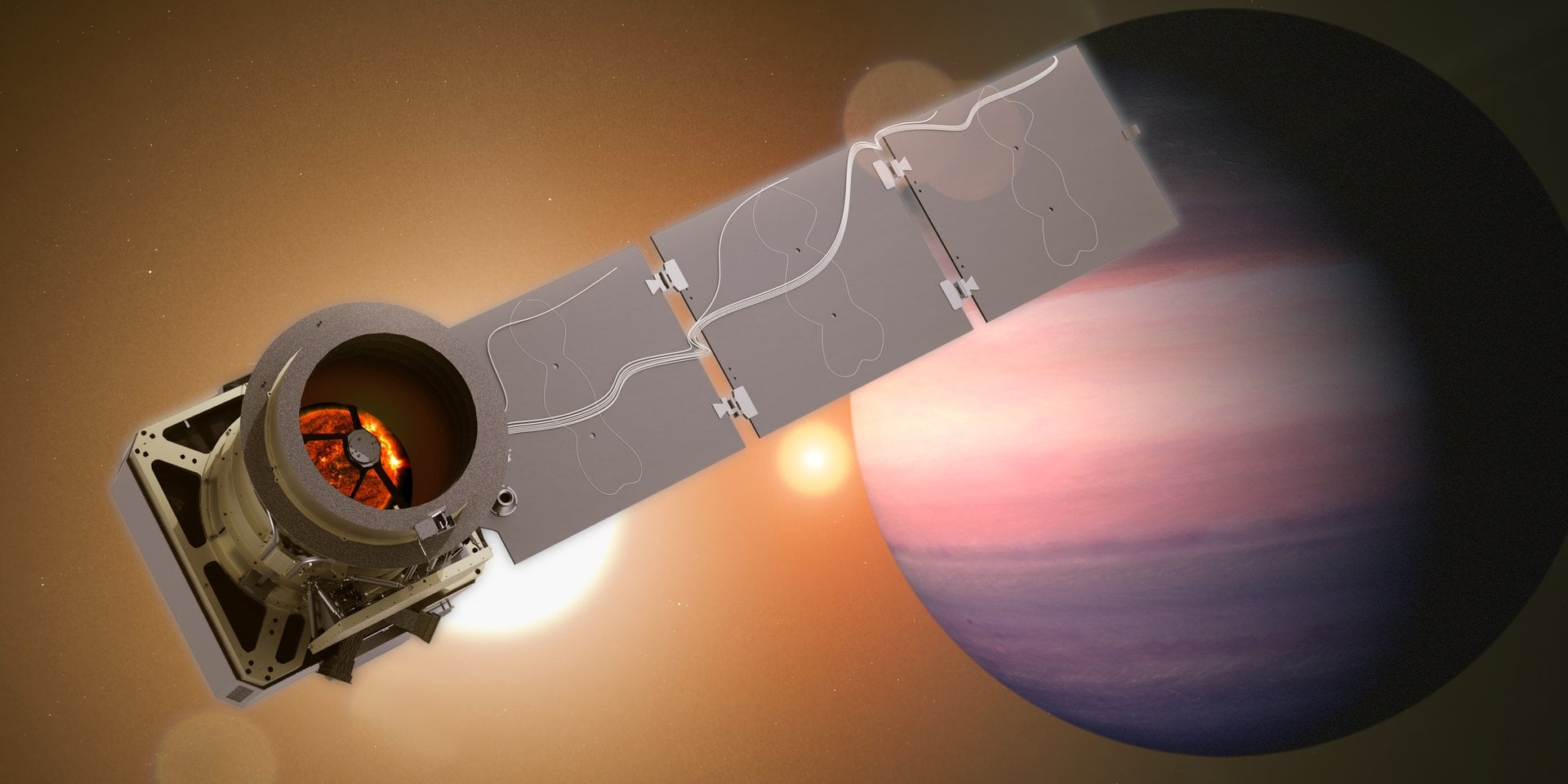
The Pandora exoplanet mission has returned its first engineering images from space, providing an early look at the performance of the small observatory as it moves through commissioning. The images mark the first publicly described orbital results from a NASA Astrophysics Pioneers Program mission, giving the low-cost initiative a visible milestone as Pandora prepares for science operations focused on known transiting exoplanets.
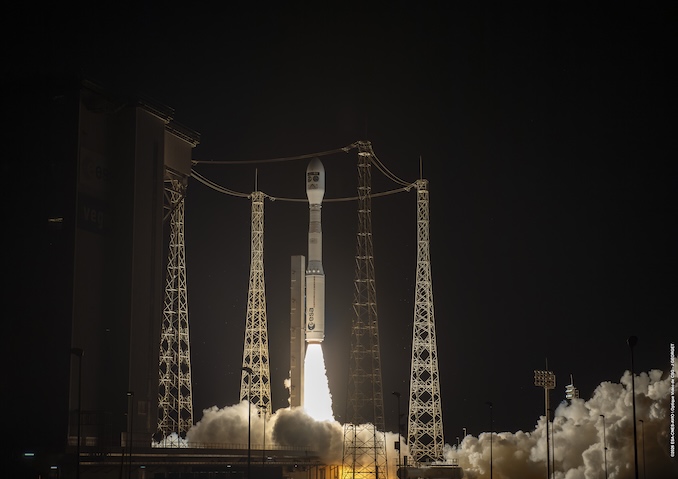
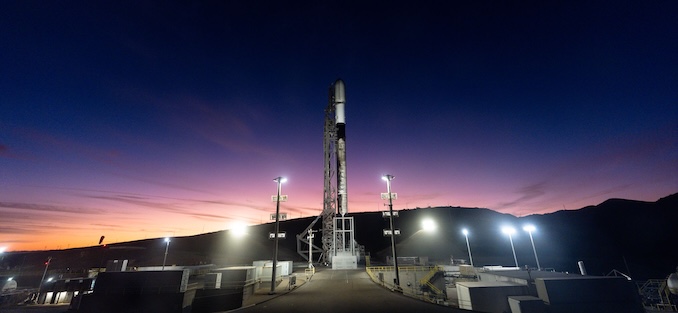
Pandora launched on January 11 from Vandenberg Space Force Base aboard a SpaceX Falcon 9 as part of a rideshare mission that also included SPARCS and BlackCAT. The spacecraft is a smallsat developed for NASA in partnership with Lawrence Livermore National Laboratory, Blue Canyon Technologies, and Corning Incorporated. That lineup reflects the mission’s broader purpose: to show how compact, relatively lower-cost missions can still target important astrophysics questions.
A test for the Astrophysics Pioneers model
NASA established the Astrophysics Pioneers Program in 2020 to test the feasibility of small, low-cost missions aimed at key problems in astronomy and astrophysics. Pandora is therefore significant in two ways at once. It is an exoplanet mission, but it is also a demonstration of a programmatic model that tries to do meaningful science without the scale and price of flagship observatories.
That model matters in a field where major missions can take many years and very large budgets to build. Smaller spacecraft cannot replace all-purpose giants, but they can fill focused roles, test instruments, and deliver targeted observations that complement larger facilities. Pandora’s first images are engineering products rather than science headlines, but they show that the observatory has reached the stage where those ambitions can start being evaluated in orbit.
Two instruments, one central problem
Pandora’s scientific design is built around the need to separate what belongs to a planet from what belongs to its star. The mission combines two main instruments operating from visible to near-infrared wavelengths. At the center is CODA, a 45-centimeter Cassegrain telescope developed through work involving Lawrence Livermore National Laboratory and Corning. Attached to that are VISDA, the Visible Detector Assembly photometer, and NIRDA, the Near-infrared Detector Assembly spectrograph.
One especially notable detail is that NIRDA is a repurposed backup copy of the James Webb Space Telescope’s NIRCam instrument. That reuse illustrates the pragmatic engineering style behind missions like Pandora. Rather than building every component from scratch, the program can draw on proven or reserve hardware to create focused scientific capability more efficiently.
What Pandora will actually do
Once commissioning is complete, Pandora is expected to conduct follow-up observations of 20 known transiting exoplanets, with 10 transit measurements planned for each target. Each observing run will last about 24 hours, and the spacecraft must remain stable and accurately pointed throughout. That requirement highlights the real technical challenge facing a small observatory. Exoplanet transit science depends on precision and consistency, not just access to space.
The mission’s simultaneous visible and infrared observations are intended to help scientists disentangle false stellar signals such as variability and starspot activity from atmospheric signatures associated with the exoplanets themselves. According to the source material, the infrared measurements could help identify water and hydrogen-rich atmospheres around those worlds.
That goal addresses a persistent problem in exoplanet characterization. When a planet passes in front of its star, the star is not a perfectly constant backdrop. Its own behavior can contaminate or mimic what observers are trying to measure in the planet’s atmosphere. Pandora’s strategy is to observe both wavelength regimes at once so those effects can be sorted more effectively.
Why first engineering images still matter
Engineering images rarely have the drama of finished science imagery, but they are crucial milestones. They show whether detectors are functioning, whether calibration behaves as expected, and whether the optical system is performing in a way that justifies moving deeper into operations. The source notes that one image from NIRDA shows the dispersal of light into vertical lines, while a first image from VISDA highlights sensitivity across visible into infrared wavelengths. Those are exactly the kinds of indicators mission teams want at this stage.
For a small mission, early success can be especially important. Programs built around lower cost and focused objectives need to show that they can deliver reliable capability, not just attractive budget logic. Pandora’s first engineering images do not prove the mission’s science case yet, but they do suggest the observatory is progressing toward the point where that case can be tested.
A small mission with a defined role
Pandora will not rival the scale of Webb or the breadth of large survey missions. It is not meant to. Its value lies in concentration: a narrow mission profile, a modest platform, and a specific method for improving exoplanet atmospheric studies. If it succeeds, it will strengthen confidence in the idea that well-scoped, lower-cost astrophysics spacecraft can produce outsized scientific value when aimed at the right questions.
That is what makes these first images more important than they appear. They are not merely proof that a camera turned on. They are the opening signal from a mission designed to show that exoplanet follow-up science can be done with a lighter, more agile approach. Pandora has not started its main scientific campaign yet, but it has now cleared one of the most visible first hurdles on the way there.
This article is based on reporting by Universe Today. Read the original article.
Originally published on universetoday.com