A Mars city may need an off-world supply chain almost immediately
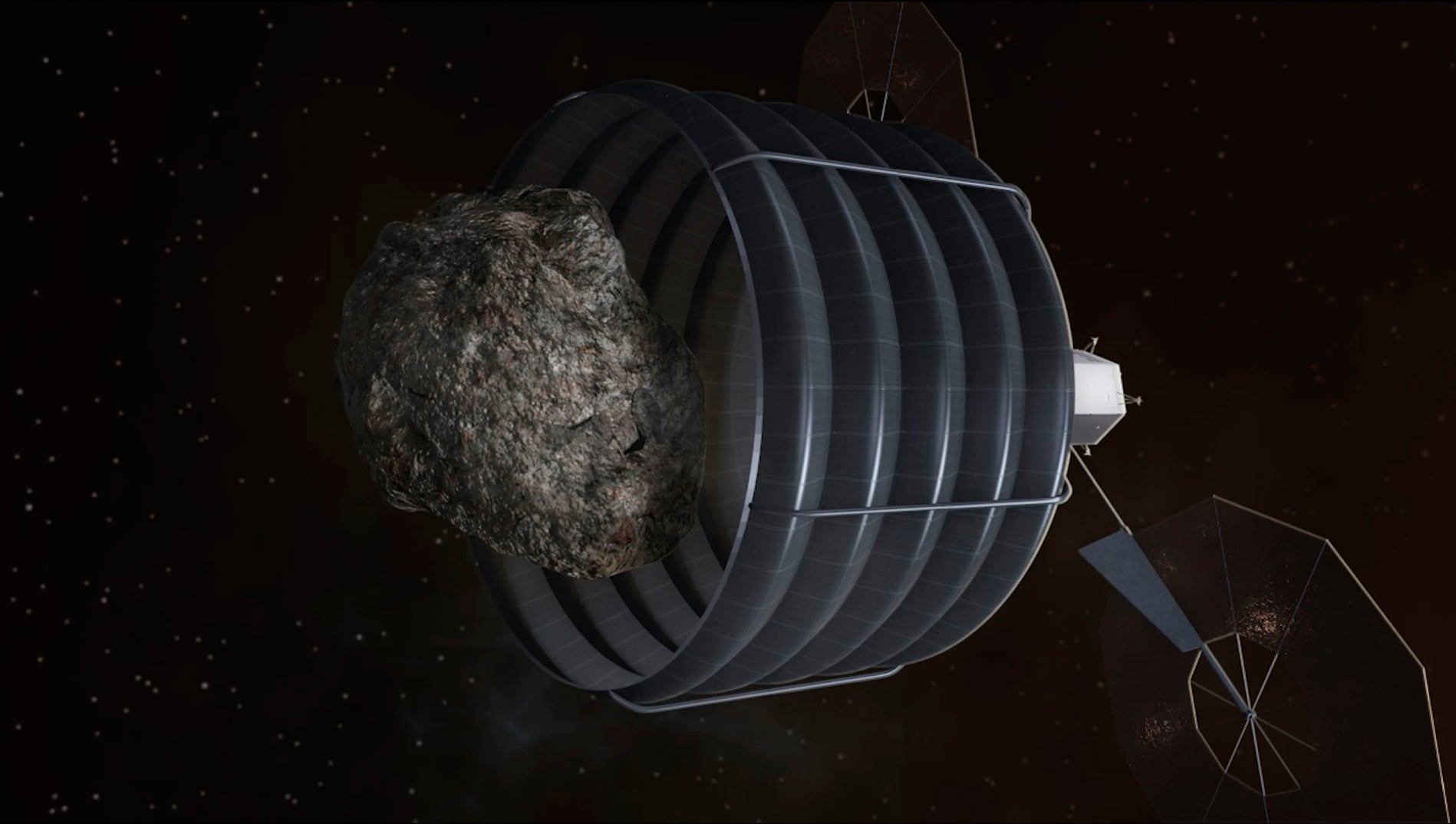
Visions of a self-sufficient city on Mars usually emphasize local industry, resource extraction, and the gradual growth of a frontier economy. A new preprint highlighted by Universe Today takes a less romantic view. Its core argument is that early Martian settlement may depend not only on local resources, but on mining the asteroid belt for critical materials Mars lacks in useful quantities.
The study, led by Serena Suriano and available on arXiv, starts from a simple industrial constraint. Mars may offer iron, but it is not necessarily rich in all the materials needed for advanced manufacturing, including elements such as boron and molybdenum. If humanity’s industrial base remains concentrated in the Earth-Moon system when Mars is first settled, then supplying a growing settlement with specialized materials could become a severe bottleneck.
The obstacle is not mining theory but orbital mechanics
The obvious response is to send ships to metallic asteroids, extract material, and return it to Mars. The study’s point is that this is far harder in practice than in concept. The barrier is delta-v: the total change in velocity a spacecraft needs to complete the mission.
To ground the analysis in near-term engineering, the authors modeled a cargo spacecraft with specifications similar to SpaceX’s Starship. In the version described by Universe Today, the vehicle has a dry mass of 120 tons, payload capacity of 115 tons, and fuel capacity of 1,100 tons. Fully fueled, it can produce a maximum delta-v of 6.4 kilometers per second.
That sounds large until it is compared with the routes under discussion. According to the report, the authors found zero metallic asteroids close enough to Mars for a spacecraft to launch, mine the metal, and return to low Mars orbit on a single tank. Most candidate missions would require between 10 and 12.8 kilometers per second of delta-v, roughly double what the modeled vehicle could provide.

The answer proposed is a multi-hop industrial network
Rather than treating that gap as fatal, the study proposes a logistics architecture built around refueling stops. A cargo spacecraft would first travel to a metallic asteroid and collect mined material. It would then stop at a C-type asteroid, where water and hydrocarbons are abundant, and replenish propellant using in-situ propellant production.
That turns the asteroid belt from a destination into infrastructure. Under this model, one set of asteroids provides metals while another acts as a fuel depot. The mission succeeds not because spacecraft become magically more capable, but because the supply chain is broken into stages that fit within real propulsion limits.
It is a useful reminder that space industry, if it happens at scale, will probably look less like heroic one-shot voyages and more like shipping. Deep-space gas stations may sound futuristic, but so does any serious attempt to support a remote industrial civilization on Mars.
Why this matters for settlement planning
The preprint’s importance lies less in immediate feasibility than in forcing a harder conversation about what Martian development would actually require. Popular discussions of Mars often focus on habitats, life support, and launch cadence from Earth. Those are essential, but they do not solve the question of materials supply for advanced manufacturing.
If Mars lacks enough of certain strategic inputs, then even an energetically optimistic settlement could remain dependent on imported resources for far longer than advocates assume. That dependence might not run primarily through Earth. In some cases, the asteroid belt could be the better industrial hinterland.
The source text specifically notes that the entirety of humanity’s industrial capacity may still be based in the Earth-Moon system when early colonists arrive. If so, the first decades of Martian growth could hinge on whether spacefaring civilization can create a broader resource web rather than simply an Earth-to-Mars corridor.
A study about limits as much as ambition
It is also important to treat the work as what it is: a preprint, not a proven mission architecture. The article makes clear that the study is available on arXiv and that the concept remains difficult in practice. Nothing in the supplied source text suggests operational asteroid-mining routes are close to deployment.
Still, preprints can be valuable when they sharpen the right constraint. Here, the constraint is not whether metallic asteroids contain useful materials. It is whether a plausible transport chain can move those materials to Mars under near-term propulsion assumptions. By concluding that no single-hop route works for the modeled spacecraft, the authors shift attention toward refueling infrastructure as a prerequisite rather than an upgrade.
The broader implication
There is a tendency to imagine planetary settlement as a local story: arrive, build, extract, expand. This study argues for a different image. A city on Mars may be less like an isolated colony and more like a node in a much larger interplanetary logistics network, dependent on specialized material flows from multiple regions of the solar system.
If that is right, then the road to Martian urbanism runs through orbital economics as much as through rockets or habitats. The first enduring city on Mars may not be built only with what Mars has. It may be built with what the solar system can move there.
This article is based on reporting by Universe Today. Read the original article.

Originally published on universetoday.com