An invisible population may finally come into view
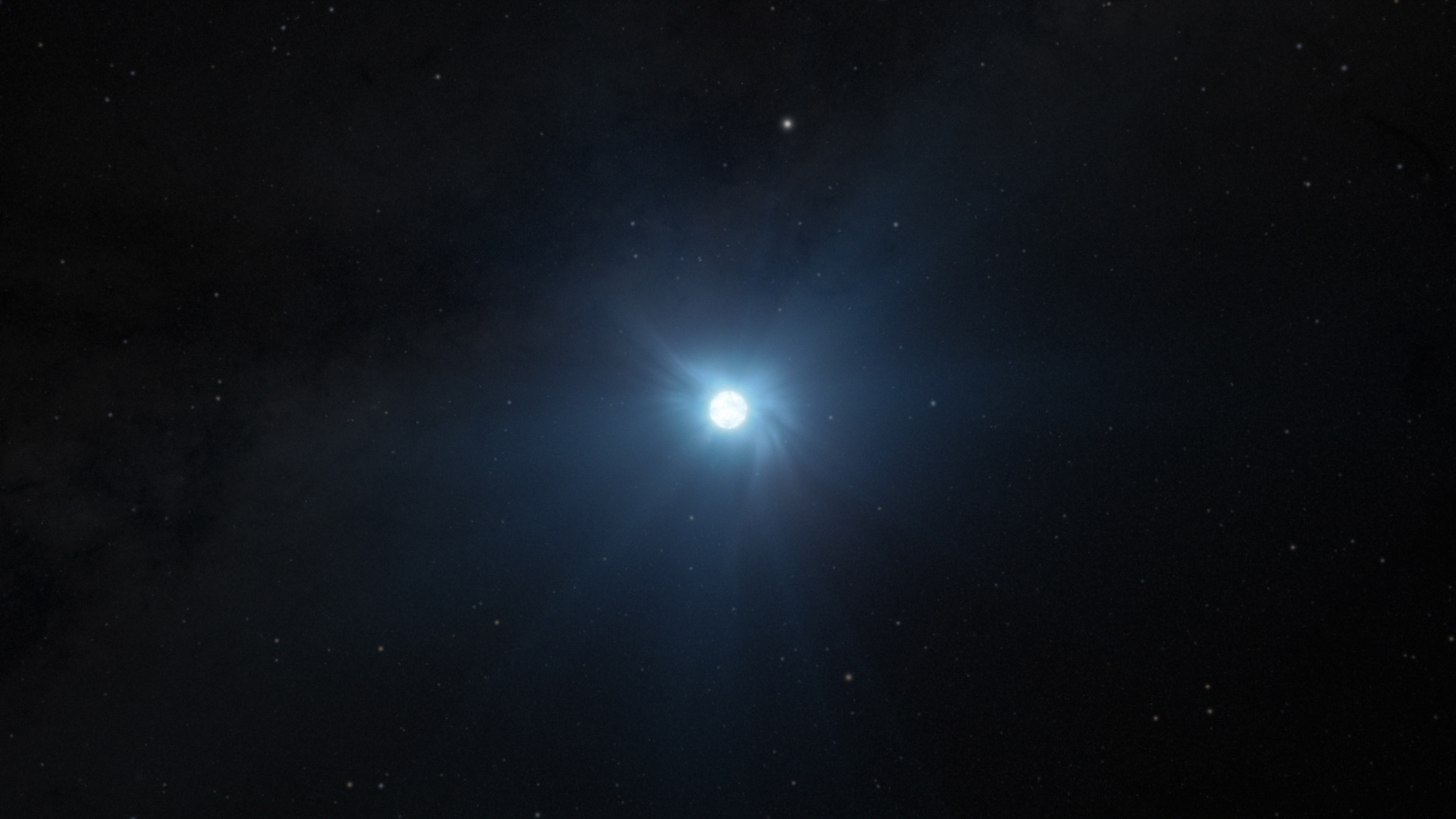
Neutron stars are among the strangest objects in the universe: collapsed stellar cores that can pack more mass than the Sun into a sphere roughly the size of a city. Astronomers are confident they should be scattered across the Milky Way. The problem is that most of them are extremely hard to find. Unless they pulse in radio wavelengths or glow in X-rays, they can remain effectively hidden.
A new study cited by NASA suggests that may change when the Nancy Grace Roman Space Telescope begins observing. Researchers used simulations of the Milky Way and Roman’s future capabilities to show that the telescope may be able to identify and characterize dozens of isolated neutron stars using astrometric microlensing, a subtle gravitational effect that briefly alters the apparent brightness and position of background stars.
Why isolated neutron stars are so elusive
Many neutron stars are discovered because they announce themselves. Pulsars emit sweeping radio beams. Others can be spotted in X-ray wavelengths. But not every neutron star is so obliging. Some exist alone, faint and difficult to detect with conventional observing methods. That creates a major blind spot in astronomy, because these objects can reveal how massive stars die, how heavy elements are distributed, and how matter behaves under extreme pressure and density.
Zofia Kaczmarek of Heidelberg University, who led the study published in Astronomy and Astrophysics, summarized the challenge directly in the supplied source text: most neutron stars are relatively dim and on their own, making them incredibly hard to spot without some kind of assistance.
Roman’s advantage is precision
Roman is expected to help by using gravity itself as the marker. When a massive foreground object such as a neutron star passes in front of a more distant star, its gravity bends the background star’s light. That is microlensing. Telescopes can sometimes detect the temporary brightening created by this alignment, but Roman is expected to add something especially valuable: exceptionally precise astrometric measurements of how the background star’s apparent position shifts in the sky.
This combination of photometry and astrometry is what makes the mission promising. The brightening alone can indicate that something massive passed in front of a star. The positional shift can help reveal more about the lensing object itself, including potentially its mass.
That matters because isolated neutron stars are hard not only to find, but also to weigh. A telescope that can both detect them and constrain their mass would offer a much richer scientific payoff than a simple count.
What microlensing can reveal
The source text explains that when the gravity of a foreground neutron star bends the light of a distant background star, the distorted images cannot be resolved directly, but their combined light appears both brighter and slightly displaced. As the alignment changes over time, astronomers can track those changes and infer the presence of the otherwise unseen object.
This makes Roman well suited to studying compact, dark, or dim objects that announce themselves through gravity rather than light. In effect, the telescope could turn stellar alignments into a way of conducting a census of hidden remnants in the galaxy.
That is scientifically powerful because neutron stars occupy an important boundary in astrophysics. Their properties connect stellar evolution, supernova remnants, nuclear physics, and general relativity. Finding more of them, especially isolated examples, can refine models across all of those fields.
Why dozens would matter
The study’s estimate that Roman could identify and characterize dozens of isolated neutron stars may sound modest, but it would represent a substantial advance for a class of objects that has remained largely invisible outside special cases. In astronomy, high-quality measurements on a relatively small number of hard-to-observe objects can transform theory more than thousands of lower-quality observations elsewhere.
A sample of dozens could begin to answer key questions: how isolated neutron stars are distributed through the Milky Way, how their masses vary, and whether current models of stellar death and remnant formation are missing important population-level features.
A mission built for survey science
Roman’s design has always been associated with large-scale, high-precision survey work. The neutron star result highlights the value of that approach. A telescope built for wide and sensitive observation can generate discoveries beyond its headline goals because it repeatedly captures subtle changes across large stellar fields.
That is often how major observatories create enduring scientific impact. They are not limited to one class of object or one flagship question. Their true power comes from enabling new methods of seeing. In Roman’s case, one of those methods may be the ability to find collapsed stars that emit little or no obvious signal of their own.
The larger importance of seeing the unseen
The appeal of this study goes beyond neutron stars themselves. It is a reminder that astronomy increasingly advances by extracting information from indirect evidence. Some of the most important things in the universe do not shine brightly enough to be found the old way. Instead, researchers look for the traces those objects leave in spacetime, motion, or background light.
If Roman performs as expected, isolated neutron stars may become one of the clearest examples of that principle in action. Objects that were once effectively lost in the Milky Way could become measurable targets, not because they suddenly brighten, but because a telescope precise enough to notice their gravitational fingerprint is finally on the way.
For astronomers, that would be more than a technical milestone. It would open a new observational window onto some of the galaxy’s most extreme remnants, turning invisible stellar corpses into data-rich laboratories for fundamental physics.
This article is based on reporting by NASA. Read the original article.
Originally published on nasa.gov