Fresh observations sharpen the picture of an interstellar visitor
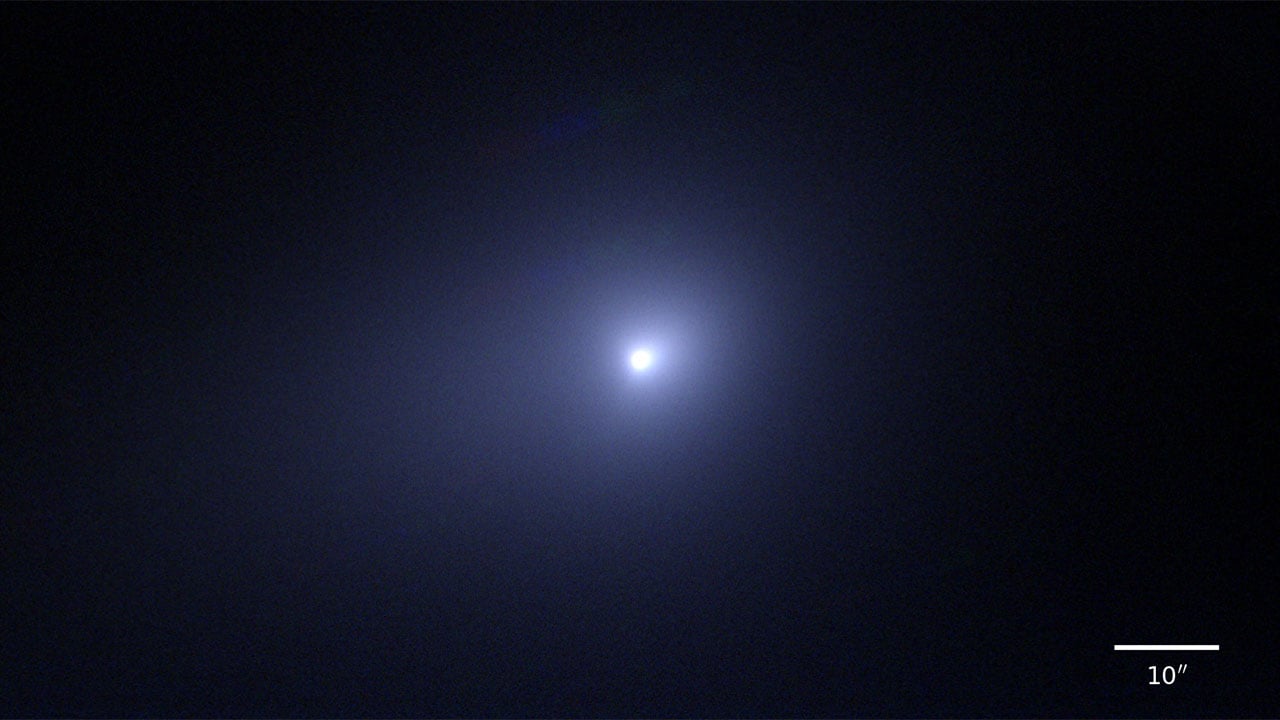
Astronomers using the Subaru Telescope have reported new observations of 3I/ATLAS, the third interstellar object detected passing through the Solar System, and the findings suggest its interior may differ more sharply from its surface layers than earlier readings implied.
According to Universe Today, Subaru observed the comet on January 7, 2026, shortly after its closest approach to the Sun. The timing mattered because perihelion intensified outgassing, giving researchers a better opportunity to study the material released from the object. By analyzing light from the coma, the team estimated the ratio of carbon dioxide to water and found it was lower than ratios inferred from earlier observations by space telescopes.
The result, reported in a study published in The Astrophysical Journal, offers a new clue about the structure of 3I/ATLAS and suggests the chemistry of the coma is evolving.
Why this object matters
3I/ATLAS has attracted intense attention since its discovery on June 1, 2025, by the Asteroid Terrestrial-impact Last Alert System. It is only the third confirmed interstellar object ever observed in the Solar System, following 1I/'Oumuamua and 2I/Borisov.
That rarity alone would make the object important. But 3I/ATLAS also appears to have been especially favorable for observation. Universe Today noted that scientists detected it four months before perihelion and that it was larger and brighter than 2I/Borisov, increasing the scientific return. In practical terms, that meant astronomers had more time, more instruments, and better conditions for comparing how the object behaved at different points in its journey past the Sun.
Interstellar objects are valuable because they carry material formed around other stars. Unlike Solar System comets, they offer a chance to inspect the building blocks of planetary systems beyond our own without leaving home.
Interior versus exterior
The key scientific point in the new Subaru work is the distinction between outer and inner material. Prior observations largely revealed information about the comet’s exterior layers, which had been exposed to cosmic irradiation over billions of years. The Subaru team’s post-perihelion measurements, by contrast, provided a way to infer something about material from deeper inside the object as solar heating drove stronger outgassing.
The lower carbon-dioxide-to-water ratio detected by the team therefore matters for more than a single measurement. It implies that what sits beneath the surface may not match what earlier remote observations led researchers to expect. That points to a more layered or compositionally varied structure.
The researchers also concluded that the coma’s chemistry may be changing. That is important because observers do not measure the nucleus directly. They measure the cloud of gas and dust released from it. If that cloud evolves as the object warms, fractures, or exposes new material, then the chemistry seen from Earth can shift over time in ways that reveal physical structure inside the comet.
What scientists can learn from it
Comets and asteroids are often described as leftovers from planetary formation. For interstellar objects, that idea becomes even more powerful: they are leftovers from someone else’s planetary system. Their compositions can preserve information about the temperature, chemistry, and conditions present when they formed.
That is why differences between surface and interior signatures matter. Outer layers altered by long exposure to interstellar space may tell one story, while fresher material revealed by later activity may tell another. By comparing those signals, astronomers can begin separating long-term space-weathering effects from the original chemistry of the object’s parent system.
Universe Today reported that the Subaru team applied analytical methods developed through decades of observing comets in the Solar System. That continuity is part of the significance here. Interstellar science often sounds wholly new, but it also depends on established cometary expertise. Researchers are extending familiar tools to unfamiliar bodies.
A small sample, but a growing one
With only three confirmed interstellar objects ever detected, every new dataset matters disproportionately. Scientists cannot yet say whether 3I/ATLAS is typical of interstellar comets or unusual. But each observation expands the baseline for comparison.
The Subaru results therefore do double work. They refine the scientific picture of one specific object, and they help build the methods that will be used when the next interstellar visitor appears. If future detections arrive earlier, brighter, or on more favorable trajectories, astronomers will be better prepared to test how common layered chemistry and evolving coma signatures really are.
For now, 3I/ATLAS is giving researchers a rare chance to compare the outer record of deep-space exposure with the inner record of formation. The gap between those two records may turn out to be one of the most revealing features of the object. If so, the Subaru observations will be remembered not just as another look at a passing comet, but as an early step toward reading the internal history of material forged around another star.
This article is based on reporting by Universe Today. Read the original article.
Originally published on universetoday.com