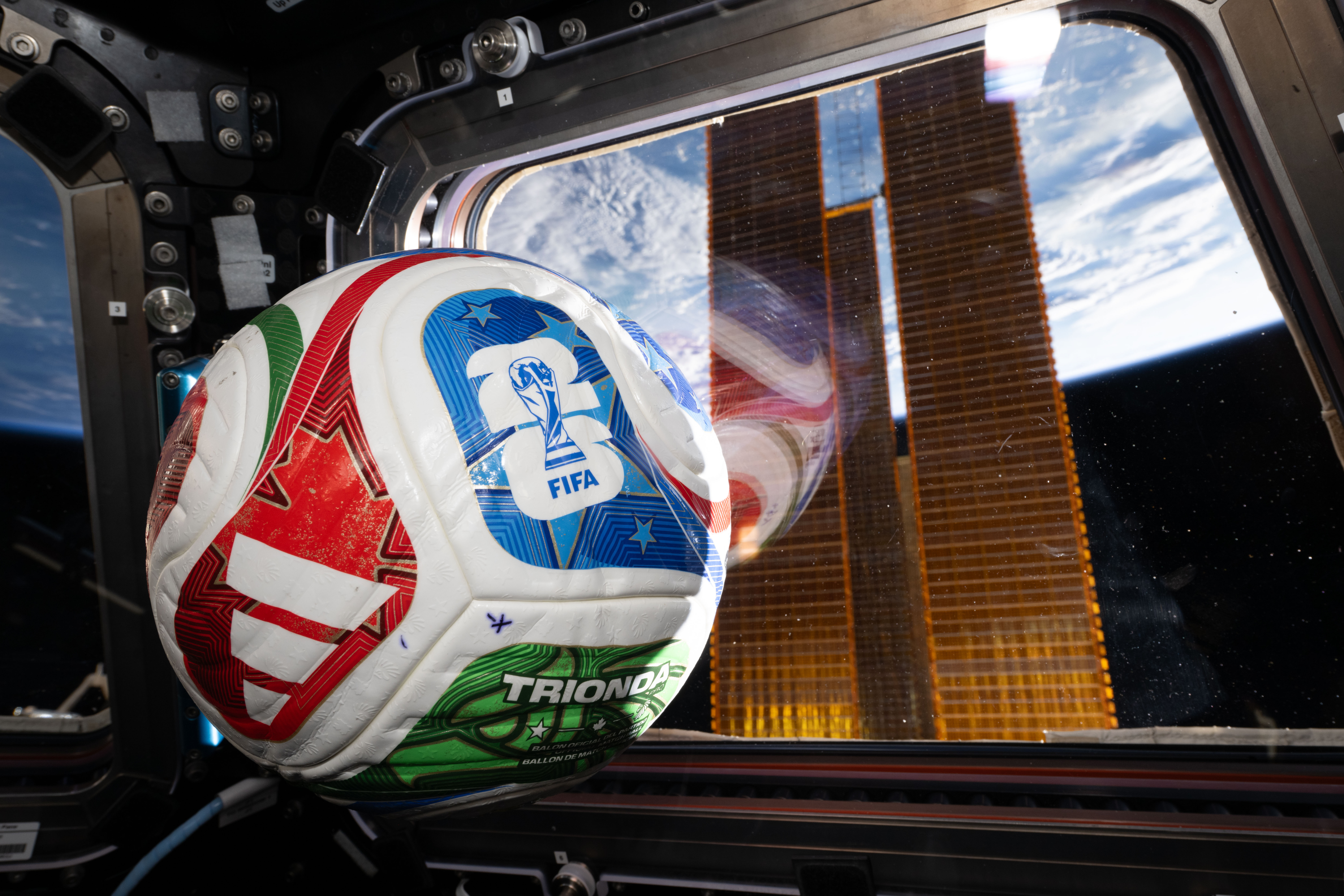
NASA Brings Space Science to the World Cup Stage
As the 2026 FIFA World Cup kicks off, NASA is bringing the wonders of space exploration to soccer fans worldwide. From June 11 to July 19, 2026, the space agency will host an interactive exhibit at the FIFA Fan Festival™ Houston, where visitors can learn how research aboard the International Space Station (ISS) benefits life on Earth and experience the agency's ambitious plans for low Earth orbit, the Moon, and beyond through the Artemis program.
The exhibit opens on June 11, coinciding with the first matches of the tournament. Located in East Downtown Houston, the Fan Festival is free to attend and open for every match, offering a unique blend of soccer excitement and space discovery. NASA's presence underscores the deep connections between space exploration and sports technology, highlighting how innovations developed for astronauts can enhance athletic performance and fan engagement.
Artemis II Crew to Appear at Fan Festival
A major highlight of NASA's World Cup activities will take place on June 20, when Johnson Space Center Director Vanessa Wyche introduces select Artemis II crew members following their historic mission around the Moon. The crew will participate in World Cup activities ahead of the Netherlands-Sweden match in Houston and will appear on the main stage of the Fan Festival to share their experiences with fans. This rare public appearance offers an opportunity for soccer enthusiasts to meet the astronauts who have traveled farther from Earth than any humans in decades.
The Artemis II mission, which successfully completed a flyby of the Moon, represents a critical step toward establishing a sustainable human presence on the lunar surface. By bringing the crew to the World Cup, NASA aims to inspire the next generation of explorers and demonstrate that the spirit of discovery transcends boundaries, whether on the soccer field or in space.
Microgravity Soccer Ball Research
The connection between NASA and the World Cup goes beyond the exhibit floor, reaching all the way to orbit. For more than 25 years, research aboard the ISS has enabled breakthroughs in science, technology, and human health while advancing innovations that benefit people on Earth. One such study focused on the aerodynamics and physics of soccer ball flight, providing insights that have improved the design of match balls used in major tournaments.
In 2019, researchers partnered with the ISS National Laboratory to use the station's microgravity environment to study how a soccer ball's internal mass affects its motion, stability, and rotation. By observing the ball's behavior in the absence of gravity, scientists gained a better understanding of how embedded technologies, such as match-ball sensors, can influence performance during play. The findings contributed to studies used in the development and evaluation of soccer balls for international competitions, including the FIFA World Cup.
From Spacecraft to Soccer Balls: The Science of Center of Mass
Understanding the relationship between an object's center of mass and its geometric center is key to predicting how free-flying objects move, whether they are spacecraft, satellites, aircraft, or soccer balls. In microgravity, this relationship becomes even more critical because there is no gravitational force to stabilize the object. The ISS experiments allowed researchers to isolate the effects of internal mass distribution without the interference of gravity, providing data that is difficult to obtain on Earth.
Since 2022, Adidas has embedded electronics inside official match balls used in major tournaments. These sensors track speed, position, and contact in real time to support officiating and broadcast technology. However, adding sensors inside a ball introduces additional mass at specific locations, which can alter the ball's center of mass and affect its flight characteristics. The NASA research helped manufacturers understand and mitigate these effects, ensuring that the balls perform consistently and fairly during high-stakes matches.
NASA Spinoff Technologies in Sports
The soccer ball research is just one example of NASA spinoff technologies that shape commercial products and everyday life. Innovations developed for space exploration have found applications in sports, medicine, transportation, and countless other fields. By making these technologies accessible to the public, NASA demonstrates the tangible benefits of investing in space exploration.
At the Fan Festival exhibit, visitors can explore interactive displays that showcase how ISS research has led to advancements in materials science, robotics, and human health. They can also learn about the Artemis program's goal of returning humans to the Moon and eventually sending astronauts to Mars. The exhibit aims to inspire curiosity and highlight the role of science and engineering in solving real-world challenges.
A Celebration of Exploration and Sport
The 2026 FIFA World Cup in Houston represents a unique convergence of global sport and space exploration. By hosting an exhibit and featuring Artemis II astronauts, NASA is reaching a diverse audience of millions of fans from around the world. The agency's message is clear: the same spirit of exploration that drives astronauts to venture into the cosmos also fuels innovation on Earth, from the soccer field to the laboratory.
As fans gather to cheer for their favorite teams, they will also have the opportunity to glimpse the future of human spaceflight. The NASA exhibit at the FIFA Fan Festival Houston is a testament to the power of collaboration between science, technology, and sport, and it promises to be a highlight of the World Cup experience.
This article is based on reporting by NASA. Read the original article.

Originally published on nasa.gov