Scientists push for protected lunar research zones
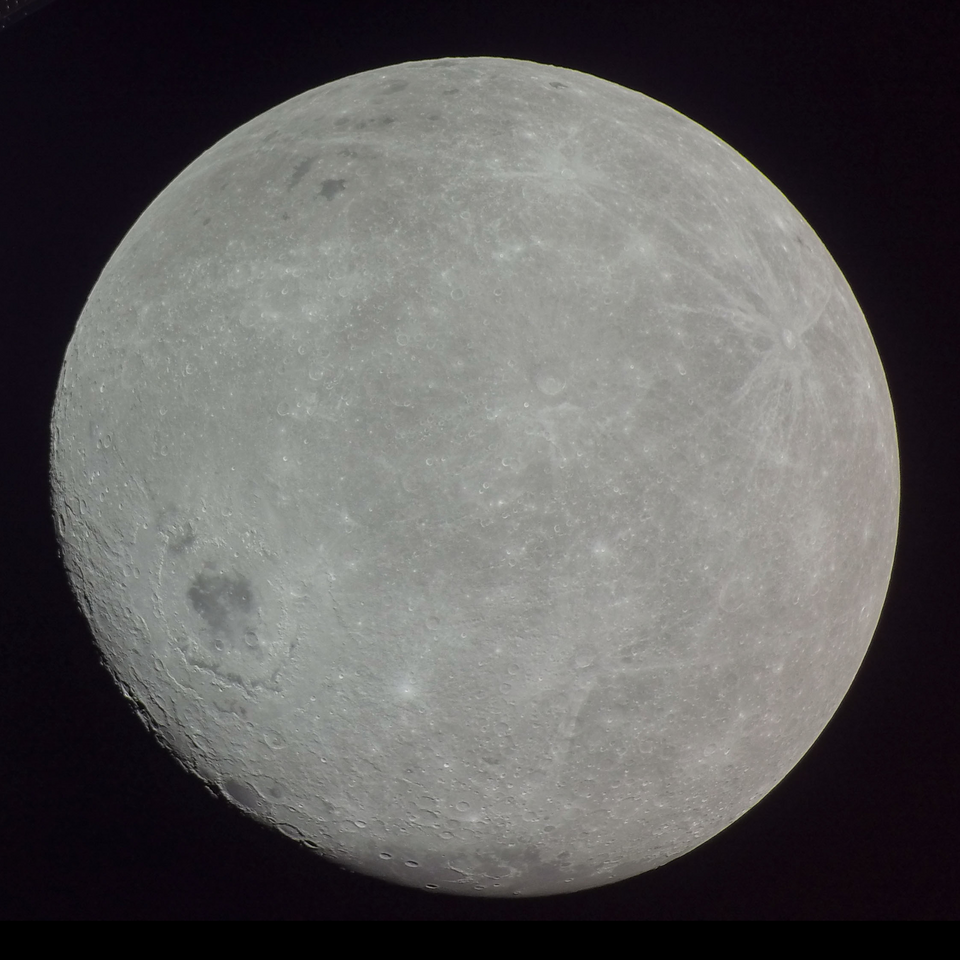
As lunar exploration accelerates, a long-running space policy question is becoming more concrete: should parts of the Moon be preserved for science before heavy commercial and industrial activity begins? That question moved further into the mainstream this week after a debate hosted by the Royal Astronomical Society in Birmingham, England, where attendees were asked whether the lunar far side should remain a protected scientific environment or whether commercial activity should proceed alongside research.
According to the source material, 76 percent of attendees backed scientific preservation of the Moon following the July 21 debate. The discussion was part of a wider conference on lunar governance, a sign that the argument is no longer confined to abstract ethics or long-term speculation. As governments and companies plan more robotic missions, sustained human presence, and infrastructure beyond Earth, the Moon is becoming a test case for how spacefaring societies will balance access, profit, research, and stewardship.
The far side of the Moon sits at the center of that debate for a practical reason. It offers an unusually quiet scientific environment, shielded from Earth’s radio interference and free from the light pollution that affects observations closer to home. Those conditions make it especially valuable for astronomy and cosmology, including future observatories that could benefit from an environment largely untouched by the electromagnetic noise of modern civilization.
From planetary protection to lunar preservation
The idea of protecting extraterrestrial environments is not new. For decades, space agencies have worked under planetary protection protocols designed to prevent “forward contamination” of other worlds by terrestrial organisms and to avoid “backward contamination” of Earth by potentially hazardous material returned from space. Those rules emerged out of concern for worlds such as Mars, Jupiter’s moons, and Saturn’s moons, where contamination could compromise the search for life or create biological risks.
But the Moon presents a different kind of challenge. It is not primarily a case about microbes or biosafety. Instead, it is about preserving a place’s scientific character before activity on a large scale alters it. That makes lunar preservation a governance problem rather than a narrowly technical one. Once a radio-quiet region is filled with communications equipment, transport traffic, habitat systems, and industrial machinery, its value for certain kinds of observation may be permanently reduced.
The source text frames the question this way: if future science depends on some pristine conditions, should those conditions be protected in advance? That concern becomes more urgent as lunar plans shift from occasional missions to the possibility of regular operations. Protection after the fact may be far less effective than deciding early which sites are too scientifically valuable to lose.
The far side’s unique scientific appeal
The lunar far side has been discussed for years as a compelling location for radio astronomy and other observatories that need insulation from Earth-generated interference. On Earth, even remote deserts and mountaintops are increasingly surrounded by telecommunications signals, aviation systems, satellites, and urban light. The Moon offers a rare chance to establish observatories in a setting that is naturally shielded from much of that background noise.
That appeal extends beyond a single branch of science. The source describes the far side as a promising environment for multi-messenger observatories, suggesting it could support research that combines different forms of cosmic information rather than relying on one instrument or wavelength alone. In policy terms, that means the issue is not simply whether astronomers want access to a scenic location. It is whether humanity wants to preserve an unusually capable natural laboratory before competing uses crowd it out.
The more serious commercial planning becomes, the sharper that tradeoff looks. Lunar transport, communications relays, resource prospecting, landing zones, habitats, and power systems all require physical footprint and operational freedom. Scientific preservation, by contrast, often depends on limiting activity, restricting noise, and maintaining buffers around sensitive areas. Those logics can coexist in theory, but only if rules are set early enough to matter.
A preview of future space governance conflicts
The Birmingham debate included scientists such as Jonathan McDowell, Joe Silk, Martin Ward, Nikita Chu and Manual Salvoldi, reflecting that the issue spans astronomy, policy, and the practical future of exploration. The question they addressed is likely to reappear far beyond the Moon. If protected scientific zones can be justified on the lunar far side, similar arguments may follow for parts of Mars, asteroids, icy moons, or other destinations where scientific opportunity could be degraded by premature exploitation.
That is why the lunar argument is broader than lunar science. It is effectively a rehearsal for governance norms in deep space. Early precedents tend to shape later behavior. If the Moon is treated as a place where first arrivals can establish uses with minimal constraint, future disputes elsewhere may become harder to manage. If, instead, the international community starts recognizing certain extraterrestrial locations as worthy of preservation for scientific reasons, that could influence how missions are planned and licensed in the decades ahead.
The survey result from the debate does not create policy by itself, and conference audiences are not a substitute for international negotiation. Still, the 76 percent figure is meaningful as an indicator of where scientific opinion may be consolidating. Researchers appear increasingly concerned that waiting until after commercial expansion begins would amount to surrendering the best chance to preserve uniquely valuable observing conditions.
Why timing may be the decisive issue
The strongest argument for lunar preservation is not that commercial activity should be stopped outright. It is that certain decisions become effectively irreversible once infrastructure is in place. Roads, landing patterns, communications networks, dust disturbance, electromagnetic emissions, and site occupation all have a way of normalizing themselves. A protected zone declared after those systems spread is unlikely to restore what was lost.
That puts timing at the heart of the debate. The Moon is still early enough in its development trajectory that meaningful choices remain possible. Yet it is late enough that the issue can no longer be postponed as a distant hypothetical. Governments, agencies, researchers, and companies are now dealing with real programs, real timelines, and real incentives.
For that reason, the push to define scientific reserves on the Moon should be understood less as anti-development and more as an attempt to set boundaries before momentum takes over. The far side’s unusual quiet may be one of the rarest scientific assets available beyond Earth. If the goal is to preserve options for future generations of researchers, then the debate now underway may prove to be one of the most consequential policy questions in the next phase of lunar exploration.
This article is based on reporting by Universe Today. Read the original article.
Originally published on universetoday.com