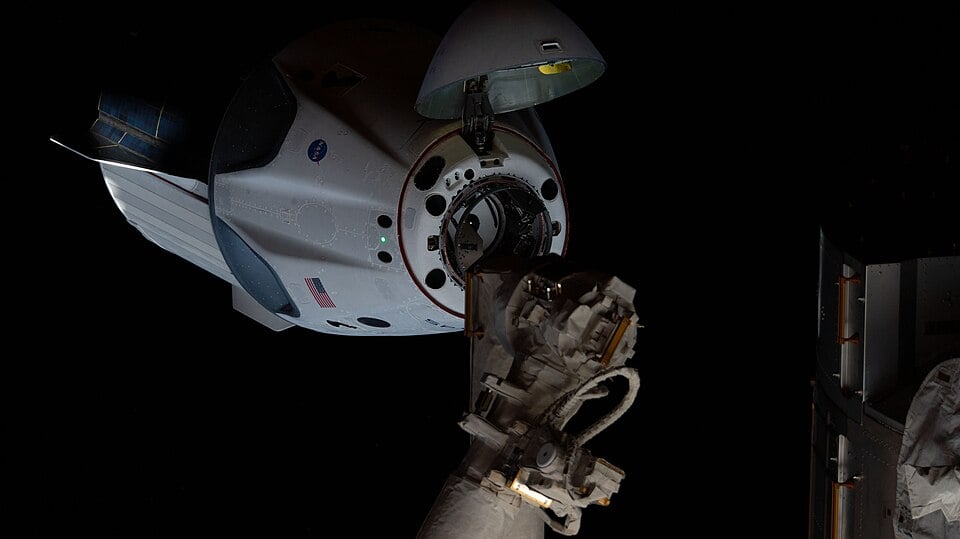
NASA is extending a financial and engineering lifeline to Boeing's Starliner crew capsule, moving to rehabilitate a spacecraft whose 2024 test flight went badly enough that its two pilots ended up living aboard the International Space Station for roughly nine months longer than planned.
NASA Administrator Jared Isaacman announced Monday that Boeing should be in position to send a revamped Starliner to the station by December. That flight would carry cargo, not people. Astronauts will not strap into the capsule until 2028, a timeline driven by safety redesigns that managers say will consume months, and possibly years, of additional work.
A Cargo Run First, Crew Much Later
The December target represents a deliberate step backward before any step forward. Flying Starliner uncrewed allows engineers to validate fixes to the propulsion and other systems that malfunctioned during the 2024 mission without exposing a crew to residual risk. Only once those systems demonstrate repeatable, reliable performance would the agency consider putting humans on board again.
Dana Weigel, a manager involved in the program, emphasized that the threshold for returning astronauts is confidence, not schedule pressure. Her message was that every known defect must be understood and resolved before a crew is cleared to fly. That stance reflects how seriously NASA has come to regard the vehicle's track record.
The stakes are unusually high because the agency has already labeled the 2024 flight a crew-endangering "Type A mishap" — its most severe classification for an incident. That designation carries weight inside NASA, shaping how much scrutiny, paperwork and independent review any future flight will face.
How the 2024 Mission Unraveled
Starliner's path to orbit was never smooth. Boeing struggled through a pair of uncrewed test flights that failed to go cleanly, delaying the program repeatedly and eating into schedules NASA had built around having a second commercial ride to the station.
The capsule finally launched with astronauts Butch Wilmore and Suni Williams aboard. What was supposed to be a relatively short demonstration mission instead turned into an extended stay: the problems encountered in flight were serious enough that NASA opted not to bring the crew home in Starliner at all. Wilmore and Williams instead returned aboard a SpaceX Dragon, roughly nine months after they launched.
Both astronauts have since retired from the agency. Their unintended marathon aboard the station became the most visible symbol of the program's difficulties and, for a time, a running story about two professionals making the best of an open-ended deployment in orbit.
Why NASA Still Wants a Second Ride
The agency's interest in fixing Starliner is structural rather than sentimental. After the space shuttle fleet retired, NASA paid billions of dollars to two companies — Boeing and SpaceX — specifically to avoid depending on a single vehicle for ferrying people to and from orbit.

- SpaceX became the first private business to launch astronauts to orbit in 2020 and has since flown a steady cadence of crews for NASA, with its 14th such mission slated for later this week.
- Boeing was meant to provide the competing option, giving the agency redundancy if one capsule were grounded.
- That redundancy has not materialized, leaving NASA reliant on a single provider for crew transportation far longer than planned.
A Clock Ticking on the SpaceX Side
There is a second reason the agency is eager to see Starliner fly again: SpaceX has signaled that it intends to phase out its Falcon 9 rockets and Dragon capsules within a few years, shifting focus to the larger Starship vehicle, which reached orbit for the first time Monday.
That transition, whenever it fully arrives, would leave NASA needing certified alternatives. A Starliner that works — and works reliably — would preserve competition and give the agency leverage and fallback capacity in a market that currently has only one proven crew carrier.
The Cost of Redemption
Getting Starliner back to flight is not free. Weigel said the additional capsule upgrades and new rocket certifications required for the program will cost NASA another $359 million. That figure lands on top of the billions the agency has already invested in Boeing's ferry service, and it underscores how expensive it becomes when a spacecraft must be substantially reworked rather than simply recertified.
The spending also signals intent. NASA is not walking away from Boeing's capsule; it is buying the engineering hours needed to close out the anomalies and rebuild a case for crewed flight.

A New Commander, and a Nod to the Past
NASA astronaut Woody Hoburg will command the next Starliner flight. He described the effort as being on the right track and paid tribute to the two pilots who flew the vehicle before him, calling Wilmore and Williams American heroes and saying he is deeply humbled to follow in their footsteps.
That framing matters for a program trying to move past its most difficult chapter. The astronauts who absorbed the consequences of the 2024 failures are now out of the agency, but their experience shapes the redesign work and the caution surrounding it.
What Comes Next
The near-term milestones are concrete: complete the upgrades, fly the December cargo mission to the station, gather data, and then begin the long certification road toward putting people aboard in 2028. Each step will be watched closely, both because the vehicle has failed before and because NASA's broader strategy for human spaceflight depends on having more than one way to reach orbit.
For Boeing, the program represents a chance to convert years of setbacks into a functioning spacecraft. For NASA, it is a bet that additional funding and oversight can turn a Type A mishap into a routine, dependable service — one the agency cannot easily do without.
This article is based on reporting by Phys.org. Read the original article.
Originally published on phys.org