Introduction
Photographers at NASA's Johnson Space Center in Houston have documented some of the most defining moments in human spaceflight. From astronaut training and engineering tests to mission control operations and milestone celebrations, their images preserve the history of exploration while capturing the people and teams behind the missions shaping the next era. Meet the photographers behind the lens and explore the stories behind the images that have helped tell NASA's story.
The Imagery Acquisition Group
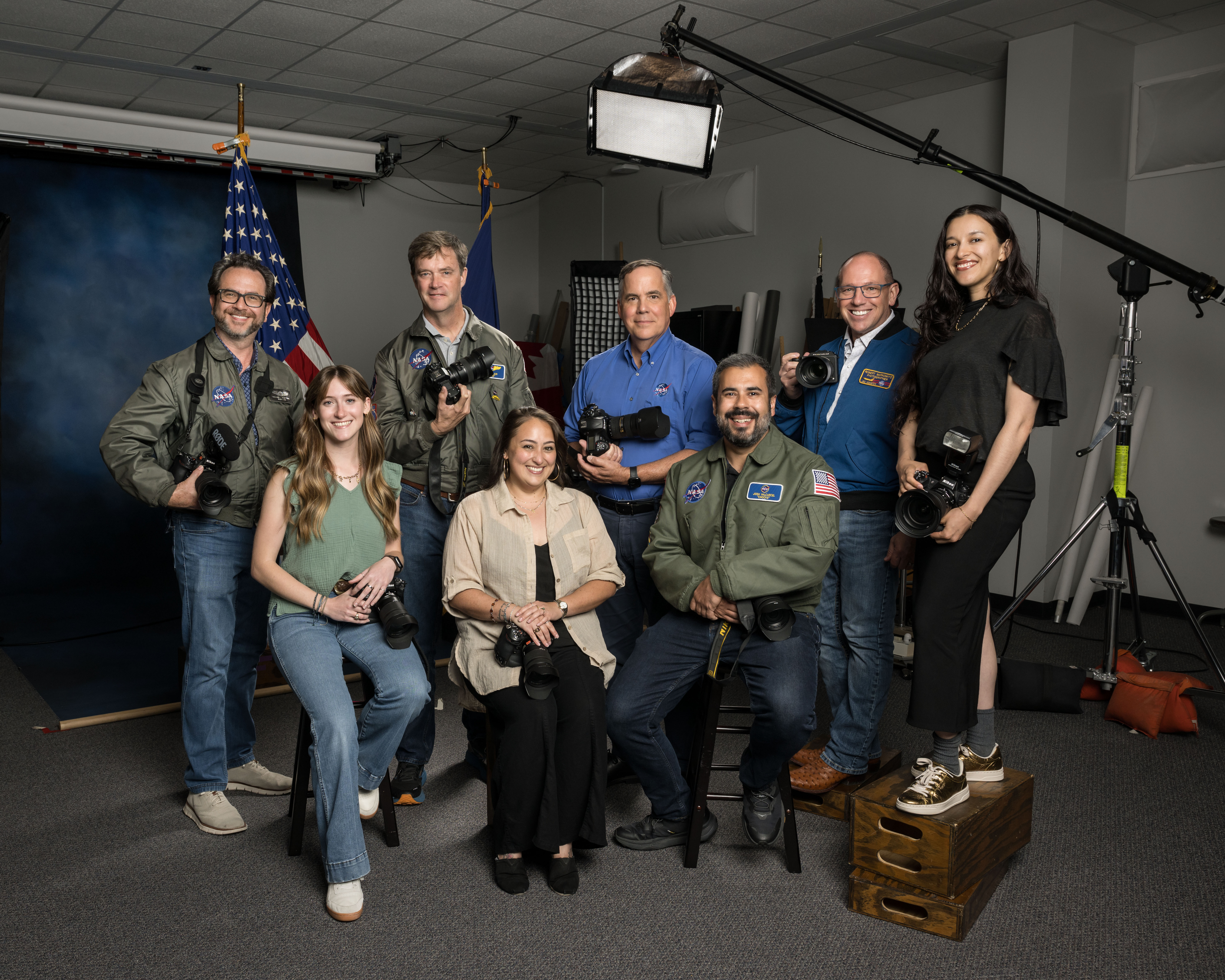
The Imagery Acquisition Group at NASA's Johnson Space Center is a team of professional photographers responsible for capturing the visual record of human spaceflight activities. On August 10, 2026, the group posed for a group photo in Houston, Texas, showcasing the talented individuals who work behind the scenes. The team includes NASA photographers Bill Stafford, James Blair, supervisor Mark Sowa, Robert Markowitz, Luna Posadas Nava, Morgan Gridley, Helen Arase Vargas, and former NASA photographer Josh Valcarcel.
These photographers are tasked with a wide range of assignments, from documenting astronaut training in simulators and underwater facilities to capturing engineering tests and mission control operations. Their work not only serves as a historical archive but also helps communicate NASA's missions to the public, inspiring future generations.

Robert Markowitz: Three Decades of Storytelling
For more than three decades, NASA photographer Robert Markowitz has documented the people and milestones that have shaped NASA's human spaceflight program. His career has spanned the space shuttle program, 25 years of continuous human presence aboard the International Space Station, and the upcoming Artemis II mission.
“My favorite part of this job has always come down to the range of assignments we take on and the people I get to work with every day,” Markowitz said. His passion for the work is evident in the diverse portfolio he has built over the years.
One of Markowitz's early career highlights came during the filming of “Apollo 13,” when he served as the behind-the-scenes still photographer for nearly every KC-135 zero-gravity flight. Reflecting on that experience, he said, “Looking back as a 25-year-old photographer at Johnson, I don't think I fully appreciated how unique an opportunity it was to be there documenting those moments.”
Markowitz says the job has challenged him to grow as both a photographer and a communicator. Whether photographing dozens of individual portraits in a day or coordinating a 300-person group photo, each assignment has strengthened his ability to adapt, collaborate, and connect with people. “This work has shaped not just my career, but my life,” he said. “Being part of a team that captures and preserves the story of human spaceflight continues to be one of the great honors of my time at Johnson.”
Other Photographers in the Group
While Robert Markowitz's career is highlighted, the Imagery Acquisition Group includes many other skilled photographers whose work is vital to NASA's mission. Bill Stafford, James Blair, Luna Posadas Nava, Morgan Gridley, Helen Arase Vargas, and others each bring their unique perspectives and expertise to the team.
These photographers often work in challenging environments, from the cramped quarters of spacecraft mockups to the high-speed, high-G environments of T-38 training flights. Their ability to capture compelling images in these conditions is a testament to their skill and dedication.
The group's work extends beyond the technical aspects of photography. They are storytellers who capture the human element of space exploration—the excitement of a successful launch, the concentration in a mission control room, and the joy of a crew returning home. Their images help the public connect with the astronauts and the missions, making the distant world of space exploration feel personal and immediate.
The Importance of NASA Photography
NASA photography serves multiple purposes. It provides a historical record of the agency's achievements, documents technical details for engineering and scientific analysis, and communicates the excitement of space exploration to the public. The images captured by the Johnson Space Center photographers have been instrumental in shaping public perception of NASA and its missions.
From the iconic photos of the first moon landing to the stunning images of the International Space Station, these photographs have inspired generations. As NASA prepares for the Artemis missions to return humans to the Moon and eventually reach Mars, the work of these photographers will continue to be crucial in documenting these historic endeavors.
Behind the Scenes: A Day in the Life
A typical day for a NASA photographer at Johnson Space Center might involve photographing astronauts training in the Neutral Buoyancy Laboratory, capturing engineers testing new hardware, or documenting a press conference with mission leadership. Each assignment requires careful preparation, technical expertise, and the ability to work seamlessly with a variety of teams.
Photographers must be versatile, skilled in everything from portrait photography to high-speed action shots. They also need to be knowledgeable about the subjects they photograph, understanding the significance of the equipment and procedures they are documenting.
In addition to their technical skills, NASA photographers must be excellent communicators. They often work with astronauts, engineers, and other NASA personnel, building trust and rapport to ensure they can capture the best possible images. Their ability to put people at ease and tell their stories through photographs is a key part of their role.
Preserving History for Future Generations
The work of the Imagery Acquisition Group is not just about the present; it is also about preserving history for future generations. The photographs they take today will be studied by historians, scientists, and the public for decades to come. They are the visual record of humanity's journey into space.
As NASA continues to push the boundaries of exploration, the photographers at Johnson Space Center will be there, capturing every moment. Their images will help tell the story of the Artemis generation and inspire the explorers of tomorrow.
Conclusion
The photographers at NASA's Johnson Space Center are more than just image-makers; they are historians, storytellers, and ambassadors for space exploration. Their dedication and skill have preserved the defining moments of human spaceflight and brought the wonders of space to people around the world. As we look to the future, their work will continue to be an essential part of NASA's mission.
This article is based on reporting by NASA. Read the original article.
Originally published on nasa.gov