The Army is testing small robots to push sensors forward
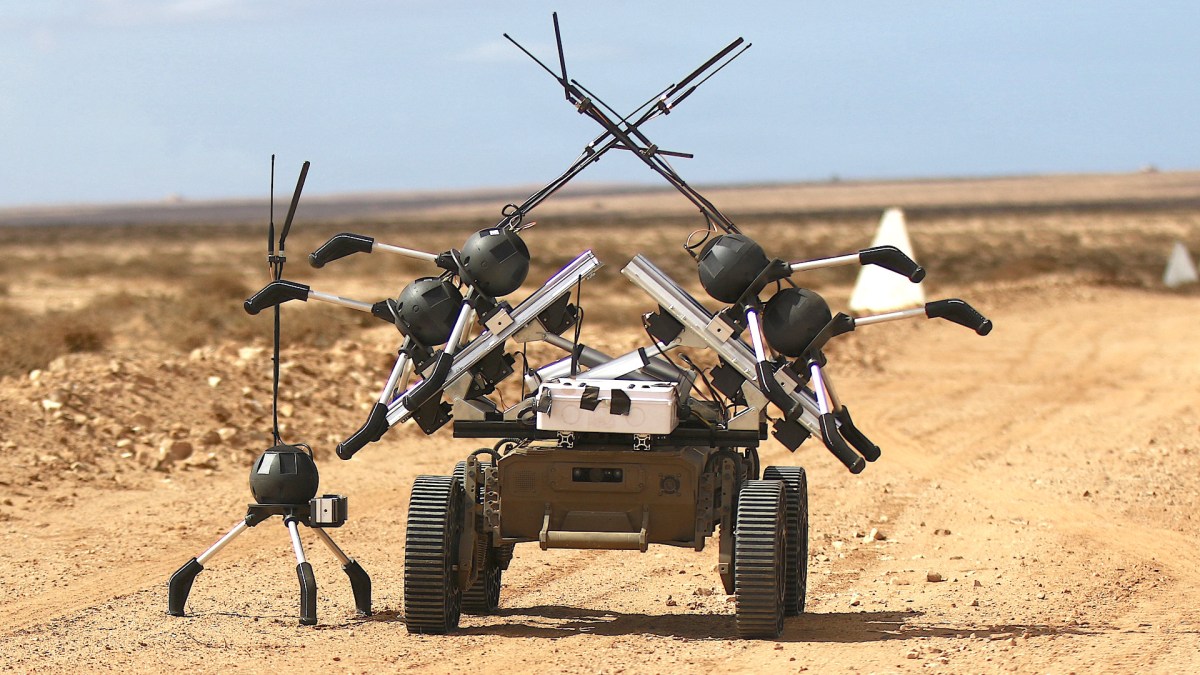
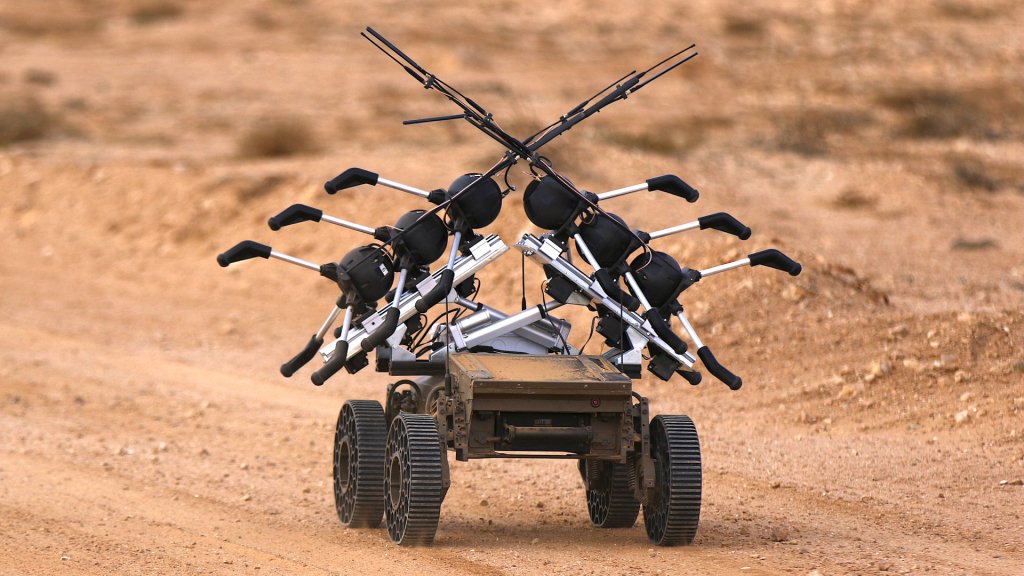
The U.S. Army has tested a FireAnt uncrewed ground vehicle as a way to deploy small ground sensors designed to detect hostile drones, exploring how compact robotic systems could help establish forward sensor networks in dangerous or difficult terrain.
The test took place during the Army-led Needs-Driven Acquisition for Near-Term Operations Accelerated Capability II, or NANO ACE II, exercise in October. The event was held at the Multidomain Training Area in Tan-Tan, Morocco, in cooperation with the Moroccan armed forces. The Army recently released details of the activity.
The basic concept is straightforward: instead of requiring personnel to carry and place sensors in exposed positions, a small uncrewed ground vehicle could travel over unimproved terrain and distribute them nearer to likely threat routes or areas of concern. The resulting network could provide local warning of aerial threats while reducing some of the risk to troops.
Counter-drone coverage is a growing operational need
Small uncrewed aerial systems have become a persistent threat on modern battlefields. They can support surveillance, target acquisition, artillery adjustment, or direct attack. Detecting them early is difficult because low-flying drones can be small, mobile, and hard to spot with a single sensor placed far from the area being protected.
That makes distributed sensing attractive. Multiple sensors positioned across an area can potentially improve awareness of what is approaching and from where. The FireAnt demonstration focused on the role a ground robot might play in getting those sensors into place quickly, including in areas that may be too hazardous or inconvenient for a person to reach.
The Army described the demonstration as part of an effort to test prototype systems that combine autonomous platforms, payloads, mission-management software, and resilient communications. Its stated goal was to examine semi-autonomous capability sets that extend counter-uncrewed aerial system coverage while addressing a joint-force need for integrated sensing and effectors on an accelerated acquisition timeline.
What NANO ACE II evaluated
NANO ACE II was not solely a test of the FireAnt vehicle. It assessed systems against operational criteria that included independent movement across unimproved terrain and survivability in a contested electronic-warfare environment. Those conditions matter because a robot and its sensors are only useful if they can function outside controlled demonstration settings.
Terrain can restrict mobility, strain batteries, block communications, and complicate navigation. Electronic warfare can interfere with command links, satellite navigation, and data transmission. A deployable sensor network also needs a reliable way to relay detections to the people and systems that can act on them.
The broader NANO ACE effort is connected to the Army’s Operation Jailbreak initiative, which has focused primarily on developing networking capabilities that link disparate systems. In this context, the value of a robotic sensor carrier is not limited to the vehicle itself. It lies in its ability to become one part of a connected system spanning sensors, software, communications, and potential response tools.
A small vehicle can support a larger network
FireAnt’s role points to a wider shift in military experimentation: using small, comparatively expendable autonomous platforms to move sensing and other capabilities closer to the point of risk. A vehicle that can place a sensor in a forward area may help units observe more of the battlefield without permanently stationing personnel there.
That approach can be useful beyond drone detection. The same principle could apply to ground surveillance, communications relays, environmental monitoring, route reconnaissance, or other payloads. However, the Army’s disclosed test centered on sensors capable of detecting hostile drones, and it did not establish that the system has entered procurement or operational service.
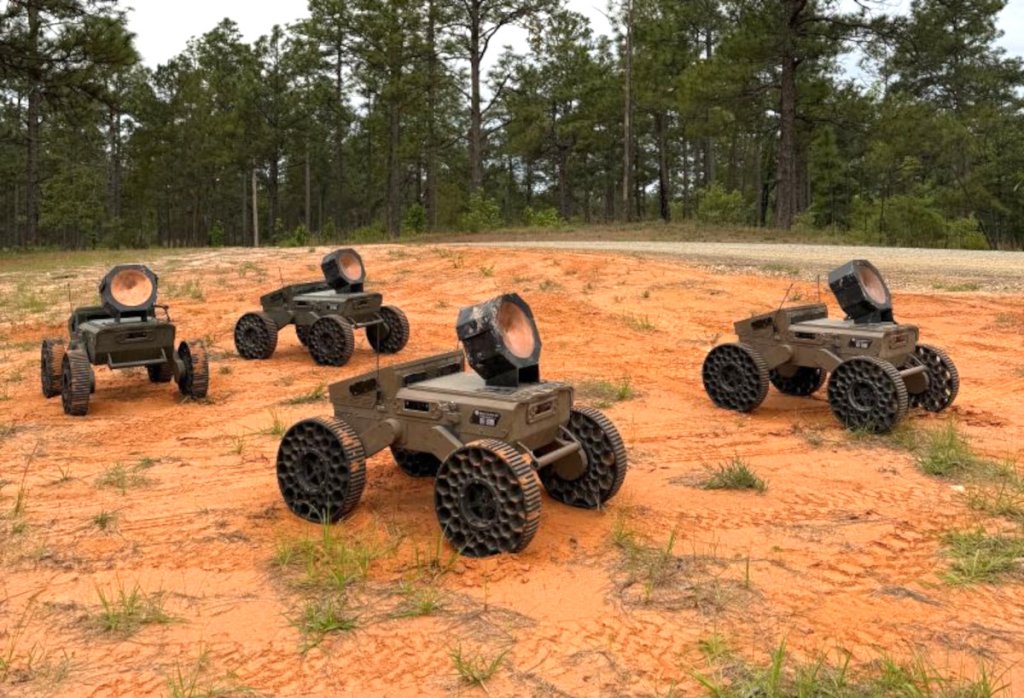
It also remains unclear from the released information how many sensors a vehicle can deploy, how long they operate, how they are recovered or replaced, or what specific detection technologies were used. Such details will be important in determining whether a prototype becomes a fieldable capability.
Morocco test site supports contested-environment trials
The Moroccan training area gave the Army an opportunity to evaluate capabilities in an environment with open electromagnetic spectrum, uncongested airspace, and terrain suitable for experimentation. The event was supported by the U.S. Army’s Africa Multi-Domain Training and Experimentation Center, known as AMTEC.
International training sites can provide room to test systems that depend on interactions among air, land, spectrum, and networked capabilities. For counter-drone efforts in particular, realistic trials require more than proving that a sensor works in isolation. Developers must show that sensing, reporting, command-and-control, and any response mechanisms can operate together under stress.
From prototype to capability
The FireAnt demonstration should be viewed as an early operational experiment rather than evidence of a completed Army program. Still, it highlights a practical requirement: units need ways to place sensors where threats are likely to appear, while limiting exposure for soldiers and maintaining communications in contested conditions.
If the concept advances, its success will depend on reliability, ease of use, resilience against electronic disruption, and the quality of the information delivered to operators. The most important measure will be whether the robot-enabled network gives units earlier, more actionable warning than conventional methods can provide.
For the Army, the test reflects an effort to accelerate experimentation around autonomous, networked counter-drone systems. For industry, it signals that small ground robots may have a role not just as remote vehicles, but as mobile infrastructure for distributing the sensors needed in increasingly drone-saturated environments.
This article is based on reporting by twz.com. Read the original article.
Originally published on twz.com