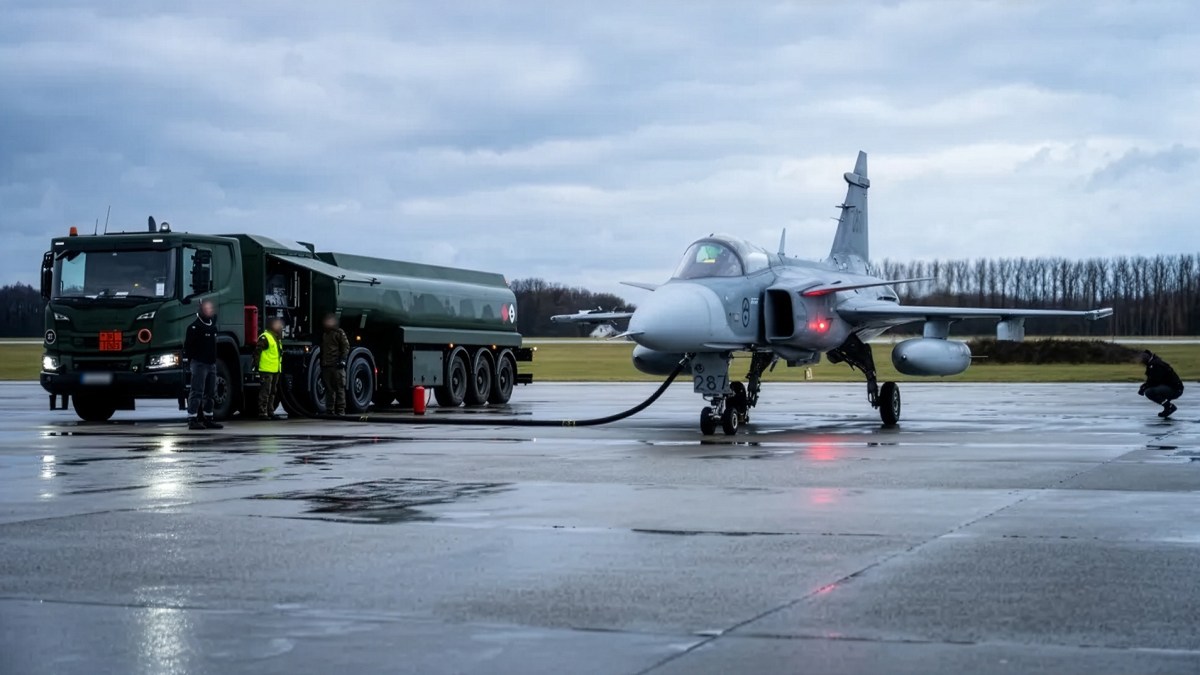
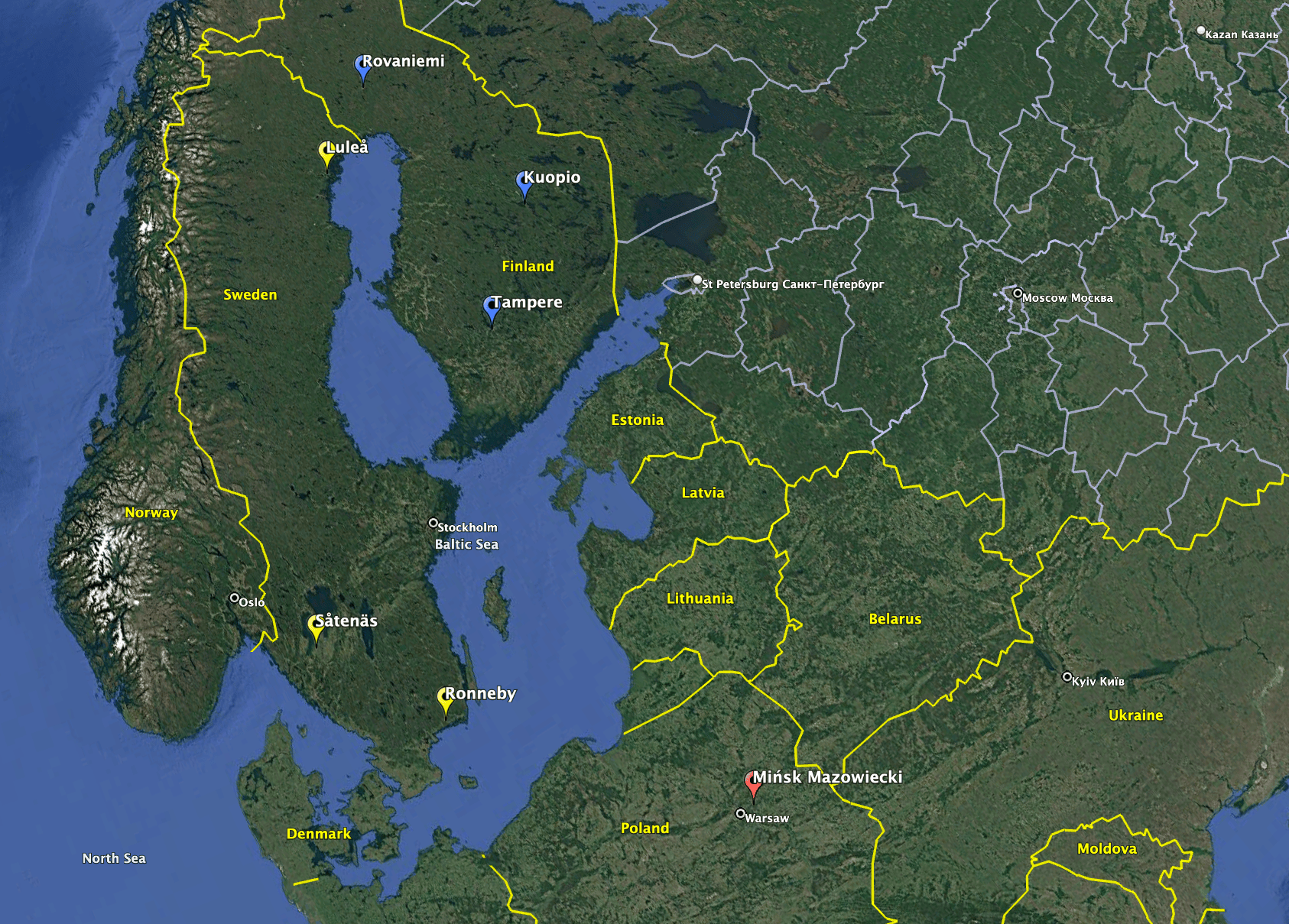
Sweden is extending a long-standing model for operating fighter aircraft from dispersed locations into NATO missions on the alliance’s eastern flank. A small forward support element at Mińsk Mazowiecki air base outside Warsaw is giving Swedish Gripen fighters an additional operating location while the aircraft remain primarily based in Sweden.
The arrangement is notable for its scale. Sweden is supporting the mission with a forward team of eight personnel, according to The War Zone. The team is intended to help sustain missions on short notice and give Gripens more flexibility during air-defense scrambles over Poland and nearby areas.
A small footprint for a demanding mission
The forward deployment was tested against a tense operational backdrop on November 20, when Russian cruise missiles entered Polish airspace during a major attack on Ukraine. NATO aircraft scrambled in response. Two Swedish Gripens joined Polish F-16s to track airborne threats over Poland.
One Swedish pilot sought to intercept an object believed to be a Russian Kh-101 cruise missile and had conditional NATO authorization to engage. Exceptionally difficult weather prevented positive identification, however, and the pilot did not fire.
The episode illustrates both the urgency and the restraint built into air-defense operations. Fighters must respond quickly to possible threats, but weapons use depends on meeting identification and authorization requirements. In this case, challenging conditions prevented the pilot from confirming the target sufficiently to take that next step.
Dispersal as an operational model
Sweden has long developed dispersed fighter operations as a way to preserve flexibility and resilience. Rather than concentrating all activity at a single main operating base, the approach uses alternative locations and smaller support elements to keep aircraft able to fly, refuel and support missions under changing conditions.
At Mińsk Mazowiecki, the concept is being applied within a NATO setting. The aircraft themselves are not permanently shifted to Poland; the compact support presence instead creates another option for sustaining operations. That can reduce the friction of operating across borders during urgent missions and make it easier to place support closer to the area being defended.
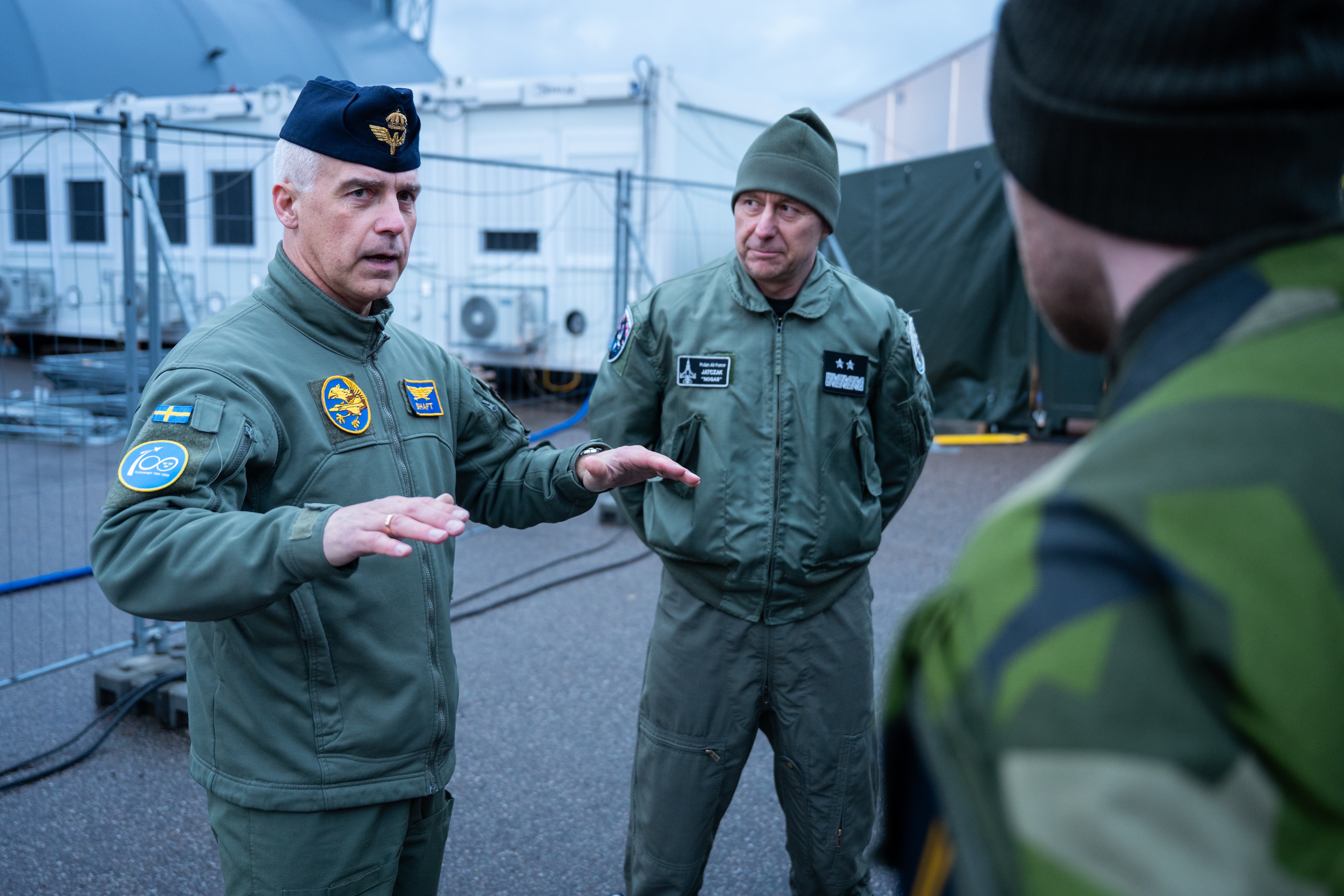
Major General Jonas Wikman, chief of the Swedish Air Force, said the recent missions in Poland and Finland demonstrated the value of the concepts Sweden has been developing. He described Swedish fighters as responding alongside allied forces while maintaining Sweden’s national alert commitment.
From national practice to NATO role
The Polish deployment reflects Sweden’s broader effort to adapt its dispersed operating model to collective defense. It is not presented as a capability awaiting a future trial. Instead, the approach is being refined through active missions with allied air forces.
That distinction matters for NATO’s eastern flank, where the ability to generate aircraft quickly and coordinate with national forces can be as important as the number of jets available. A small, prepared support team may offer a way to increase options without building a large permanent overseas detachment.
The November 20 mission also underscored the practical demands placed on such arrangements. Air-defense sorties can last for hours, occur in poor weather and require close coordination among aircraft from multiple countries. Sweden’s Gripens operated with Polish F-16s as NATO reacted to the airspace incursion.
A flexible forward presence
The deployment does not eliminate the need for aircraft and personnel to remain ready in Sweden. It adds flexibility by connecting a Swedish fighter force to a forward operating location in Poland. That combination allows Sweden to contribute to NATO air defense while retaining its own alert responsibilities.
For the Swedish Air Force, the small detachment is therefore more than a logistical detail. It is a working example of how dispersed operations can be extended across allied territory: limited personnel forward, aircraft able to draw on additional locations, and a force prepared to operate with partners during real-world alerts.
As air-defense demands on NATO’s eastern flank continue, the value of that model will be measured by its ability to support rapid, safe and coordinated responses. The recent Polish mission showed both its potential and its limits: the Gripens were available to join the response, but disciplined target identification remained decisive before any engagement could occur.
This article is based on reporting by twz.com. Read the original article.
Originally published on twz.com