A new milestone in Ukraine’s F-16 campaign
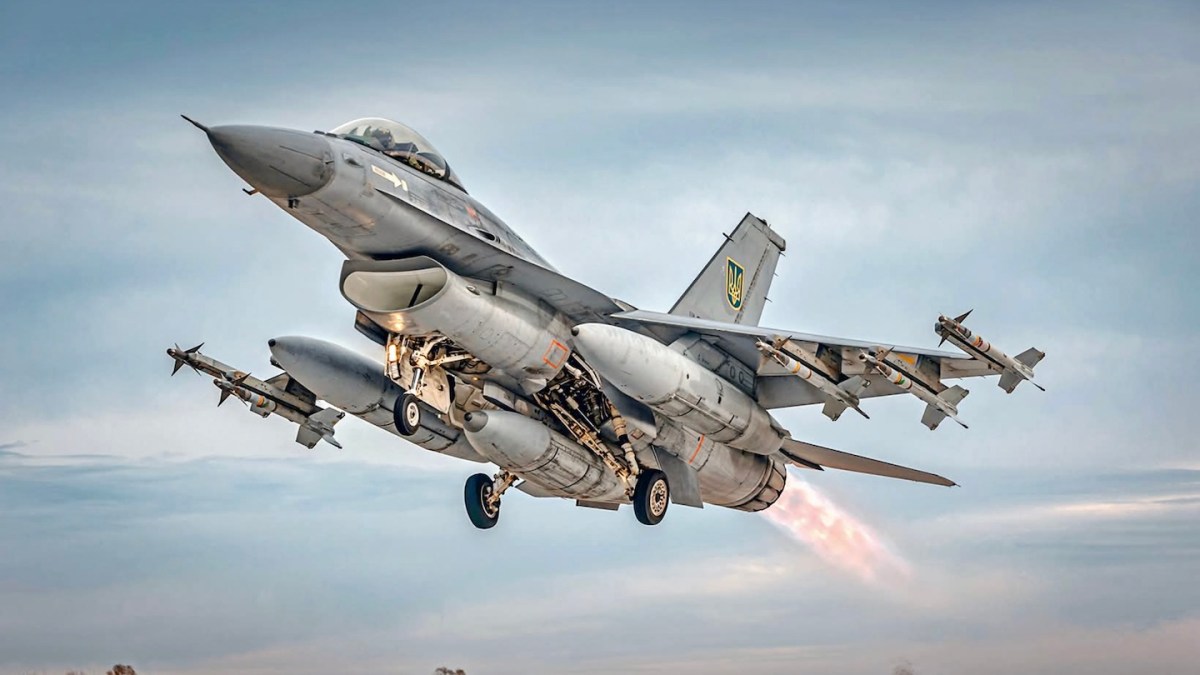
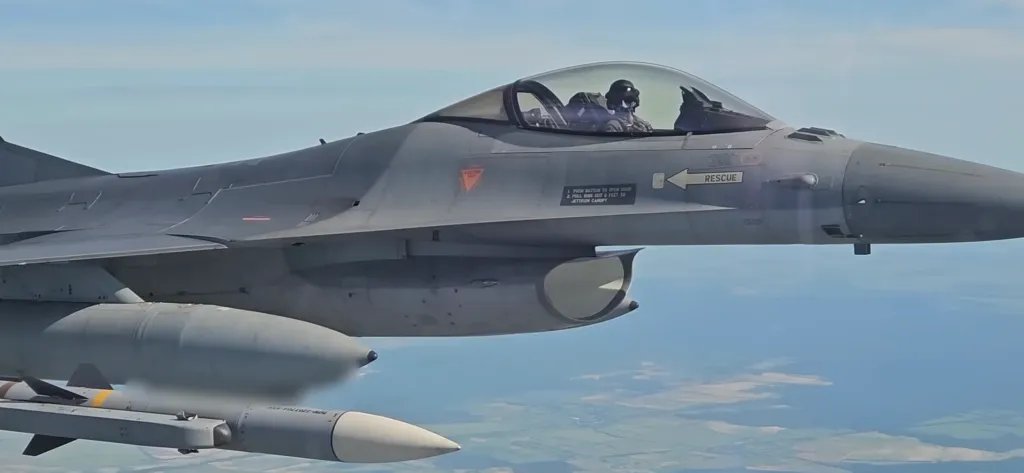
Ukraine’s F-16 fleet has apparently achieved its first air-to-air kill against a crewed Russian fighter, according to the top U.S. military officer. The disclosure came from Gen. Dan Caine, chairman of the U.S. Joint Chiefs of Staff, during testimony before the U.S. Senate Appropriations Committee on July 22, 2026.
Caine’s statement is significant because it is the first public confirmation from a senior U.S. official that a Ukrainian F-16 has destroyed a Russian combat aircraft in aerial combat. While reports had already circulated that a Ukrainian F-16 may have downed a Russian Su-35S earlier this month, his remarks move the claim into a different category: from battlefield reporting and open-source speculation into a publicly acknowledged U.S. assessment.
The general did not provide operational details. He did not identify the Russian aircraft type, the weapon used, the location of the engagement or the evidence behind the conclusion. But he did make the broader point clearly: Ukraine’s air defense network is maturing, and its air-to-air capability is now part of that layered structure.
What Caine actually said
During the hearing, Caine highlighted what he called the “incredible work” of Ukraine’s industrial base as it expands air defense capacity. He described that capacity as spanning both surface-to-air and air-to-air systems. In response to questions about the consequences of a potential multi-year halt in funding for Ukrainian air defenses, he added that “recently” there had been a first air-to-air kill in which a Ukrainian F-16 shot down a Russian fighter.
That wording matters. It places the event in a recent timeframe and links it directly to the broader resilience of Ukraine’s layered defense architecture. In other words, the claim was not offered as an isolated anecdote. It was presented as evidence that Ukraine has progressed from relying primarily on ground-based defenses toward a more integrated network in which Western-supplied fighter aircraft are playing a meaningful combat role.
Because Caine’s remarks were brief, they leave major questions unanswered. Even so, public confirmation from the chairman of the Joint Chiefs carries weight. It signals that U.S. officials believe the engagement happened and are prepared to reference it in open testimony.
Why this matters militarily
The symbolism is obvious. The F-16 was originally designed during the Cold War to counter Soviet-built fighters, and now a Ukrainian-operated example appears to have shot down a Russian aircraft in Europe more than 50 years after the jet first flew. But beyond symbolism, the operational significance is more important.
Ukraine’s F-16s have already been credited in the source text with downing “more than a thousand” drones and cruise missiles. That is a substantial contribution, but it belongs to the air defense mission rather than classic air superiority combat. A successful engagement against a crewed Russian fighter would represent a different level of tactical performance and confidence. It would suggest that Ukraine is not only using the aircraft as a missile truck or interceptor platform against lower-end threats, but can also employ it in contested airspace against an adversary with advanced fighters of its own.
That does not mean the balance of airpower has suddenly flipped. One kill, if confirmed in fuller detail, would not erase the larger constraints under which Ukraine operates, including limited fleet size, dependence on external support, and the persistent threat posed by Russian long-range weapons and aviation. But it would indicate that the F-16 program is moving beyond basic integration and into a more consequential phase of combat employment.
Part of a layered defense story
Caine’s framing is also a reminder that Ukraine’s air war is increasingly about systems, not individual platforms. Western discussion of the F-16 has often drifted toward whether the aircraft alone could alter the war’s trajectory. In reality, the more relevant question is how the jet fits into a broader structure that includes ground-based air defenses, sensors, command networks, maintenance, munitions and domestic industrial adaptation.
The chairman’s testimony explicitly connected the recent air-to-air kill to Ukraine’s ability to “scale” layered air defense. That suggests U.S. officials see the event as evidence of institutional development as much as battlefield success. The achievement, in that reading, is not merely that one pilot won one engagement. It is that Ukraine has assembled enough training, sustainment, weapons integration and operational coordination to make such an engagement possible.

That distinction matters because modern air combat is rarely reducible to the performance of a single aircraft. The effectiveness of an F-16 depends on how well it is cued, armed, sustained and integrated with the rest of the battlespace. If Ukraine has reached the point where its F-16s can credibly threaten Russian fighters, even selectively, that reflects progress across the supporting architecture.
What remains unknown
The lack of detail limits how far the claim can be taken. The source text notes open questions about when and where the engagement occurred, what missile may have been used, and what evidence led U.S. officials to conclude the kill had occurred. Those are not minor omissions. They shape how analysts would assess the encounter, including whether it reflected an opportunistic shot under favorable conditions or a more repeatable tactical capability.
There is also no official public account here from Ukraine or Russia in the supplied material. As a result, the milestone should be understood narrowly: a top U.S. general has publicly said the first Ukrainian F-16 air-to-air kill against a Russian fighter has occurred. Anything beyond that, including the exact scenario or broader consequences, remains unresolved on the basis of the provided source text.
Why the disclosure still lands hard
Even with those caveats, Caine’s statement is a meaningful marker in the war. Western-supplied fighters were once discussed as a future political decision. Then they became a training and delivery challenge. Now they are increasingly part of the operational picture. A reported first kill against a Russian fighter gives that evolution a concrete milestone.
For Ukraine, it supports the argument that continued investment in air defense and tactical aviation can produce cumulative gains. For Russia, it is a reminder that the introduction of Western aircraft is not merely symbolic support, but an expanding source of battlefield risk. For outside backers debating future assistance, the episode provides a concise demonstration that the capability build-out is generating results that go beyond interception of drones and missiles.
Whether this becomes a singular moment or the beginning of a pattern will depend on what happens next. But as of July 22, 2026, the public record has changed: the chairman of the Joint Chiefs has said a Ukrainian F-16 has shot down a Russian fighter.
Key points
- Gen. Dan Caine publicly said a Ukrainian F-16 recently achieved its first air-to-air kill against a Russian fighter.
- No official details were provided on the location, weapon, timing or aircraft type involved.
- The statement ties the event to Ukraine’s broader progress in layered air defense.
- The milestone suggests Ukraine’s F-16 fleet is moving into a more advanced combat role.
This article is based on reporting by twz.com. Read the original article.
Originally published on twz.com